

TOTAL HIP REPLACEMENT
A total hip replacement replaces damaged joint surfaces with implants. It is primarily recommended when cartilage wear causes significant pain and discomfort.
The decision is made on a case-by-case basis, after evaluating the symptoms, clinical examination, imaging, treatments already tried, and the patient's expectations. The presence of osteoarthritis on an X-ray is not, in itself, sufficient to justify surgery.
UNDERSTANDING TOTAL HIP REPLACEMENT

WHEN TO CONSIDER A TOTAL HIP REPLACEMENT?
Prosthesis may be considered when pain and loss of function related to joint damage persist despite appropriate management.
1- Advanced osteoarthritis with persistent pain
Pain can interfere with walking, rest, or sleep. The decision to operate also takes into account its impact on daily life.
2- Difficulty performing usual tasks
Significant limitations in walking, dressing, or getting up may warrant a discussion of treatment options.
3- Insufficient relief with non-surgical treatments
Physiotherapy, activity modifications, and other appropriate treatments may be considered before surgery. Their relevance depends on each individual situation.
4- Joint involvement confirmed by medical evaluation
Clinical examination and imaging help to confirm the origin of the symptoms and to verify that the joint is indeed the main source of discomfort.
Surgery is not automatic. It can be postponed if symptoms remain mild, if another cause better explains the pain, or if an underlying health issue needs to be evaluated first. Age alone does not determine the need for surgery.
PREPARE FOR THE INTERVENTION
The preparation allows us to verify that the intervention is appropriate, to discuss technical choices and to anticipate the first few days after returning home.
PRE-OPERATIVE ASSESSMENT
The assessment includes necessary consultations, an evaluation of the patient's health status, and, as needed, examinations or tests. The anesthesia consultation allows for discussion of anesthesia options and precautions related to medical history or current treatments.
INTERVENTION PLANNING
The surgeon assesses the anatomy of the hip and the quality of the bone to select the surgical approach, dimensions, and type of prosthetic components. Further planning may be discussed in situations where it is warranted.
PHYSICAL PREPARATION AND PRACTICE
Pre-operative exercises or physiotherapy may be recommended depending on the patient's abilities. It is helpful to prepare the home environment, arrange for recommended assistive devices, and anticipate the necessary support during the first few days.
INSTRUCTIONS BEFORE THE OPERATION
The team will provide specific instructions regarding fasting, hygiene, and skin preparation. Regular medications should not be stopped or changed without consulting the medical team. Smoking may also be discussed during the preparation process.
HOW DOES THE PROCEDURE WORK?
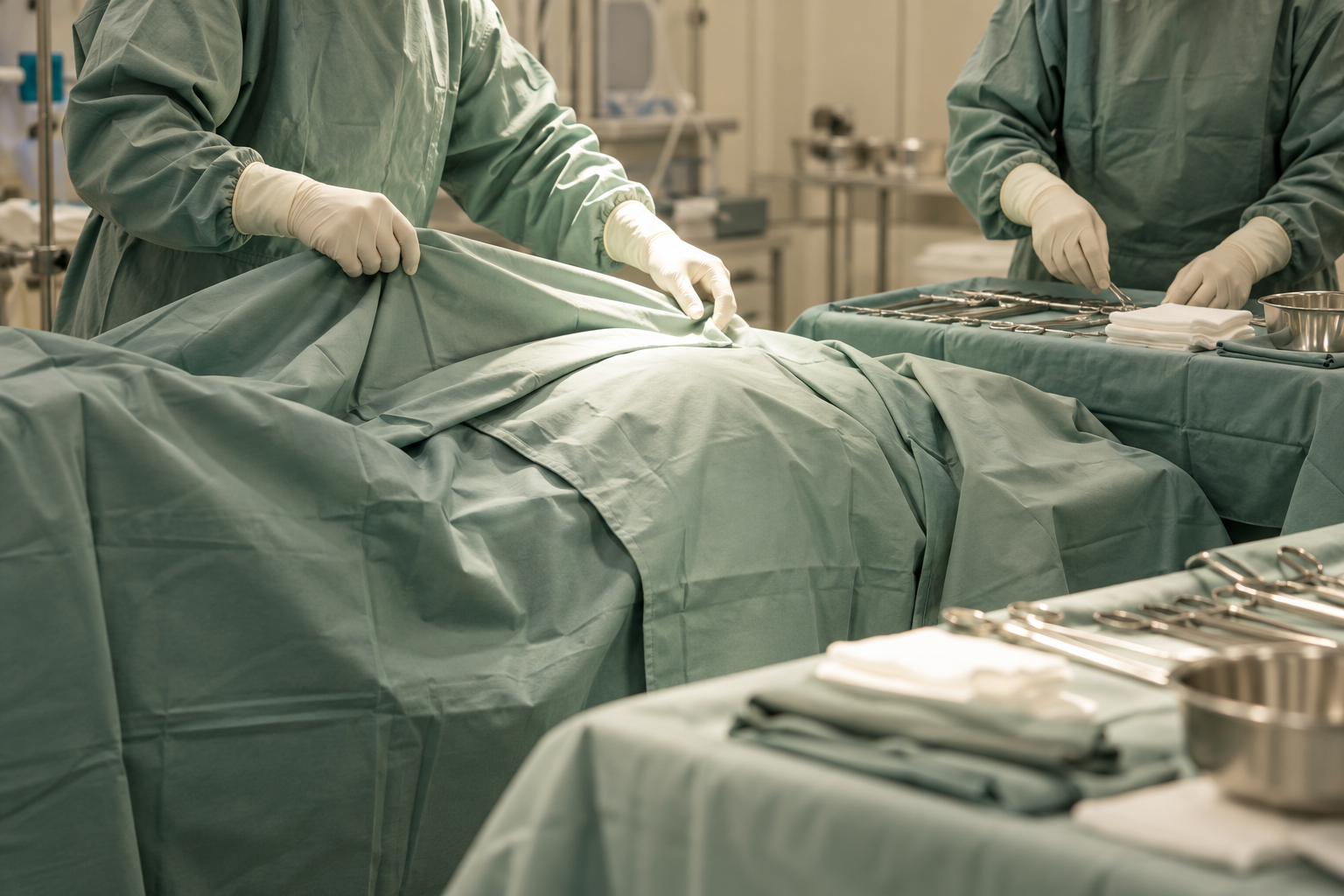
The procedure varies depending on the anatomy, the condition of the bone, and the technique chosen. Total hip replacement is performed through a surgical incision; it is not an arthroscopic procedure.
INSTALLATION AND ANESTHESIA
The patient is positioned on the operating table according to the chosen surgical approach. General or regional anesthesia, sometimes combined with sedation, may be offered after discussion with the anesthesiologist. The skin is prepared according to aseptic technique, and the team performs its safety checks before beginning.
HIP ACCESS
The surgeon accesses the joint through an incision, the location of which depends on the surgical approach. The direct anterior approach is a minimally invasive option used in certain situations; other approaches may be chosen depending on the patient and the team's experience. Tissues are carefully retracted or mobilized to reach the joint.
PREPARATION AND REPLACEMENT OF SURFACES
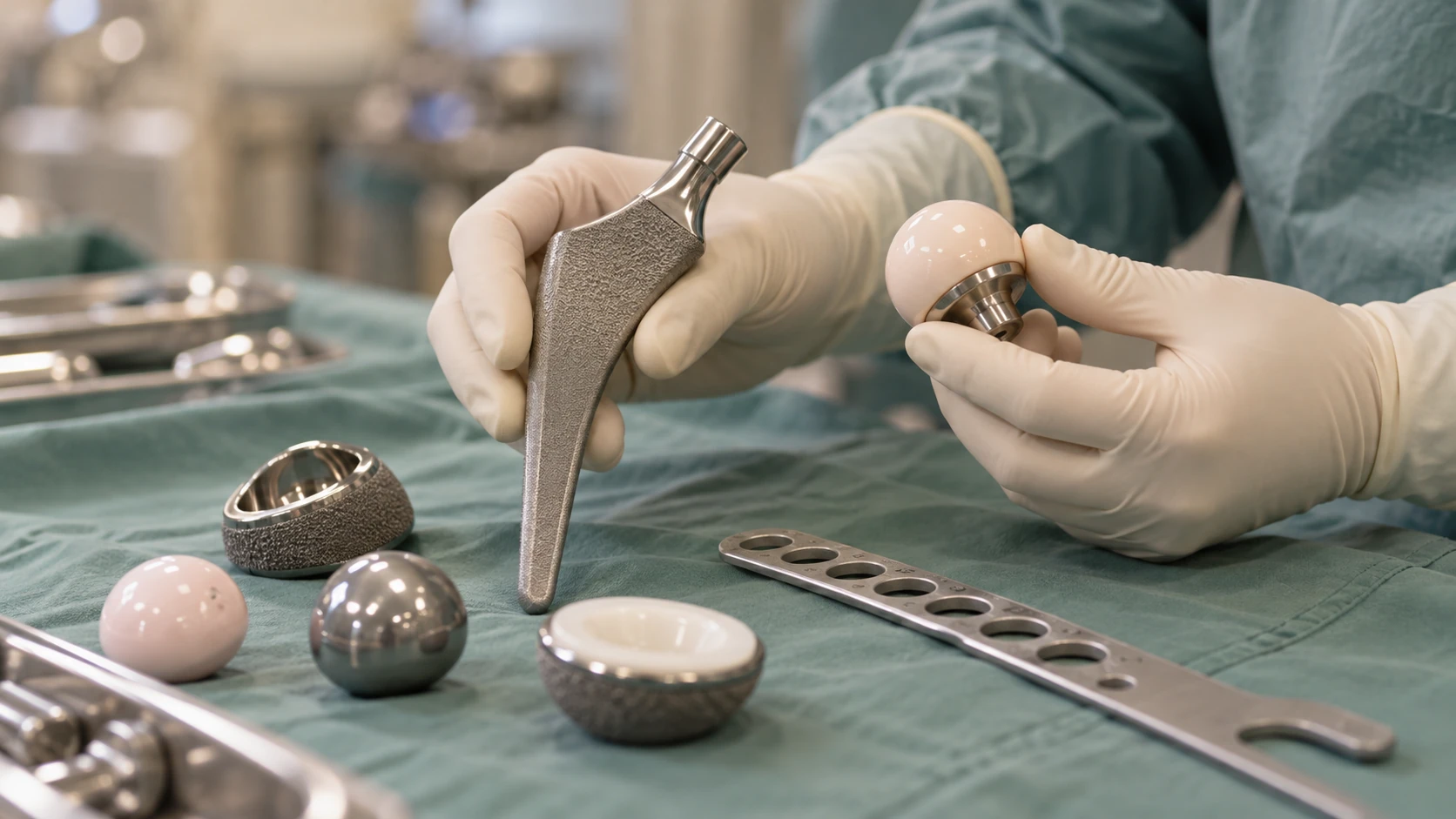
The surgeon removes the worn femoral head and prepares the acetabulum to receive the acetabular cup. The femoral canal is then prepared to receive the stem. The prosthetic head is assembled to the stem and then placed in the acetabular cup. The components replace the damaged articular surfaces while maintaining the desired anatomy and balance of the hip.
RESULT CONTROL
The surgeon checks the stability of the joint, its mobility, and the position of its components. Intraoperative radiographic examination may be used depending on the context and surgical practice. The surrounding tissues and muscle tension are also taken into account.
CLOSURE AND END OF THE PROCEDURE
After the checks are performed, the tissues are closed using the chosen technique and a dressing is applied. The patient is then transferred to the recovery room for monitoring. The duration of the operation and the length of stay depend on the medical condition and the organization of care.
The technical objective is to replace worn surfaces while seeking a stable, mobile hip adapted to the patient's anatomy.
WHAT TECHNICAL OPTIONS ARE AVAILABLE FOR A HIP REPLACEMENT?
Several choices are involved in the placement of a total hip replacement. These include the access route, the fixation of the implants, and the gliding materials.
The choice depends on anatomy, bone quality, medical history, functional goals, and the surgeon's assessment. No single approach or combination of implants is suitable for all patients.
FIRST LANE
The direct anterior approach allows access to the hip from the front and can preserve certain muscles depending on the situation. Other approaches remain appropriate depending on the anatomy, medical history, and complexity of the procedure. A smaller incision alone does not guarantee a faster recovery.
CEMENTED OR NON-CEMENTED FIXING
A stem or cup can be fixed with surgical cement or designed to allow for gradual biological fixation within the bone. The choice depends primarily on bone quality and the type of implant. Some procedures combine different fixation methods.
SLIDE SURFACE MATERIALS
Material combinations may include a ceramic or metal head and a polyethylene or ceramic sliding part. The choice takes into account the patient's characteristics and expected wear. No single material can guarantee a precise lifespan for every individual.
PLANNING AND POSITIONING
Planning helps anticipate the size and positioning of components. In selected situations, imaging tools and 3D planning can help prepare for the procedure. Their use depends on anatomical needs and does not replace surgical judgment.
The final choice takes into account the entire case and is discussed with the patient before the procedure.
AFTER THE PROCEDURE: THE FIRST STEPS
After the patient is transferred to the recovery room, the team monitors their general condition, pain levels, and the surgical wound. Mobilization is usually organized early, depending on the procedure and the patient's condition.
Instructions may vary depending on the stability of the prosthesis, the approach, any associated procedures, and the patient's general health.
WAKE-UP AND PAIN ROOM
Monitoring focuses on recovery after anesthesia, pain, and any nausea. Medication is offered as needed. The resumption of food and drink is decided by the healthcare team.
SUPPORT, WALKING AND TECHNICAL ASSISTANCE
Walking often begins with the help of a professional and crutches or a walker. The amount of weight-bearing allowed and the duration of use of these aids depend on the procedure and the surgeon's instructions. A physiotherapist may assist with the initial transfers and movements.
RETURN HOME AND MONITORING
The length of stay varies depending on recovery, travel safety, and return arrangements. The team explains dressing care, follow-up procedures, and signs that require contacting them, such as fever, wound drainage, or worsening pain.
REHABILITATION AND RETURN TO ACTIVITIES
The initial goals are to manage pain and swelling, promote healing, and gradually regain mobility. The exercises are tailored to the specific instructions for the prosthesis and surgical approach.
Physiotherapy supports walking, balance, and strengthening of the muscles around the hip. Progress is made in stages, depending on mobility, strength, and the quality of movement.
Resuming daily activities, climbing stairs, and driving depends on recovery, medication taken, and medical recommendations. Returning to work varies depending on whether the job is sedentary or physical and on the possibilities for workplace adjustments.
Sports activities are resuming gradually. Low-impact activities can be considered depending on the situation; activities involving impact, pivoting, or risk of falling require specific discussion with the team.
Resumption of activity does not depend solely on the time elapsed: it is based on functional progress and medical validation.

EXPECTED RESULTS, LIMITATIONS AND RISKS
OBJECTIVES AND EXPECTED RESULTS
The intervention primarily aims to reduce joint pain and improve the ability to walk and perform daily activities. The extent of the benefit varies from patient to patient and also depends on other health problems or pain originating from other sources.
BOUNDARIES
A hip replacement does not necessarily restore the hip to its original state. Pain, stiffness, or discomfort may persist. Recovery depends on many factors, including the patient's overall health, muscle strength, any associated injuries, and participation in rehabilitation. Results cannot be guaranteed.
RISKS AND COMPLICATIONS
Like any surgery, prosthesis implantation carries risks, including infection, hematoma, phlebitis or embolism, dislocation, fracture around the implant, persistent pain, or neurological or vascular complications. In the longer term, wear or loosening of the components may necessitate further surgery. The team implements preventative measures and provides appropriate follow-up care.
The decision weighs the expected functional benefits, the limitations of the intervention, and the risks specific to each situation.

AN INTERVENTION TAILORED TO EACH PATIENT
Two people with similar hip osteoarthritis shown in the images may have very different pain levels, needs, and expectations. Therefore, their treatment will not necessarily be the same.
Dr. Benoît Coulin takes into account the patient's age, anatomy, bone and muscle quality, the extent of the damage, activity level, profession, previous treatments, and personal goals.
The approach, components, timing of the intervention, and recovery plan are discussed based on these factors. The goal is to choose a solution that is consistent with the patient's clinical situation and life plan.
«"A prosthesis is chosen according to the individual, their joint, and what they wish to regain in their daily life."»
FREQUENTLY ASKED QUESTIONS
HAVE YOU BEEN OFFERED A HIP REPLACEMENT?
A consultation allows us to assess symptoms, analyze tests, and discuss treatment options and the technique best suited to your situation.
