
Minimally invasive surgery
who surround him.
Minimally invasive surgery encompasses various techniques used to treat certain knee or hip conditions through small incisions, sometimes with the aid of a camera or digital guidance. The technique depends on the specific procedure required; the term does not refer to a single operation.
The appropriate procedure is assessed based on your discomfort, clinical examination, observed lesions, treatments already tried, and your goals. A smaller incision does not automatically mean a faster recovery: the procedure performed and the tissues involved also matter.
UNDERSTANDING ANTERIOR CRUCIATE LIGAMENT SURGERY

WHEN TO CONSIDER MINIMALLY INVASIVE SURGERY?
Minimally invasive surgery can be considered when intervention is indicated and a limited approach is suitable for the planned procedure. The choice primarily concerns the treatment best suited to the lesion; the size of the incision alone is not an indication.
- A targeted joint injury: Certain meniscal, ligamentous or cartilaginous lesions can be treated arthroscopically, depending on their nature and location.
- A persistent discomfort: Symptoms may remain limiting despite appropriate non-surgical management.
- A planned intervention: Some hip or knee operations can be performed through a less extensive approach when the anatomy and the procedure allow it.
- A defined functional objective: The decision takes into account the desired mobility, the level of activity, and the patient's expectations.
Minimally invasive surgery is not automatically possible or preferable for every patient. An abnormal image alone is not enough to decide on an operation, and a limited incision does not guarantee the absence of pain or a precise recovery time.
PREPARE FOR THE INTERVENTION
The preparation is tailored to the actual planned operation. The team will explain the necessary tests, practical instructions, and arrangements for returning home.
PRE-OPERATIVE ASSESSMENT
The consultation allows us to review your symptoms, medical history, and treatments. Tests or analyses may be requested depending on your health and the type of procedure. The anesthesia consultation will clarify the appropriate options.
INTERVENTION PLANNING
The surgeon explains the planned procedure, the approach, and the alternatives. For some operations, imaging tests or planning tools can help prepare for the procedure.
PHYSICAL PREPARATION AND PRACTICE
Depending on the procedure, pre-operative exercises or physiotherapy may be recommended. It is helpful to arrange for the return home, transportation, and home care if needed.
INSTRUCTIONS BEFORE THE OPERATION
The team will provide you with instructions regarding fasting, hygiene, and arrival at the clinic. Do not change or stop your medication without their advice.

HOW DOES MINIMALLY INVASIVE SURGERY WORK?
The procedure depends on the operation: knee arthroscopy and hip replacement surgery do not use the same instruments, the same surgical approach, or the same recovery process. The team will explain the protocol planned for your specific case.
INSTALLATION AND ANESTHESIA
You will be positioned according to the joint and the procedure to be performed. Anesthesia may be general or regional, sometimes combined with another method of pain control. The team will verify your identity, the side to be operated on, and the surgical plan, then prepare the area under sterile conditions.
ACCESS TO THE TREATED AREA
For arthroscopy, the surgeon makes small incisions around the joint and inserts a camera and thin instruments. Other procedures use a limited incision, the location of which depends on the anatomy and the chosen technique. Minimally invasive surgery does not mean that all operations are performed arthroscopically.
MAIN SURGICAL PROCEDURE
The procedure is defined by the problem to be treated. It may involve repairing or suturing tissue, reconstructing a structure, treating a specific lesion, or implanting a prosthesis. The surgeon uses appropriate instruments, carefully controlling access to and visibility of the surgical area. The goal is to perform the necessary treatment while preserving as much of the surrounding tissue as possible.
RESULT CONTROL
The surgeon checks the procedure performed and, depending on the intervention, the mobility, stability, alignment, fixation, or position of the implanted components. Intraoperative checks may be used if the type of operation warrants it.
CLOSURE AND END OF THE PROCEDURE
The incisions are closed and protected with a dressing. A splint may be prescribed in certain situations. You are then taken to the recovery room for observation.
The minimally invasive approach is chosen based on the procedure to be performed and your anatomy; it does not replace the checks necessary for a safe intervention.
The duration, type of anesthesia, and the possibility of returning home the same day vary depending on the operation, the patient's health, and the clinic's organization. These details are specified during the pre-operative preparation.
What are the minimally invasive surgical techniques?
Minimally invasive surgery can refer to several methods of accessing the joint and visualization techniques. It is not a single technique applicable to all knee and hip pathologies.
The choice depends on the structure to be treated, the extent of the procedure, and the functional objectives. Arthroscopy is one of the minimally invasive techniques used to explore or treat the inside of a joint.
Arthroscopy
A camera and instruments are inserted through small incisions to visualize and treat certain joint lesions. This method may be suitable for targeted procedures, but it does not replace all open surgery and is not appropriate for every problem.
method of accessing the joint
Some procedures can be performed through a smaller incision than conventional approaches. Its location and length depend on the anatomy, the technique, and the conditions necessary to work effectively.
Instruments and visualization
Arthroscopic cameras, specialized instruments, and guidance systems can help the surgeon visualize and perform the procedure. Their use depends on the intervention; a given technology alone does not make an operation minimally invasive.
3D planning and digital assistance
3D planning or robotic assistance can be relevant for certain procedures, particularly prosthetics. These tools help plan or guide the procedure, but do not replace the surgeon's assessment or shared decision-making.
The chosen technique must allow the indicated treatment to be carried out under good conditions; the smallest access is not always the most appropriate.
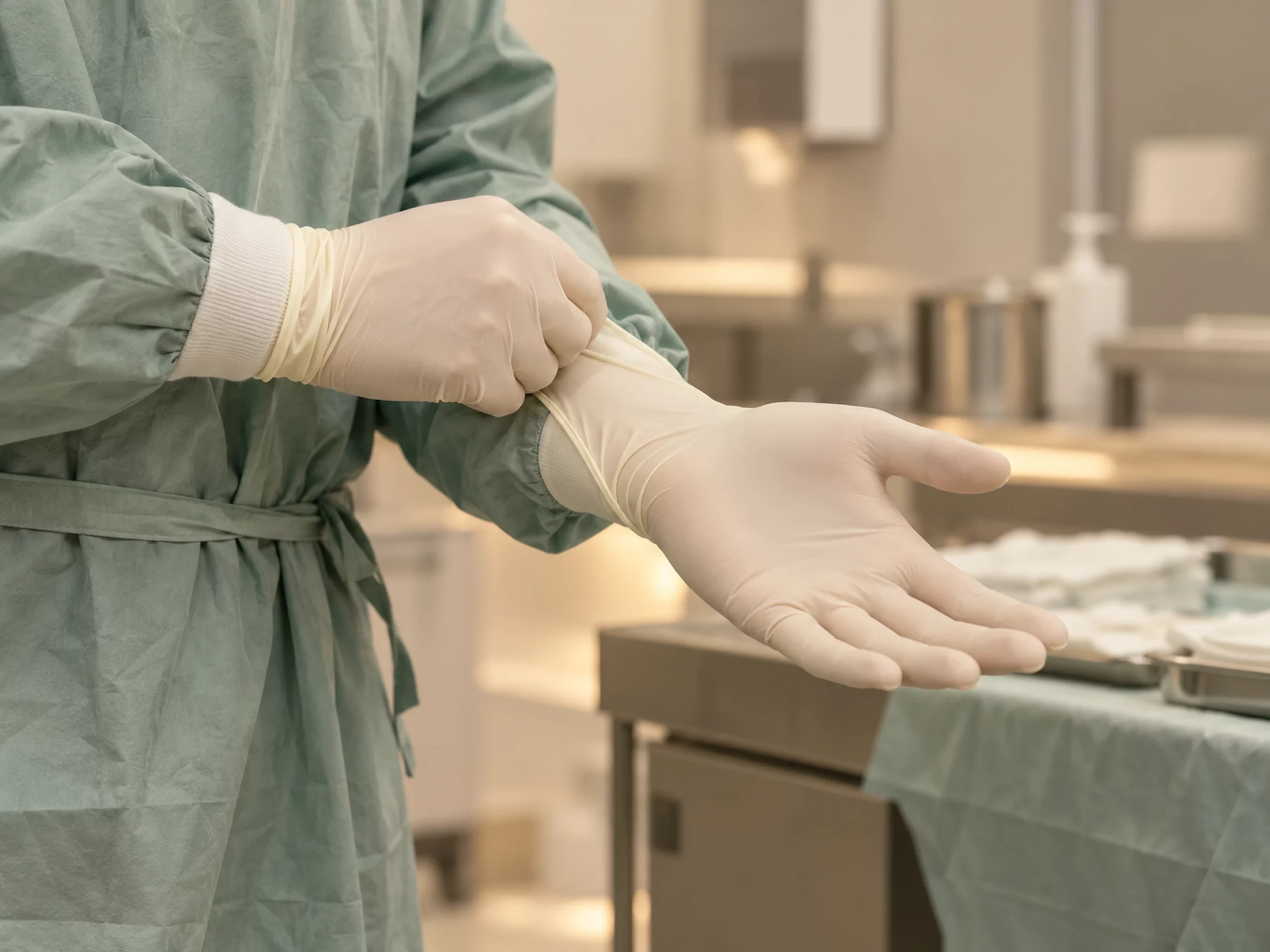
AFTER THE PROCEDURE: THE FIRST STEPS
After the operation, the team monitors your recovery, comfort, and the healing of the treated area. The duration of monitoring and your hospital stay will depend on the procedure, your health, and your level of independence.
WAKE-UP AND PAIN ROOM
The monitoring focuses particularly on your recovery after anesthesia and on pain. The team will explain how to manage it and what signs to report.
SUPPORT, WALKING AND SPLINTING
Weight-bearing may be permitted quickly, limited, or delayed depending on the movement. Crutches or a splint may be necessary. Initial mobilizations are performed according to the team's instructions.
RETURN HOME AND MONITORING
Some procedures are performed on an outpatient basis; others require hospitalization. You will receive instructions regarding dressing changes, incision care, and follow-up. Contact the team if you experience fever, significantly worsening pain, significant redness, unusual discharge or swelling, or if you notice any of the symptoms you have been given.
REHABILITATION AND RECOVERY AFTER MINIMALLY INVASIVE SURGERY
In the early stages, rehabilitation aims to manage pain and swelling, protect scars and gradually regain mobility and muscle activation adapted to the movement.
The progression may combine mobility, strengthening, balance, and movement control. The program is tailored to the operated joint and the specific instructions for the procedure; rehabilitation may be supervised by a physiotherapist.
Walking, climbing stairs, driving, and work will resume depending on your level of independence, weight-bearing limitations, and the requirements of your job. Resuming driving or work should be discussed with the team, especially if you are taking medication that impairs alertness.
Sports activities can be resumed gradually, depending on wound healing, mobility, strength, and functional tests, after medical approval. Recovery times vary from one procedure to another and from one patient to another.
Recovery depends on the procedure performed, not just the size of the incisions. A physiotherapy and rehabilitation program can be integrated into the follow-up depending on your situation.

EXPECTED RESULTS, LIMITATIONS AND RISKS
Choosing a minimally invasive approach involves weighing the expected benefits, technical constraints, and risks specific to your procedure.
OBJECTIVES AND EXPECTED RESULTS
The goal is to treat the identified lesion or problem while minimizing, when possible, damage to surrounding tissues. A shorter incision may be part of the approach, but does not guarantee a faster recovery or a precise outcome.
Boundaries
Minimally invasive surgery is not suitable for all operations. Pain, stiffness, or discomfort may persist, and recovery may take time. The procedure may also require a larger incision if the surgical conditions demand it.
Risks and complications
Like any surgical procedure, it carries risks, including infection, hematoma, complications related to anesthesia, phlebitis, wound healing problems, or persistent symptoms. Specific complications depend on the joint and the procedure performed; these are discussed before the operation.

AN INTERVENTION TAILORED TO EACH PATIENT
Two patients with a similar lesion do not necessarily require the same surgery or the same surgical approach. Functional age, anatomy, health status, activity level, and previously tried treatments all influence the choice.
The surgeon compares the clinical examination and imaging results, then explains the possible options, their limitations, and the necessary post-operative care. Minimally invasive surgery is chosen when it is suitable for the planned procedure.
FREQUENTLY ASKED QUESTIONS
Are you wondering if minimally invasive surgery is suitable for your situation?
A clinical examination and analysis of imaging help to confirm the indication and to discuss the appropriate technique.
