

Partial meniscectomy
Partial meniscectomy is a procedure performed arthroscopically. It involves removing damaged or unstable meniscal fragments that cause discomfort, while preserving the rest of the meniscus.
It is not indicated for every injury. The decision depends on the symptoms, the examination of the knee, the shape and location of the tear, treatments already tried, and the patient's goals. When meniscal repair is possible, it may be preferred to preserve the meniscus.
UNDERSTANDING PARTIAL KNEE REPLACEMENT

-
This is the area located on the inner side of the knee and is the most frequently affected by osteoarthritis. Its wear and tear can cause internal pain and gradually lead to leg deformity.
-
Located on the outer side of the knee, this compartment is less frequently affected. Its wear and tear can cause lateral pain and gradually alter the leg's alignment.
-
This joint is located between the kneecap and the femur. When it is affected, pain often appears when climbing stairs, squatting, or after sitting for a long time.

WHEN TO CONSIDER A PARTIAL MENISCECTOMY?
Partial meniscectomy may be considered when symptoms are consistent with a meniscal tear and examination confirms discomfort attributable to an unstable fragment. It is particularly relevant for certain tears that cannot be reliably repaired.
- Unstable or displaced fragment — A fragment causes snagging or limits certain knee movements.
- Injury deemed irreparable — The shape, location or quality of the fabric does not allow for a suitable repair.
- Persistent symptoms — The discomfort continues despite appropriate non-surgical treatment and a sufficient follow-up period.
- Failure or recurrence after repair — A new intervention may be discussed if symptoms persist or reappear after meniscal repair.
An abnormal image alone is not enough to decide on surgery. Meniscal tears, particularly some degenerative lesions, can be managed without surgery. The choice must weigh symptoms, examination, imaging, and other options. Removing meniscal tissue reduces the amount of tissue available to distribute knee stress and may be associated with an increased risk of long-term joint wear.
To learn more, see the page on the meniscus tear and the article Meniscus surgery : when is it necessary to operate?
PREPARE FOR THE INTERVENTION
The preparation allows us to confirm the indication, to plan the course of the arthroscopy and to organize the return home.
PRE-OPERATIVE ASSESSMENT
The surgeon reviews the symptoms, medical history, knee examination, and any available imaging studies. An anesthesia consultation and further tests may be arranged depending on the patient's health and the facility's requirements.
INTERVENTION PLANNING
The surgeon determines whether a partial resection is appropriate or if meniscal repair should be considered instead. The final decision regarding the extent of the procedure may depend on the appearance of the lesion observed during arthroscopy. To understand this approach, see the page on...’arthroscopy.
PHYSICAL PREPARATION AND PRACTICE
It can be helpful to arrange the necessary assistance for the return home and initial outings. Physiotherapy and recovery exercises are planned according to the surgeon's instructions. knee rehabilitation can be adapted to the patient's objectives and progress.
INSTRUCTIONS BEFORE THE OPERATION
Instructions regarding fasting, hygiene, admission, and medication will be provided by the medical team. Do not stop or change any medication without consulting your healthcare team.
HOW DOES THE PROCEDURE WORK?
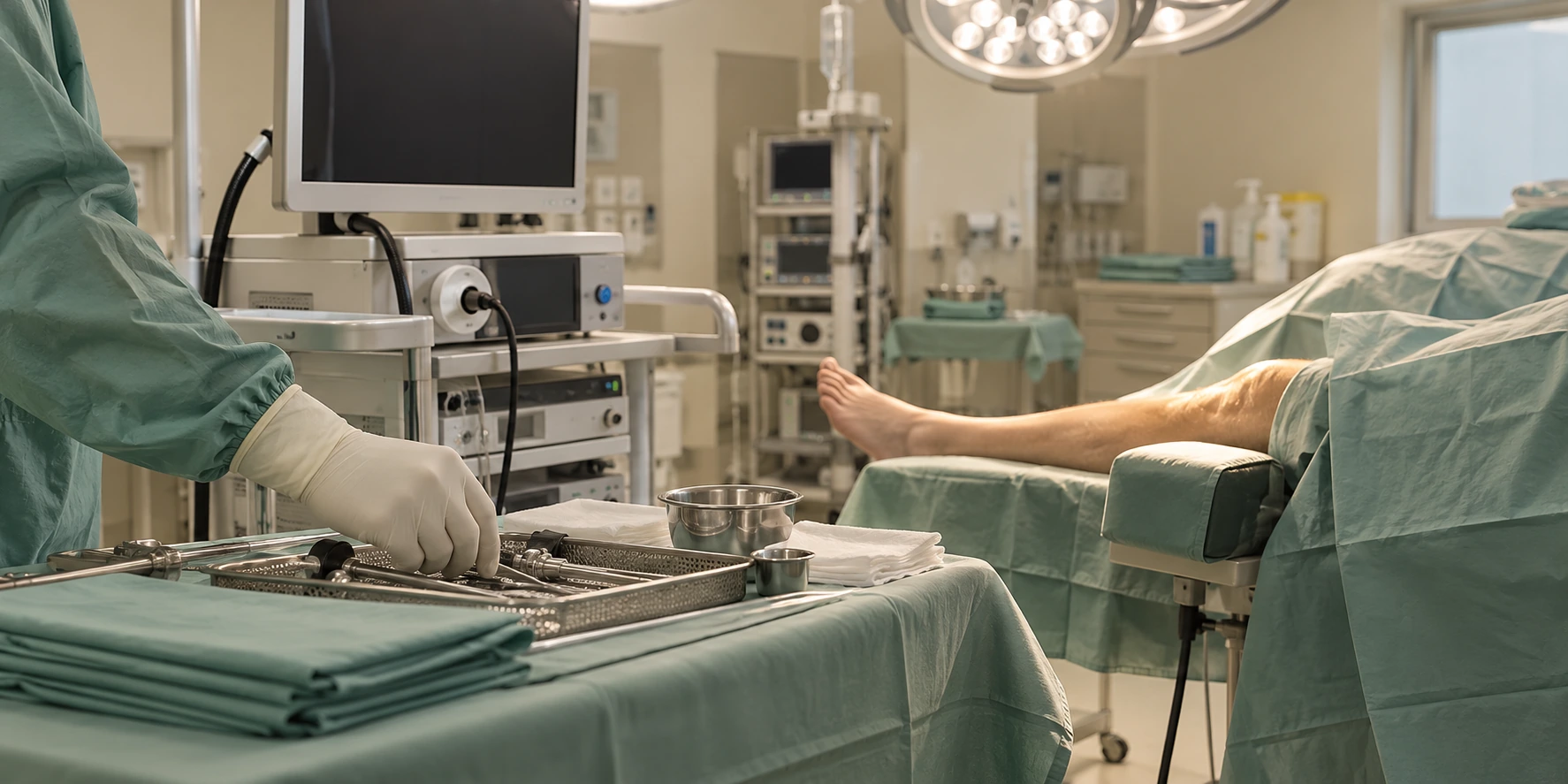
Partial meniscectomy is usually performed arthroscopically. The surgeon uses a small camera to view the inside of the knee and works through small incisions. The duration, anesthesia, and hospitalization arrangements depend on the patient and the hospital's organization.
INSTALLATION AND ANESTHESIA
The patient is positioned on their back. General or regional anesthesia may be offered after discussion with the anesthesiologist. The knee is prepared under sterile conditions. Before the incision, the team verifies the patient's identity, the side to be operated on, and the planned procedure.
ACCESS TO THE JOINT
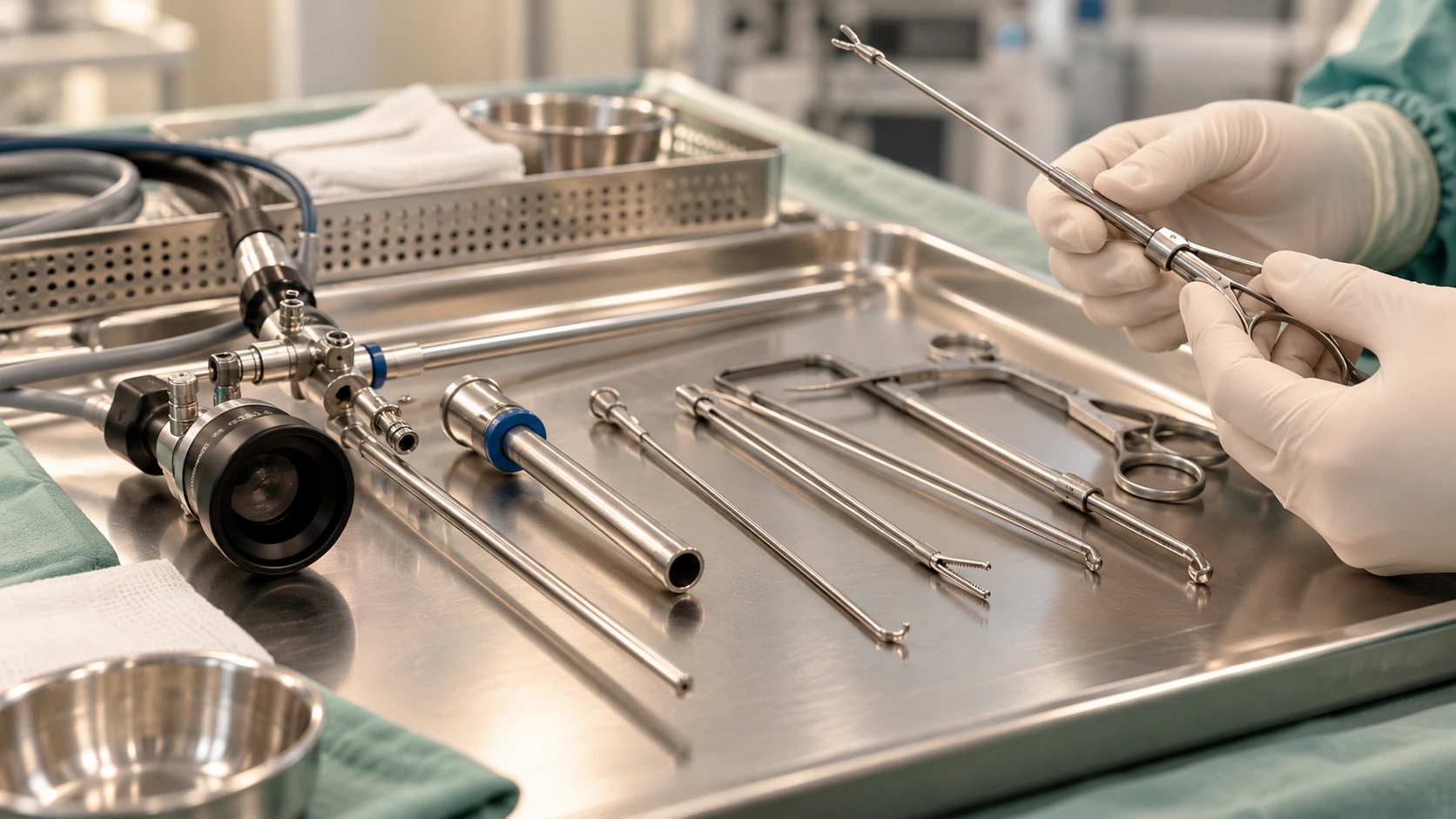
The surgeon usually makes small incisions at the front of the knee. One allows the arthroscope, a camera that transmits an image of the joint to a screen, to be inserted. Other incisions are used to insert instruments. The knee may be irrigated with sterile fluid to clear the field of vision.
MAIN SURGICAL PROCEDURE
The surgeon inspects the compartments of the knee and examines the meniscal tear. If the fragment is unstable and cannot be repaired, it is removed in small sections using appropriate arthroscopic instruments. The edges are then smoothed to leave a stable residual meniscus. The principle is to remove the minimum amount of tissue necessary: preserving the meniscus is important because resection reduces the amount of tissue involved in load distribution within the knee. If the appearance of the tear suggests that repair or another procedure is preferable, the strategy can be adjusted based on the surgical assessment and the informed consent obtained before the operation.
RESULT CONTROL
The surgeon uses arthroscopy to check the stability of the remaining edges, the mobility of the meniscus, and the absence of any loose fragments. He also inspects the surrounding structures visible within the joint and verifies that the planned procedure has been performed.
CLOSURE AND END OF THE PROCEDURE
The instruments are removed, the small incisions are closed, and then covered with a dressing. A splint is not always necessary after an isolated partial meniscectomy; its use depends on the procedure performed and the surgeon's instructions. The patient is then taken to the recovery room for observation.
The procedure is adapted to the observed lesion and aims to preserve as much healthy meniscal tissue as possible.
The procedure is often performed on an outpatient basis. The anesthesia, the exact duration, and the possibility of returning home the same day are confirmed by the medical team.
SURGICAL OPTIONS FOR THE MENISCUS
Partial meniscectomy is a selective resection performed arthroscopically. The choice depends in particular on the location, shape, and stability of the lesion.
The goal is to preserve as much of the meniscus as possible. Depending on the type of tear, meniscal repair may be preferable to partial removal.
ARTHROSCOPY
A camera and fine instruments are inserted into the joint through small incisions. This approach allows the knee to be examined and the lesion treated under direct visual control. It does not eliminate the risks associated with any intervention and does not, on its own, guarantee the disappearance of symptoms.
SELECTIVE PARTIAL RESECTION
The surgeon removes only the unstable or irreparable portion, then smooths the edges. This option may be chosen when the fragment cannot be properly repaired. The amount removed is limited as much as possible, but the removed tissue does not regenerate.
MENISCAL REPAIR
When the injury, its location, and the quality of the tissue allow, suturing may be considered to preserve the meniscus. This is generally accompanied by different, often more restrictive, rehabilitation and protective instructions. Repair is not possible for all tears.
ASSOCIATED GESTURES
Arthroscopy allows the surgeon to examine other structures of the joint. Additional procedures are only performed if indicated and planned within the treatment strategy. The specifics are discussed on a case-by-case basis.
The choice of procedure depends on the lesion and the possibility of preserving or repairing the meniscal tissue.
AFTER THE PROCEDURE: THE FIRST STEPS
After the operation, the patient is monitored in the recovery room. Returning home is often possible the same day if the medical condition and conditions of return allow.
WAKE-UP AND PAIN ROOM
The team monitors the patient's overall condition, knee, and pain, then adjusts treatment according to medical instructions. Swelling and discomfort are possible initially. Contact the team if the pain worsens significantly, or if you experience fever, significant redness, wound drainage, or unusual calf swelling.
SUPPORT, WALKING AND SPLINTING
After an isolated partial meniscectomy, weight-bearing is often permitted quickly, depending on tolerance and the surgeon's instructions. Crutches may be helpful initially, especially if pain or swelling interferes with walking. A splint is not always necessary. If another procedure is performed, the instructions may differ.
RETURN HOME AND MONITORING
Outpatient discharge is possible once the monitoring and return criteria are met. Keep the dressing in place according to the instructions provided and monitor the incisions. The initial check-up and care will be arranged by the medical team.
REHABILITATION AND RESUMPTION OF ACTIVITIES
Initially, recovery aims to reduce discomfort and swelling, protect small incisions, gradually restore mobility, and reactivate the thigh muscles. Exercises should follow the instructions of the healthcare team.
Rehabilitation then progresses towards regaining range of motion, strength, balance, and movement control. After a partial meniscectomy, weight-bearing and mobilization are often resumed sooner than after meniscal repair, but the program depends on the specific movement performed and the progress of the knee.
Walking, climbing stairs, driving, and returning to work are determined based on pain, mobility, strength, the side operated on, and the demands of the job. Sedentary work and physical work do not involve the same constraints; the return to work is discussed with the medical team.
The return to sport is gradual, depending on the recovery of mobility and strength, tolerance to exercises, and, if necessary, functional tests. The timeframe varies from person to person and may differ if another movement has been performed.
Progress is made according to the evolution of the knee and after medical validation.
See the page on the knee rehabilitation to learn more about the recovery steps.

EXPECTED RESULTS, LIMITATIONS AND RISKS
After the operation, the patient goes to the recovery room where the team monitors his general condition, his pain and the circulation of the operated limb.
The resumption of weight-bearing, exercises and length of hospital stay are adapted to the action performed, the state of health and the initial recovery.
Objectives and expected results
The procedure aims to remove an unstable fragment that may be contributing to discomfort and to allow for gradual functional recovery. The outcome depends on the lesion being treated, the condition of the cartilage and other structures of the knee, as well as individual recovery. Complete pain relief cannot be guaranteed.
Boundaries
A partial meniscectomy removes a portion of the meniscus and does not repair the removed tissue. Some pain may originate from other structures or persist despite the procedure. A more extensive resection further reduces the remaining meniscal tissue; joint wear may develop or progress over the long term.
Risks and complications
As with any arthroscopy, complications are possible, although rare: infection, hematoma, persistent pain or stiffness, reaction to anesthesia, or blood clot. Persistent symptoms may lead to further evaluation and, rarely, another procedure.
The expected benefit must be assessed in light of the amount of meniscus to be removed, other options, and the risks specific to each patient.

A CARE APPROACH TAILORED TO EACH PATIENT
Two people with a similar meniscal tear on an image do not necessarily require the same treatment. Symptoms, clinical examination, and impairment in daily life are essential when discussing intervention.
THE Dr. Benoît Coulin It takes into account age, knee anatomy, the quality and extent of the injury, activity level, occupation, associated injuries, previous treatments, and personal goals. The strategy may also depend on the possibility of repairing the meniscus rather than removing part of it.
The technique, timing of the intervention, and recovery program are determined based on this assessment. Treatment may include a non-surgical option, repair, or a partial meniscectomy.
«"The choice of procedure aims to treat the lesion responsible for the symptoms while preserving the meniscus as much as possible."»
FREQUENTLY ASKED QUESTIONS
Does your knee require a partial meniscectomy?
A clinical examination and imaging analysis will help to discuss the origin of your symptoms and determine whether a partial meniscectomy, meniscal repair, or other treatment is appropriate.
