MENISCUS TEAR
A meniscus tear can appear suddenly after a knee twist or develop gradually with wear and tear. However, pain, swelling, catching, or locking does not always mean that surgery is necessary.
An accurate diagnosis makes it possible to identify the type of lesion, its actual impact and the most appropriate treatment.
UNDERSTANDING KNEE OSTEOARTHRITIS
THE INTERNAL COMPARTMENT
This is the area located on the inner side of the knee and is the most frequently affected by osteoarthritis. Its wear and tear can cause internal pain and gradually lead to leg deformity.
THE EXTERNAL COMPARTMENT
Located on the outer side of the knee, this compartment is less frequently affected. Its wear and tear can cause lateral pain and gradually alter the leg's alignment.
THE BALL JOINT
This joint is located between the kneecap and the femur. When it is affected, pain often appears when climbing stairs, squatting, or after sitting for a long time.
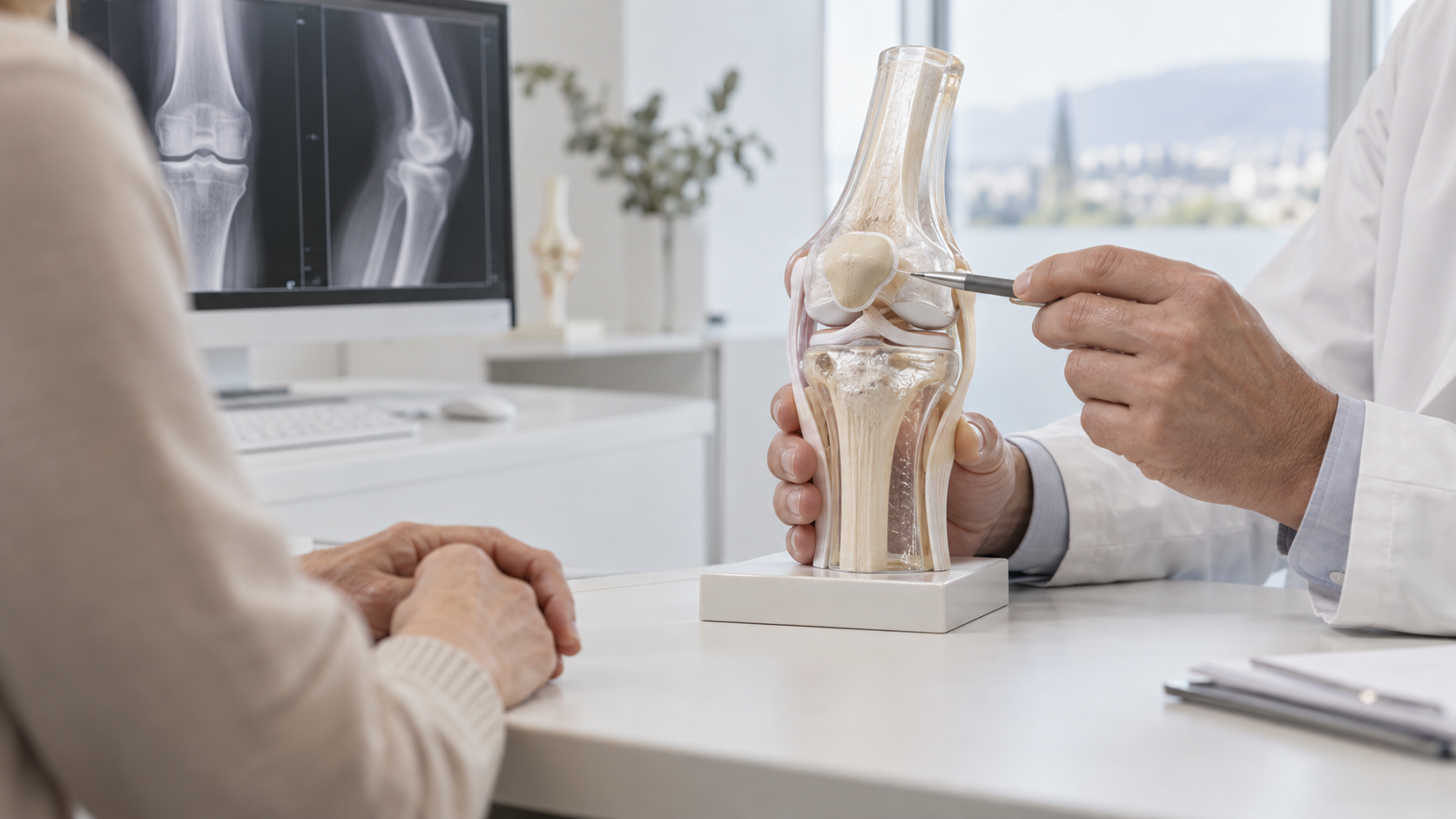
understanding the menisci
Each knee has two menisci, located between the femur and the tibia. These fibrocartilaginous structures help to distribute stress, absorb impacts, and stabilize the joint.
A meniscus tear can affect the medial or lateral meniscus. Its location, shape, and origin influence the symptoms as well as the treatment options.

RECOGNIZING THE SYMPTOMS
The symptoms of a meniscus tear They vary depending on their origin, location, and stability. They can appear immediately after a knee twist or develop gradually, without any specific trauma.
- Localized pain: It is usually felt on the inner or outer side of the knee, at the joint line.
- Pain during rotations: Pivoting, squatting, standing up or suddenly changing direction can aggravate the pain.
- Swelling : The knee may swell a few hours after the injury or after prolonged activity.
- Snaps or clanging noises: Certain movements can cause a feeling of catching, with or without a noise.
- Loss of mobility: The patient may experience difficulty fully bending or straightening the knee.
- Knee locking: A displaced meniscal fragment can prevent full extension of the joint. A truly locked knee should be evaluated promptly.
The presence of a meniscus lesion on an MRI does not necessarily mean that it is responsible for the pain.
WHY DOES OSTEOARTHRITIS APPEAR?
Knee osteoarthritis is not solely related to age. Several factors can weaken the joint, increase the stress on the cartilage, or promote premature wear.
OLD TRAUMAS
A fracture, ligament rupture, or meniscal tear can alter the function of the knee and promote osteoarthritis several years later.
LEG AXIS
A leg deviation can concentrate stress on a specific part of the knee and accelerate wear and tear on that compartment.
JOINT OVERLOAD
Being overweight, certain professional activities or repeated stresses increase the strain on the joint.
MUSCLE WEAKNESS AND INACTIVITY
Insufficiently strengthened muscles are less effective at protecting the knee. Appropriate physical activity, on the other hand, helps maintain its stability and mobility.
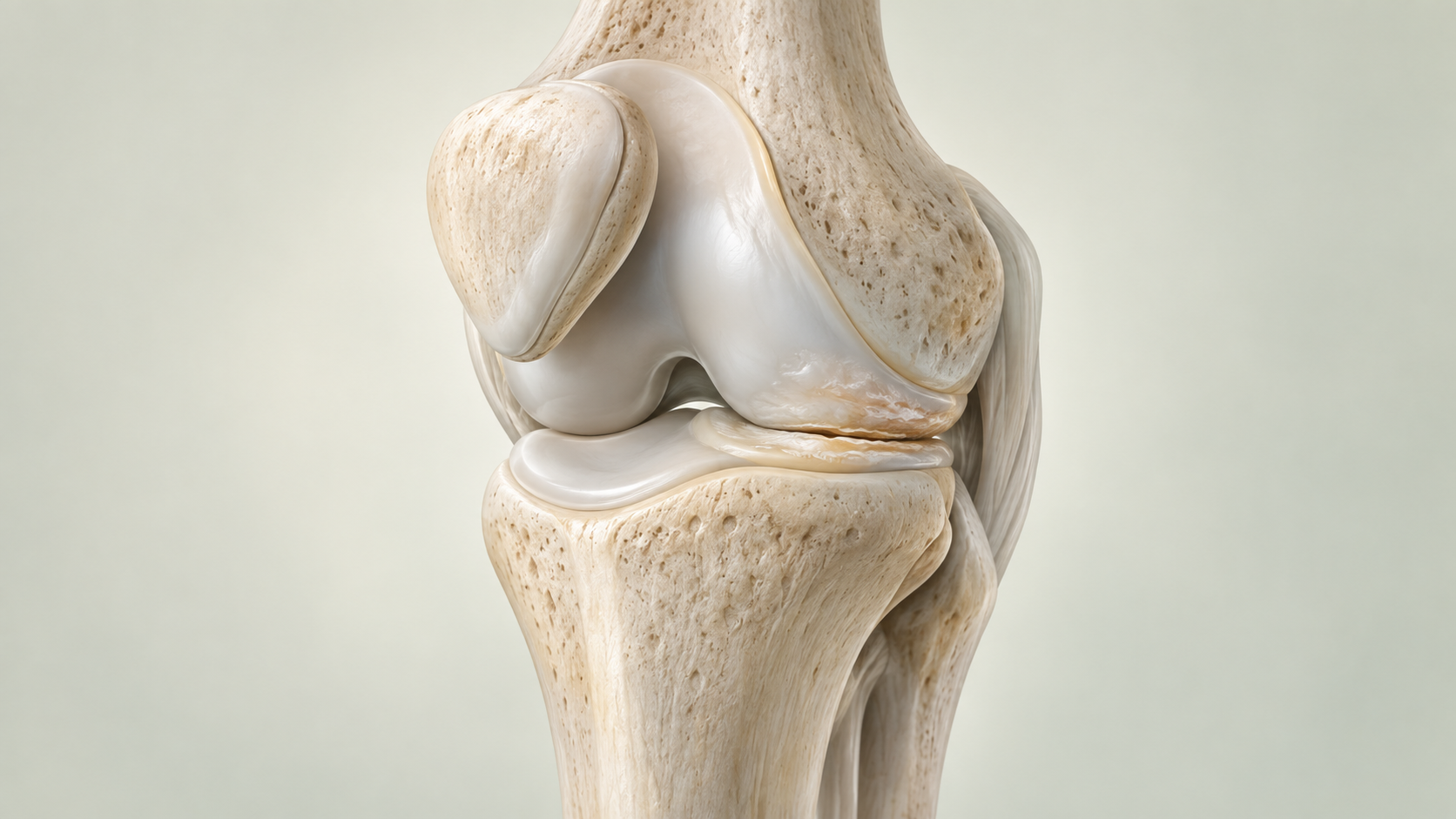
TRAUMATIC OR DEGENERATIVE INJURY?
Not all meniscal tears occur under the same circumstances. Some appear suddenly on a previously healthy meniscus, while others develop gradually in tissue weakened by time.
TRAUMATIC INJURY
It usually occurs after a twisting motion of the knee, often when the foot remains stuck on the ground. It more frequently affects young and athletic people.
The pain can be sudden and accompanied by swelling, a popping sound, or locking. Ligament injury, particularly to the anterior cruciate ligament, may also be present.
THE DEGENERATIVE LESION
It appears gradually as the meniscal tissue becomes more fragile. A simple movement, squatting, or standing up can then trigger the symptoms.
These injuries are more common from the age of 40 or 50 and can be associated with cartilage wear. Therefore, the pain is not always caused solely by the meniscus.
Distinguishing between a traumatic injury and a degenerative injury is essential, as their treatment is not the same.
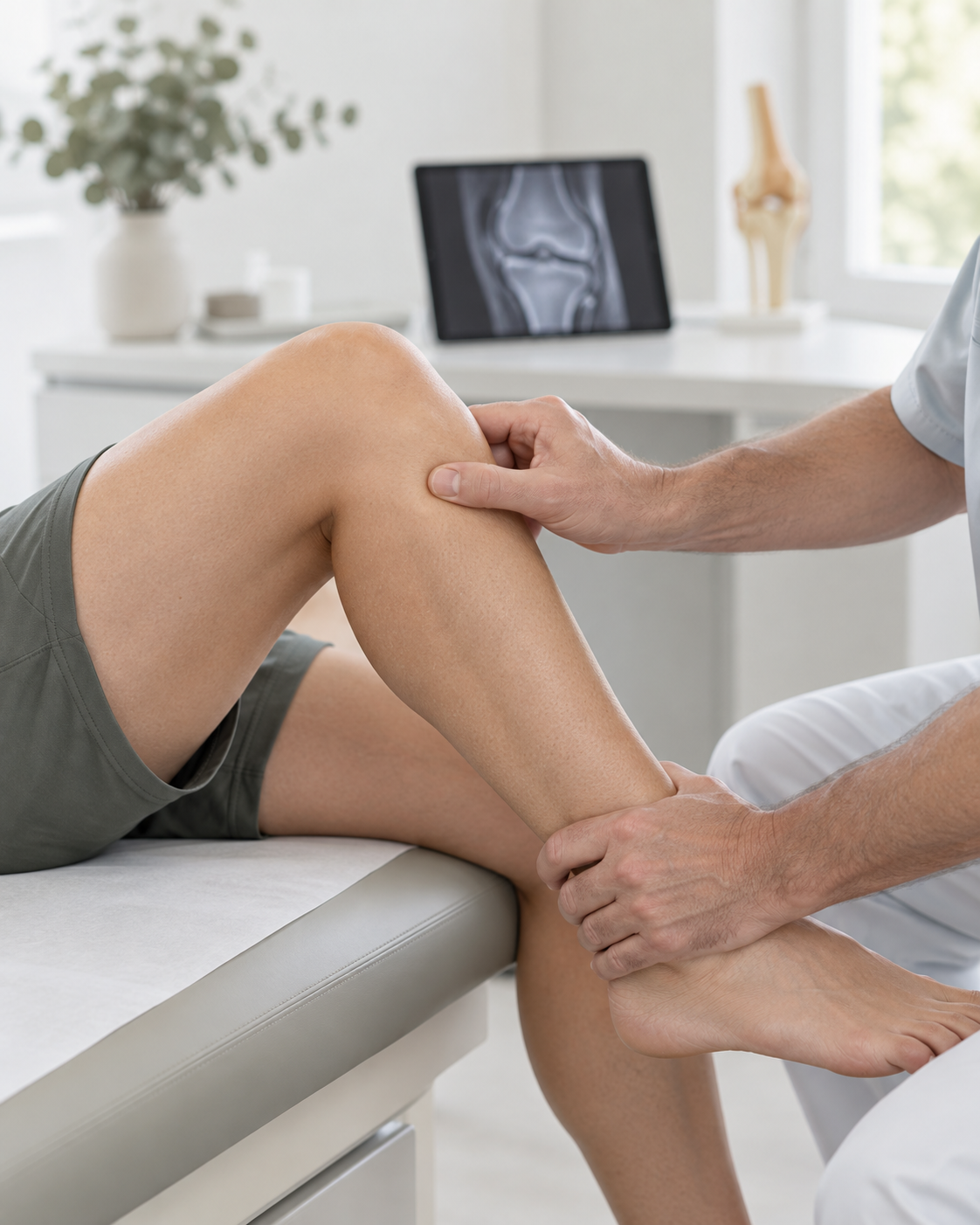
MAKE THE RIGHT DIAGNOSIS
The diagnosis of a meniscus tear is not based solely on an MRI. It takes into account the circumstances of the onset of pain, the symptoms experienced, the examination of the knee, and the overall condition of the joint.
01 — THE INTERROGATION
The doctor looks for any twisting movement, the appearance of swelling, the location of the pain, and the presence of any snagging or actual blockage.
02 — THE CLINICAL EXAMINATION
Knee mobility, stability, and painful areas are assessed. Certain movements are used to test the menisci and identify any characteristic pain.
03 — X-RAYS
Weight-bearing X-rays allow for the evaluation of leg alignment, joint space, and any associated osteoarthritis. They do not directly show the meniscus, but provide important information about the entire knee.
04 — MRI
MRI allows observation of the menisci, cartilage, ligaments, and bone. It can specify the location and shape of the lesion, but its result must always be interpreted in conjunction with the symptoms and clinical examination.
A meniscal abnormality visible on an MRI may be old and not responsible for the current pain.
A CONSERVATIVE TREATMENT IS OFTEN POSSIBLE
Not all meniscus tears require surgery. When the knee is not locked and the tear appears stable, conservative treatment may be the first-line option.
It generally relies on a temporary adaptation of activities, a reduction in painful movements, and a physiotherapy program. The goal is to regain mobility, strengthen the muscles that stabilize the knee, and gradually resume activities.
Pain relievers or anti-inflammatory medication may sometimes be considered depending on the patient's medical condition. Injections do not repair the meniscus, but may be discussed when the pain is also related to inflammation or associated joint damage.
The progress should be regularly reassessed. Gradual improvement often makes intervention unnecessary, particularly in the case of degenerative lesions.
ADAPT THE ACTIVITY
Temporarily reduce pivoting movements, deep bending, and activities that trigger pain.
RESTORE MOBILITY
Gradually preserve knee flexion and extension without causing a significant reaction.
STRENGTHEN THE KNEE
Work the muscles of the thigh, hip and trunk to improve lower limb control.
RESUME GRADUALLY
Reintroduce walking, cycling, running or sport according to the patient's symptoms and goals.

WHEN IS MENISCUS SURGERY NECESSARY?
The decision to operate depends more on the symptoms and type of lesion than on its mere presence on the MRI.
Intervention may be considered when an unstable meniscal fragment causes repeated locking or catching, when the knee remains truly locked, or when pain persists despite well-conducted conservative treatment.
In a young person, a recent traumatic injury located in an area likely to heal may justify repair in order to preserve the meniscus.
However, a degenerative lesion associated with osteoarthritis does not systematically benefit from arthroscopy. In this situation, treatment must consider the entire joint and not just the meniscus.
MECHANICAL LOCK
The knee can no longer be fully extended due to a displaced fragment. This situation requires prompt evaluation.
UNSTABLE TRAUMATIC INJURY
A recent tear can cause pain, snagging, and significant discomfort in an active person.
PERSISTENCE OF SYMPTOMS
Intervention may be discussed when mechanical pain persists despite physiotherapy and activity adjustments.
ASSOCIATED INJURY
Meniscal injury may be associated with ligament rupture or cartilage damage, requiring a comprehensive strategy.
PRESERVE THE MENISCUS WHENEVER POSSIBLE
When surgery is indicated, it is usually performed arthroscopically using a camera and small instruments inserted into the knee. Two main procedures can be considered.
01 — THE MENISCAL SUTURE
Suturing involves repairing the tear in order to preserve the meniscus. It is preferred when the location, shape, and age of the injury offer sufficient potential for healing.
Recovery is more gradual, as the meniscus needs time to heal. Temporary limitation of weight-bearing or flexion may be necessary depending on the repair performed.
02 — PARTIAL MENISCECTOMY
When the tear cannot be repaired, only the unstable and damaged portion of the meniscus can be removed. The surgeon then aims to preserve as much functional meniscal tissue as possible.
Initial recovery is generally faster than after suturing. However, removing part of the meniscus reduces its ability to distribute stress and can promote long-term joint wear.
Preserving the meniscus is a priority when the lesion can be repaired.
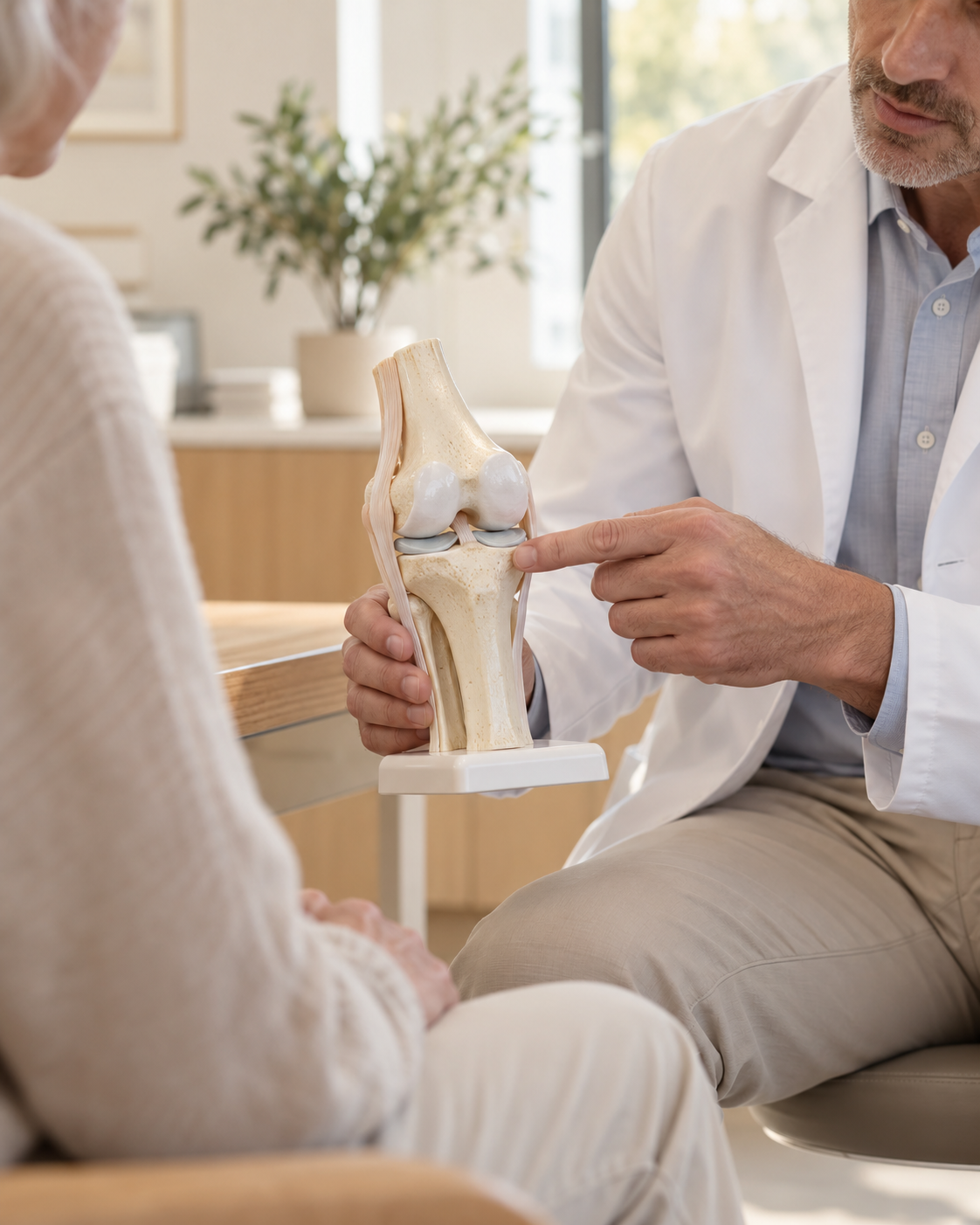
FREQUENTLY ASKED QUESTIONS

RETURN TO AN ACTIVITY WITH CONFIDENCE
Recovery depends on the type of injury, the treatment performed, and the activities the patient wishes to resume. It is not the same after conservative treatment, a partial meniscectomy, or meniscal repair.
- After conservative treatment, recovery depends primarily on the reduction of pain, the recovery of mobility and muscle control.
- After a partial meniscectomy, weight-bearing and mobility can usually be resumed quickly, depending on the swelling and pain.
- After meniscal repair, recovery is more gradual to protect the repair. Instructions regarding weight-bearing, flexion, and return to sport vary depending on the location of the injury and the technique used.
Physiotherapy supports the recovery of mobility, strength, balance, and confidence in the knee. The return to sports is determined based on functional criteria, not solely on a timeframe.
The absence of pain at rest is not enough: the knee must also regain strength, mobility and stability.
A STRATEGY ADAPTED TO EACH INJURY
There is no single treatment for all meniscus tears. Two tears that appear similar can cause very different symptoms and require different approaches.
Dr. Benoît Coulin takes into account the patient's age, the mechanism of injury, knee stability, cartilage condition, activities performed, and personal goals.
When possible, treatment prioritizes preserving the meniscus and the natural joint. Surgery is considered when it offers a real benefit, particularly in the presence of a repairable traumatic injury, an unstable fragment, or a mechanical blockage.
«"Preserving the meniscus whenever possible helps to better protect the joint in the long term."»

KNEE PAIN, IMPACT OR LOCKING?
A clinical examination combined with appropriate imaging can determine if the meniscus is actually responsible for the symptoms and choose the most appropriate treatment.