

CHRONIC KNEE INSTABILITY
Chronic knee instability manifests as a recurring sensation of giving way or a lack of confidence in the joint. It can interfere with walking, climbing stairs, pivoting, or resuming sports activities.
It sometimes appears after a ligament injury, but this sensation can have several causes. An examination allows for the assessment of the ligaments, menisci, and muscle control of the knee. Treatment depends on the cause and may involve rehabilitation, activity modifications, or, in some cases, surgery.
UNDERSTANDING KNEE INSTABILITY

RECOGNIZING THE SIGNS OF INSTABILITY
Chronic knee instability can manifest during certain movements or activities. Symptoms vary depending on the cause and are not sufficient on their own to establish a diagnosis.
- The knee seems to give way or buckle.
- The person lacks confidence in their support.
- Pivots and changes of direction are difficult.
- Walking downhill or on uneven terrain can become uncomfortable.
- Pain or swelling may occur after an episode of withdrawal.
HOW DOES CHRONIC KNEE INSTABILITY OCCUR?
Instability can persist after an injury or appear following several episodes of instability. The circumstances and medical history help guide the assessment.
AFTER A LIGAMENT RUPTURE
An injury to the anterior cruciate ligament, posterior cruciate ligament, or a collateral ligament can compromise knee stability. The discomfort experienced varies depending on the ligament involved and the individual's activities.
AFTER A SPRAINED KNEE
A sprain can affect one or more ligaments. If symptoms persist or if the knee gives way again, an examination will assess stability and recovery.
→ Understanding a posterior cruciate ligament rupture
AFTER INCOMPLETE REHABILITATION
Knee strength, balance, and control may remain impaired after an injury. Appropriate rehabilitation aims to improve these functions and support a gradual return to activities.
DURING REPEATED EPISODES OF THEFT
Repeated episodes can put stress on other structures of the knee. Any associated pain, swelling, or mechanical discomfort should be considered in the assessment.
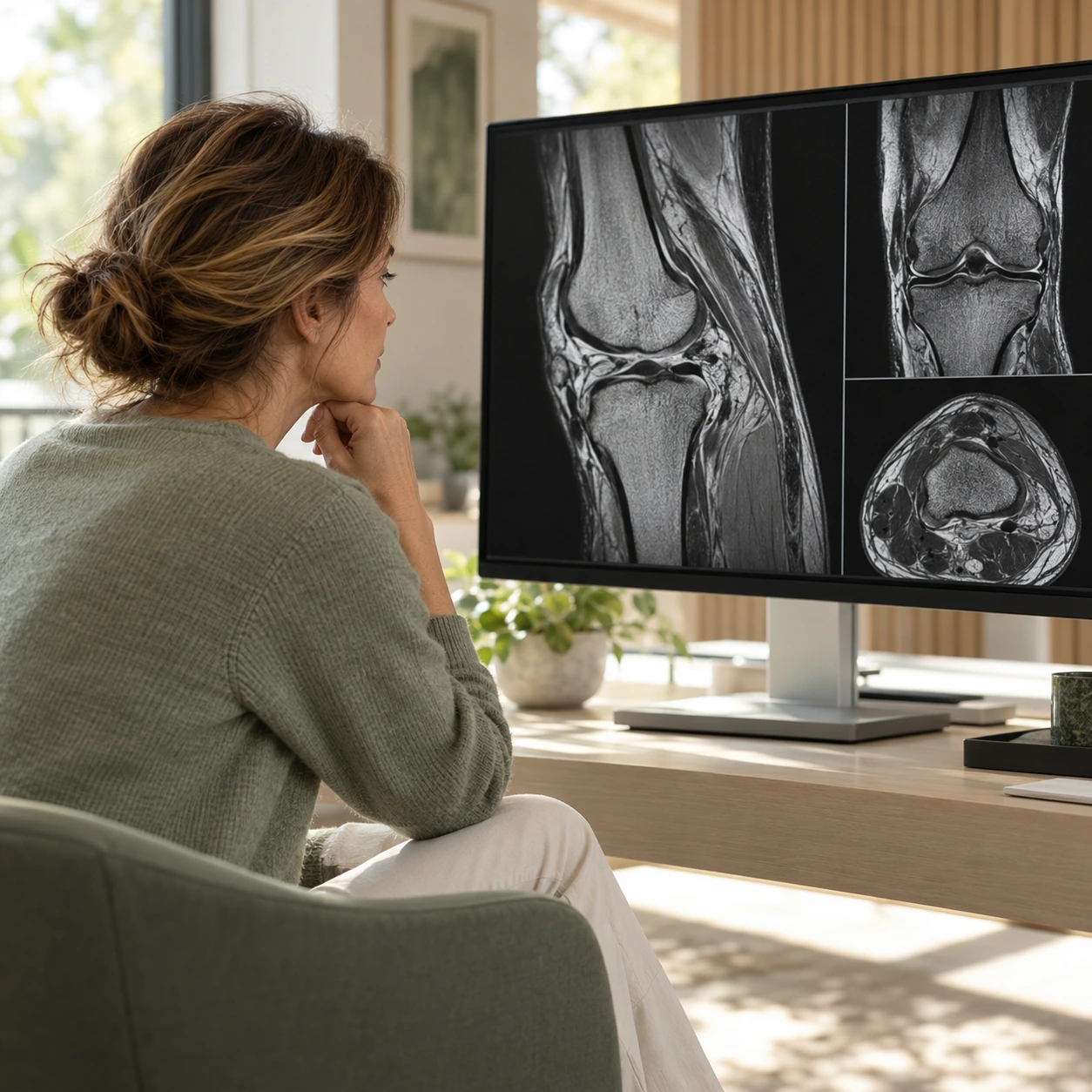
MAKE THE RIGHT DIAGNOSIS
The doctor inquires about the circumstances of the episodes, previous injuries, and the movements that trigger the feeling of instability. The clinical examination assesses the mobility, ligament stability, and function of the knee.
Imaging tests may be recommended depending on the results of the examination. These tests help to determine the condition of the ligaments, menisci, and other structures; their results are interpreted in relation to the symptoms.
RELIEVING KNEE PAIN WITHOUT SURGERY
Depending on the cause of the instability, non-surgical treatment may be recommended. Rehabilitation may aim to strengthen muscles, improve balance, and regain better knee control during movement.
The exercises and activities are tailored to the individual's symptoms and goals. Progress depends on regained stability and the knee's response.

WHEN TO CONSIDER SURGERY?
Surgery may be considered when instability persists despite appropriate management, limits desired activities, or is related to a confirmed ligament injury. The decision takes into account the cause, examination of the knee, associated injuries, and the patient's expectations. A feeling of instability alone does not necessarily mean that surgery is required.
TREAT THE AFFECTED LIGAMENT
If ligament damage is the cause of the instability, treatment depends on the affected ligament and the degree of functional impairment. For some anterior cruciate ligament ruptures, reconstruction may be considered.
IMPROVE ROTARY CONTROL
When buckling occurs during pivots or changes of direction, the rotational control of the knee is assessed. The strategy depends on the stability of the joint and the activities the patient wishes to resume.
ADDRESSING ASSOCIATED INJURIES
Damage to the meniscus or another structure can alter the symptoms and treatment. These lesions are assessed as part of a comprehensive knee evaluation.
RESUME ACTIVITIES AFTER CHRONIC KNEE INSTABILITY
Resumption of activity is gradual, depending on symptoms, stability, and the intended activities. The requirements differ for walking, climbing stairs, and pivoting sports.
After ligament reconstruction, rehabilitation accompanies the various stages of recovery. The return to activity is adapted to each patient's functional progress.
→ Discover the stages of rehabilitation after ligament reconstruction


A CARE APPROACH TAILORED TO EACH PATIENT
Chronic knee instability does not manifest itself in the same way in everyone. Dr. Benoît Coulin assesses knee stability, any associated injuries, and the activities the patient wishes to resume.
Treatment may be conservative or surgical, depending on the situation. Treatment goals and recovery steps are discussed with the patient.
«"Treatment depends on the cause of the instability, the stability of the knee, and the activities the patient wishes to resume."»
FREQUENTLY ASKED QUESTIONS
DO YOU WANT TO BETTER UNDERSTAND YOUR KNEE INSTABILITY?
A clinical examination allows us to assess knee stability and to look for possible causes of episodes of buckling.
