

RUPTURE OF THE POSTERIOR CRUCIATE LIGAMENT (PCL)
THE posterior cruciate ligament (PCL) It is located in the center of the knee, behind the anterior cruciate ligament. It helps prevent the tibia from sliding backward relative to the femur.
A rupture of the shinbone often occurs after a direct blow to the front of the tibia when the knee is bent, or after a fall onto a flexed knee. An isolated rupture can sometimes be treated without surgery. The decision depends on the examination of the knee, imaging, any associated injuries, and the patient's level of discomfort.
UNDERSTANDING THE POSTERIOR CRUCIATE LIGAMENT
The PCL connects the femur to the tibia and is located behind the ACL. It contributes to knee stability, particularly by limiting the posterior displacement of the tibia. Its rupture can occur in isolation or in association with other ligament or bone injuries.
RECOGNIZING THE SYMPTOMS
Symptoms of a PCL tear vary depending on the severity of the injury. Pain or swelling may appear after the trauma. Some people primarily experience discomfort when bending the knee or a feeling of instability, especially during certain activities.
Possible signs include:
- knee pain after a shock or fall; ;
- swelling, sometimes moderate; ;
- discomfort when bending or bearing weight; ;
- a feeling of instability or lack of confidence in the knee; ;
- a difficulty in resuming certain activities.
These symptoms are not sufficient to confirm a rupture: the diagnosis is based on clinical examination and, if necessary, imaging.

HOW DOES AN ACL RUPTURE OCCUR?
An ACL rupture often occurs when a movement puts significant stress on the knee. It can happen without direct contact or following an impact. The assessment also looks for any associated injuries.
Direct impact to the shin
An impact on the front of the tibia when the knee is bent can push it backwards and stress the PCL.
Falling onto a bent knee
Contact of the bent knee with the ground can transmit a significant force to the joint.
Sports injury
A fall, contact or forced movement during a sporting activity can cause an injury to the PCL.
Major trauma
Some injuries can affect several ligaments or result in a fracture. A complete examination then allows for an assessment of the entire knee.
MAKE THE RIGHT DIAGNOSIS
01 — Reconstructing the trauma
The doctor inquires about the circumstances of the injury, the symptoms and their evolution.
02 — Examine the knee
The clinical examination assesses the stability and displacement of the tibia. It also allows for the detection of other injuries.
03 — Complete the assessment with imaging
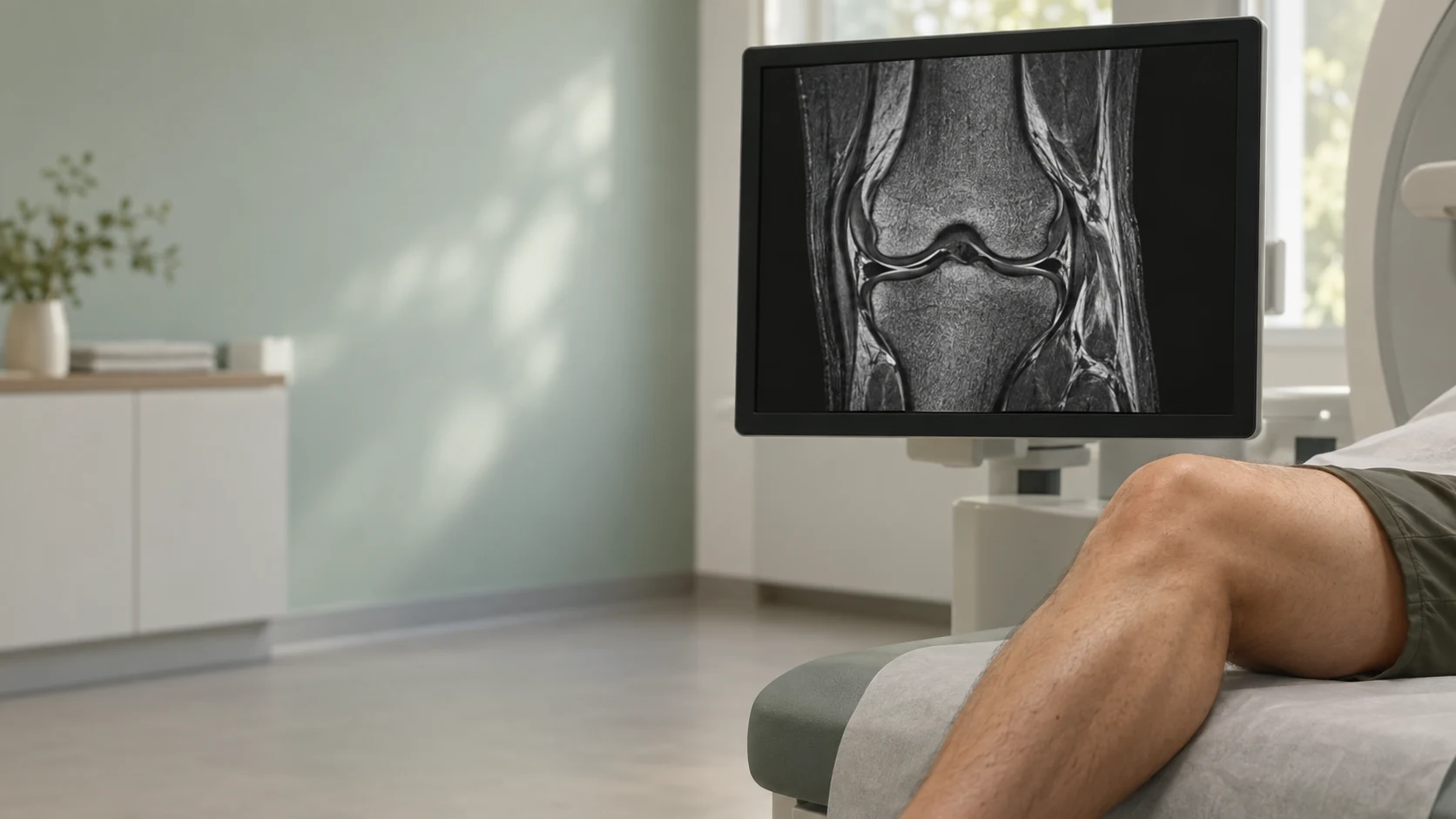
An X-ray can help locate a fracture or bone fragment. An MRI can be used to examine the PCL and surrounding structures, including other ligaments and the menisci.
RELIEVING KNEE PAIN WITHOUT SURGERY
An isolated PCL rupture can sometimes be treated without surgery. The choice depends on the symptoms, knee stability, and the results of the assessment.
Temporarily adapt activities
Movements or activities that trigger pain or instability can be modified during recovery.
Protect the knee if necessary
An orthosis may be prescribed in certain situations. Its usefulness and duration depend on the injury.
Follow a progressive rehabilitation
Physiotherapy aims to restore mobility, strengthen muscles, and improve knee control. The program is tailored to the progression of the injury. To learn more, see our page on knee rehabilitation.
Reassess stability
Medical monitoring allows us to check the progress of the knee and to adapt the strategy if symptoms persist.

WHEN TO CONSIDER SURGERY?
Surgery may be considered if multiple ligaments are affected, if a bone fragment has shifted, or if bothersome instability persists despite appropriate treatment. It is not always necessary for an isolated PCL rupture.
To fix a bone fragment
If the ligament has torn off a displaced bone fragment, its fixation may be considered depending on the results of the assessment.
Rebuild the LCP
In certain situations, ligament reconstruction may be discussed to treat persistent instability.
Address other injuries
When several structures of the knee are affected, the strategy takes into account their entirety and their impact.
RESUME BUSINESS AFTER A BREAK IN LCP
Recovery is gradual, depending on pain levels, regained mobility, strength, and stability. The pace depends on the severity of the injury, the treatment received, and the intended activities.
For sports, the decision is made with the medical and rehabilitation team. It takes into account the function of the knee, and not just the time elapsed since the injury.


A CARE APPROACH TAILORED TO EACH PATIENT
Clinical examination, imaging, symptoms, and activity goals are all taken into account to determine the treatment plan. Dr. Benoît Coulin assesses each situation to discuss the most appropriate treatment.
«"The choice of treatment depends on the stability of the knee and any associated injuries. A rupture of the posterior cruciate ligament does not automatically mean that surgery is necessary."»