

PATELLAR CHONDROPATHY
There chondropathy patellae This refers to an alteration of the cartilage located on the back of the kneecap. It can be superficial or deeper and is accompanied by pain at the front of the knee.
The discomfort depends on the condition of the cartilage, but also on how the kneecap moves and the stresses placed on the joint. Treatment aims to improve knee function and reduce symptoms.
UNDERSTANDING PATELLAR CHONDROPATHY

RECOGNIZING THE SYMPTOMS
Patellar chondropathy can cause pain at the front of the knee, around or behind the kneecap. It often appears during activities that put stress on the bent knee, but these symptoms can also have other causes.
- Pain on the stairs: Going down the stairs can be particularly uncomfortable.
- Discomfort while sitting: The knee can become painful after being bent for a long time.
- Pain when bending: Squatting, kneeling or getting up from a chair can trigger symptoms.
- Cracking or rubbing sensation: They can accompany the movements, without by themselves indicating the severity of the injury.
Pain around the kneecap alone is not enough to confirm chondropathy. An examination is necessary to distinguish it from other causes of anterior knee pain.
WHY DOES THE PATELLAR CARTILAGE DETERIORATE?
Patellar chondropathy can be caused by several factors. The assessment aims to understand the stresses exerted on the patella and to check if other structures are involved.
REPEATED OVERLOAD
Running, jumping, repeated bending or too rapid an increase in training can put significant stress on the joint between the kneecap and the femur.
TRAIL OF THE PATTLE
Specific patellar displacement or guidance can alter pressure distribution. Leg alignment and knee function are taken into account in the assessment.
TRAUMA OR INSTABILITY
A direct impact, a dislocation, or episodes of instability can damage the patellar cartilage. The doctor will also look for any associated injuries.
JOINT EVOLUTION
Over time, wear and tear can affect the cartilage of the patella and trochlea. When the damage affects a larger part of the joint, it may correspond to patellofemoral osteoarthritis.
MAKE THE RIGHT DIAGNOSIS
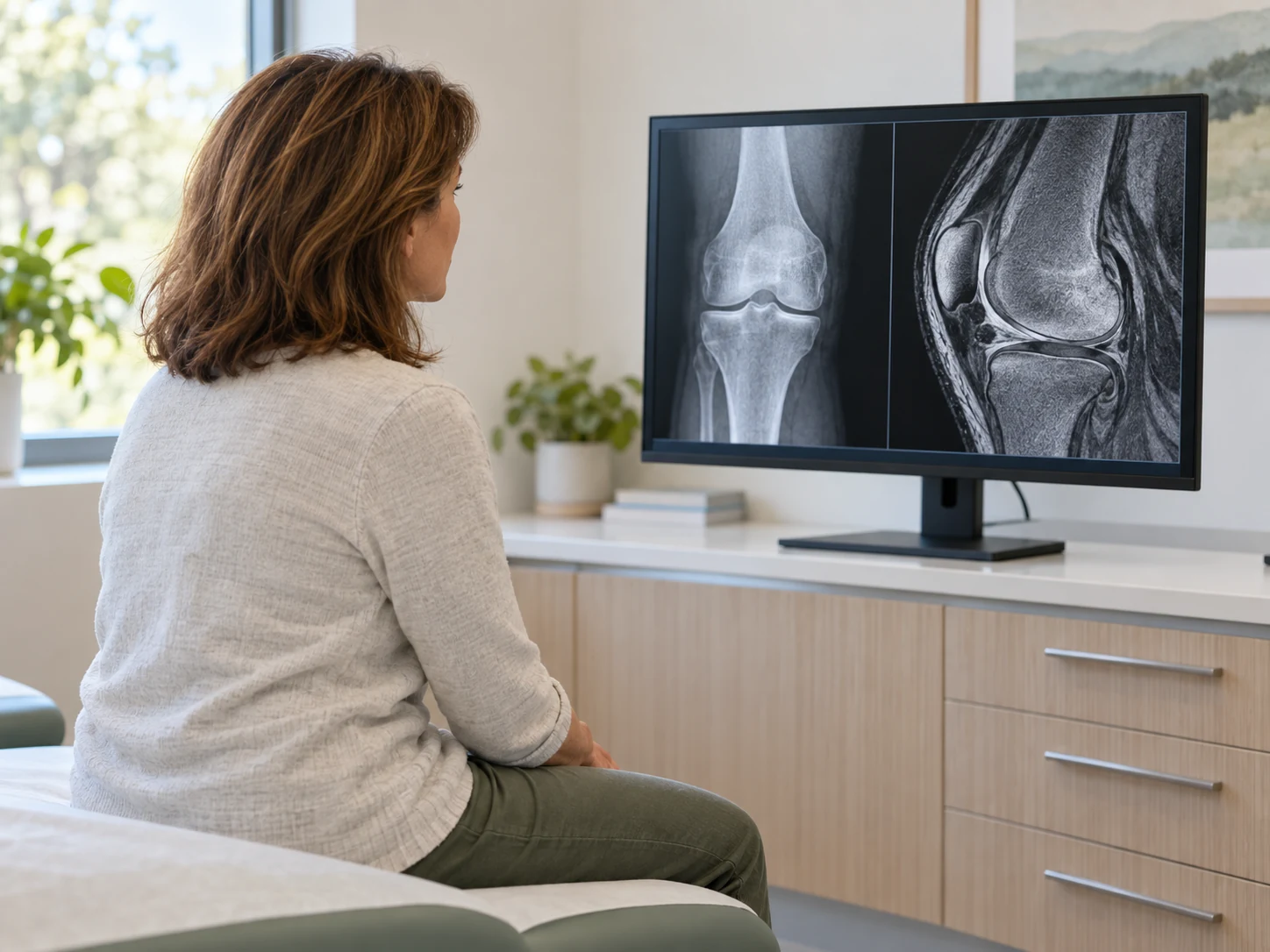
Diagnosis is based on symptoms, examination of the knee, and, if necessary, imaging studies. Any cartilage abnormality visible on MRI should be considered in relation to the reported discomfort.
01 — THE CLINICAL EXAMINATION
The doctor will determine the circumstances surrounding the onset of the pain, examine the mobility and stability of the knee, and observe the movement of the kneecap. Certain movements, such as squatting or stepping down a step, can help reproduce the discomfort.
02 — X-RAYS
X-rays are used to assess, among other things, the alignment and articulation between the kneecap and the femur. They can help to detect signs of osteoarthritis or certain anatomical abnormalities.
03 — SUPPLEMENTARY IMAGING
An MRI may be ordered when symptoms persist or if the doctor needs to assess the condition of the cartilage and surrounding structures. The results are interpreted in conjunction with the clinical examination and the patient's history of pain.
An image showing chondropathy alone does not determine the treatment. Pain, activities, and knee function are also important factors.
RELIEVING KNEE PAIN WITHOUT SURGERY
In most cases, treatment begins with non-surgical measures. The program is tailored to the symptoms, activities, and factors that may perpetuate the pain.
The goal is to gradually regain better knee function, without imposing a systematic cessation of all activity.
PHYSIOTHERAPY AND STRENGTHENING
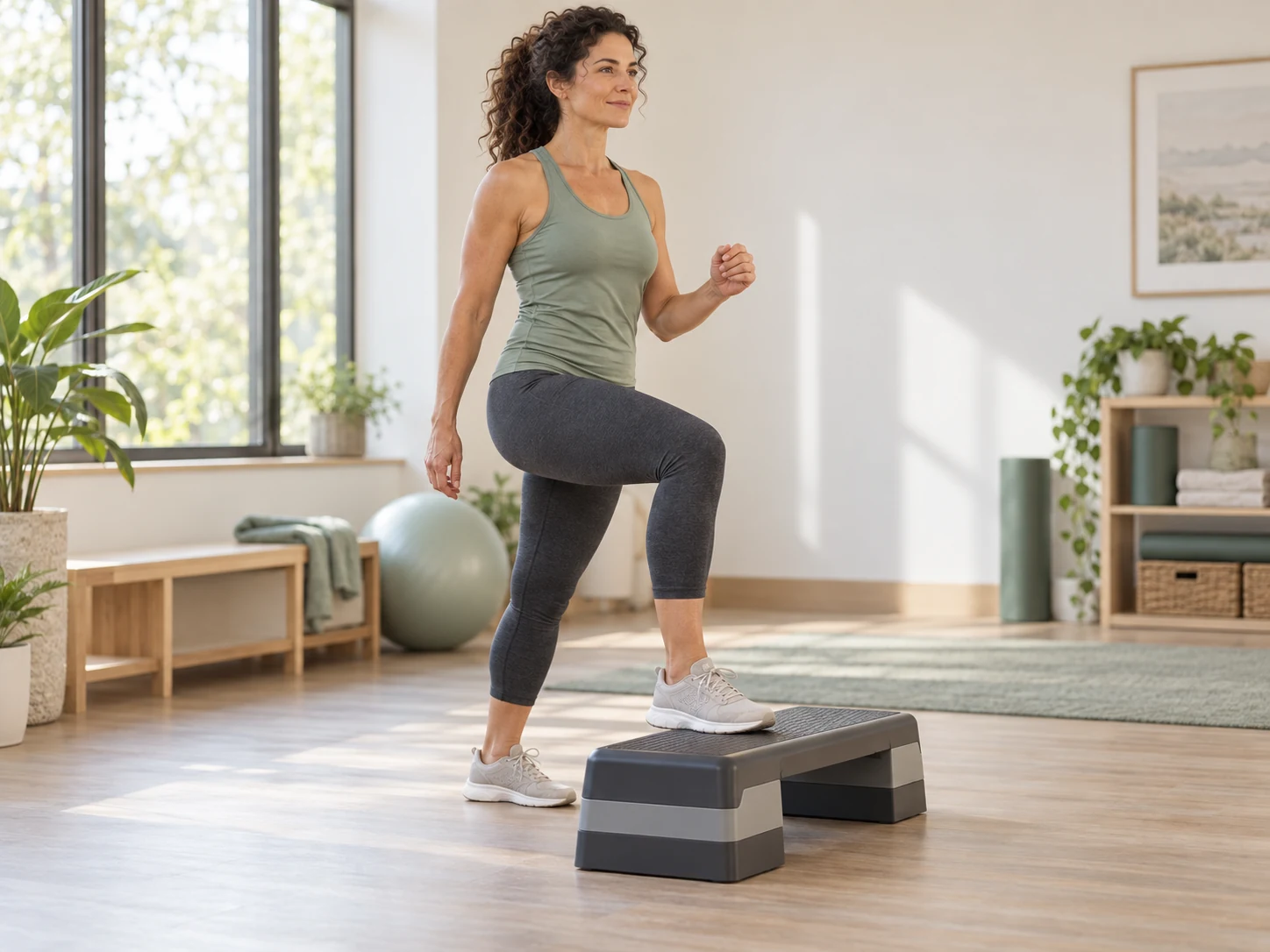
Physiotherapy may combine exercises for the thigh and hip muscles with progressive work on movement control. The program is adjusted according to the pain level and knee tolerance.
→ Discover the goals of knee rehabilitation
ADAPTATION OF ACTIVITIES
A temporary reduction in movements that strongly aggravate the pain can be helpful. Activity is then gradually resumed, taking into account the knee's reaction during exertion and in the hours that follow.
DRUG TREATMENTS
Pain relievers or, in some situations, anti-inflammatories may be considered depending on the patient's history and contraindications. They can help control symptoms, but they do not restore cartilage.
ADDITIONAL MEASURES
Depending on the examination, advice on resuming sports activities, footwear, or certain temporary aids may be discussed. An injection may be considered in specific situations, after an assessment of its benefit.
Physiotherapy and the gradual adaptation of activities often constitute the first steps in treatment.
Recommendations for patellofemoral pain support, in particular, exercises targeting the knee and hip, adapted to each individual.
WHEN TO CONSIDER SURGERY?
Surgery is rarely decided solely on the basis of an image of chondropathy. It may be considered when symptoms persist despite appropriate treatment or when a specific instability or mechanical abnormality is identified.
The choice depends on the condition of the cartilage, the path of the patella, the alignment and the patient's objectives.
ADDRESSING INSTABILITY
In cases of repeated dislocations or confirmed instability, surgery may be considered to improve patellar support and guidance. It is not warranted for all anterior knee pain.
CORRECT CERTAIN CONSTRAINTS
In selected situations, bone surgery can alter the distribution of stress around the kneecap. The decision requires a precise assessment of the joint's alignment and function.
MANAGING A CARTILAGINAL INJURY
For certain focal lesions, smoothing procedures or cartilage restoration techniques may be considered. Their indication depends on the location and extent of the lesion, as well as the overall condition of the joint.
→ Discover joint preservation treatments
KEEP MOVING WITH PATELLAR CHONDROPATHY
Patellar chondropathy does not necessarily mean that you have to stop playing sports or engaging in any physical activity. It is often possible to maintain activity by temporarily adjusting painful movements.
Cycling, swimming, or strengthening exercises may be suitable depending on the symptoms. Resuming running, jumping, or repetitive bending should be done gradually, observing the knee's reaction.
Pain that increases, swelling or discomfort that persists after activity are signs that the load should be adjusted and advice sought if symptoms do not improve.
The level of activity is adjusted according to knee tolerance and the evolution of symptoms.
→ Understanding the stages of knee rehabilitation


A CARE APPROACH TAILORED TO EACH PATIENT
The same cartilage abnormality can be associated with very different symptoms from one person to another. Treatment takes into account the examination, activities, goals, and any potential stability or alignment issues.
Dr. Benoît Coulin favors a gradual approach. When the situation allows, the first steps aim to improve knee function through non-surgical measures.
If an intervention is considered, it addresses a problem identified during the assessment. The decision takes into account the expected benefits, the constraints of recovery, and the patient's expectations.
«"Treatment must address the cause of the pain and the person's needs, not just an image."»