
Physiotherapy and rehabilitation
step by step.
Physiotherapy and rehabilitation encompass exercises and therapeutic methods designed to improve mobility, strength, balance, and everyday movements. They can be part of the treatment for many knee and hip pains and injuries.
The program depends on the diagnosis, symptoms, and situation of each patient. It is part of a comprehensive strategy, defined with the professionals who provide follow-up care.
UNDERSTANDING ANTERIOR CRUCIATE LIGAMENT SURGERY
WHEN ARE PHYSIOTHERAPY AND REHABILITATION USEFUL?
Physiotherapy and rehabilitation may be considered when symptoms or loss of function make certain movements more difficult.
- Pain or stiffness : When these symptoms limit usual movements.
- Loss of strength or stability When certain activities become difficult to perform with confidence.
- After an injury or surgery : When recovery requires support tailored to the diagnosis and medical instructions.
- Difficulty resuming usual movements When walking, getting up, or performing a daily task remains difficult.
The relevance of rehabilitation depends on the clinical situation and the needs of the person.
ASSESS BEFORE STARTING PHYSIOTHERAPY AND REHABILITATION
PAIN AND SWELLING
The professional takes into account the location, intensity and evolution of the symptoms, as well as their impact on activities.
MOBILITY
The useful ranges of motion are observed, as well as any stiffness or movements that remain difficult.
STRENGTH AND CONTROL
The assessment focuses on strength, stability, balance, and movement quality.
ACTIVITIES AND OBJECTIVES
Limited movements and activities important to the person are identified to understand their functional priorities.

HOW TO BUILD A PHYSIOTHERAPY AND REHABILITATION PROGRAM?
The functional assessment helps to define the skills to be prioritized. The program is organized according to the person's situation and the objectives set.
The steps are reassessed throughout the follow-up. The program may evolve according to observed abilities and tolerance to the sessions.
DEFINE THE PRIORITIES
The difficulties observed are ranked according to their importance for the person's function and activities.
ADAPT THE PACE
The frequency of sessions and the time spent working are adjusted to the patient's situation and organization.
PLAN THE PROGRESSION
The steps are determined according to the abilities to be recovered. Progression to the next step is based on functional criteria, not solely on the time elapsed.
RE-EVALUATE AND ADJUST
Progress and tolerance are observed in order to modify objectives or the program when necessary.
Progress is based on regained skills and their use in concrete situations.
THE COMPONENTS OF PHYSIOTHERAPY AND REHABILITATION
The content depends on the identified needs. It may combine several forms of work, without following an identical model for all.
MOBILITY AND FLEXIBILITY
The movements accompany the work on useful ranges of motion and flexibility. They may involve, for example, flexion or extension of the knee, depending on the situation.
MUSCLE STRENGTHENING
Strength training targets the muscle groups used for movement. Exercises can be performed with body weight or with appropriate resistance.
BALANCE AND MOVEMENT CONTROL
Exercises can require balance, stability and coordination, for example during weight transfer or controlled support.
FUNCTIONAL REHABILITATION
The work may incorporate actions such as getting up from a chair, walking or climbing a step, depending on the difficulties encountered.

ADVANCEMENT IN PHYSIOTHERAPY AND REHABILITATION
Progress depends on observed abilities and the individual's tolerance. It can vary from one patient to another.
The evolution is judged on the quality of the movements and the function, rather than on a fixed calendar.
RE-ESTABLISH A SAFE BASE
The work begins with basic skills and movements performed in a controlled manner, taking into account the symptoms.
INCREASE THE CONSTRAINTS
When the situation allows, tasks can become more demanding or more closely related to functional movements.
GETTING CLOSER TO THE GOAL
Work is closely linked to the intended activities, such as regular travel or professional tasks. Sport can be incorporated occasionally, depending on objectives and medical monitoring.
REDISCOVER ACTIVITIES WITH PHYSIOTHERAPY AND REHABILITATION
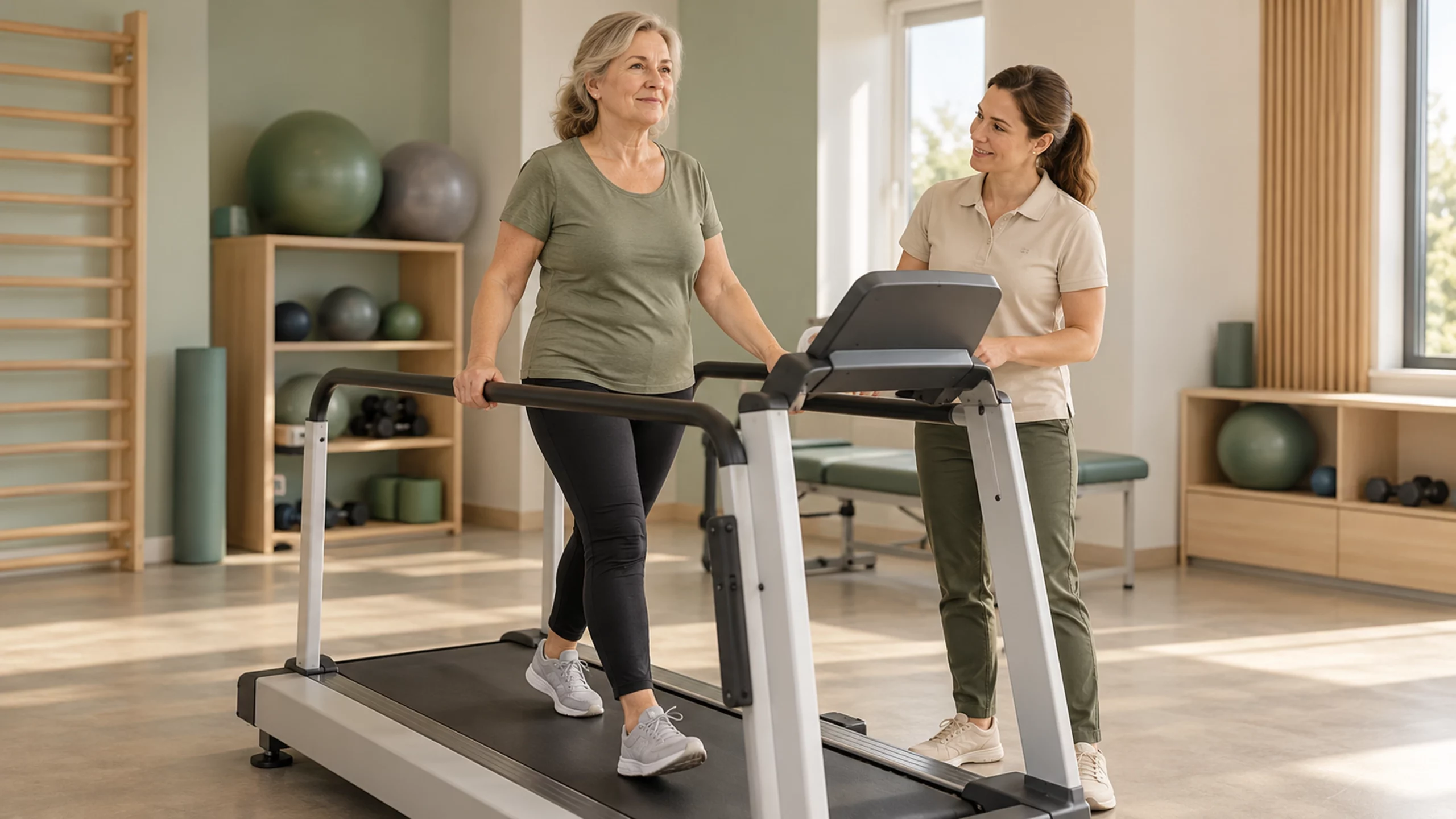
The program aims to make the exercises understandable and achievable independently, according to the instructions given by the physiotherapist.
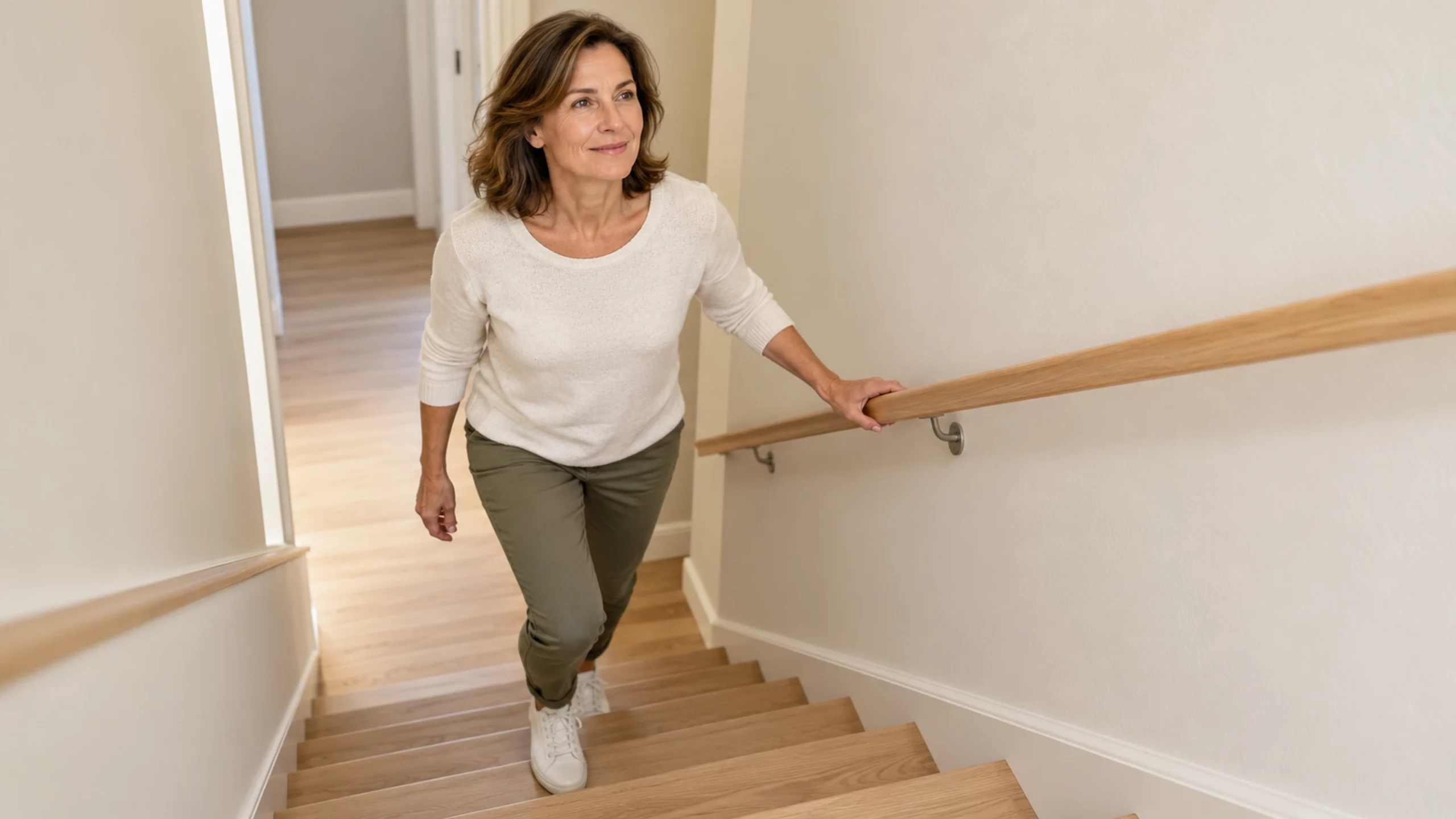
Movement, walking, and climbing stairs can be resumed depending on each person's abilities and situation. The goal is to regain a practical use of movement in daily life.
Returning to work depends on the tasks to be performed and the level of discomfort experienced. Any necessary adjustments should be discussed with the healthcare professionals involved in the patient's care.
Physical activity or sport can be reintroduced depending on progress, diagnosis, and medical instructions. This resumption is only one aspect of returning to activities.
Progress only makes sense when it facilitates the actions that matter in your daily life.
PHYSIOTHERAPY AND REHABILITATION: BENEFITS, LIMITATIONS AND WARNING SIGNS
Corticosteroid injections aim to relieve certain symptoms. Their effect varies from person to person and must be assessed with the patient.
The relief sought must be weighed against its possible duration, the limitations of the treatment, and the risks specific to each patient.
OBJECTIVES AND EXPECTED RESULTS
Rehabilitation aims to improve movement and function. The effects vary depending on the individual and their situation.
Boundaries
Progress depends in particular on the pathology, the lesions, the regularity of follow-up, the general condition, and tolerance. Rehabilitation does not correct all possible causes of pain or limitation.
SIDE EFFECTS AND RISKS
Any persistent increase in pain, unusual swelling, loss of function, locking, or a feeling of instability should be reported to the patient's healthcare provider. Recent trauma, especially with locking, deformity, significant swelling, or difficulty walking, warrants prompt evaluation by a healthcare professional.

A CARE APPROACH TAILORED TO EACH PATIENT
Two people with the same condition do not necessarily progress in the same way. Their needs and functional abilities may differ.
The program can take into account functional age, general condition, initial level, professional constraints, activities and personal goals.
When necessary, rehabilitation is coordinated with medical diagnosis and other treatments, so that the different stages of care remain consistent.
«"Rehabilitation is built around the abilities and goals of each patient."»
FREQUENTLY ASKED QUESTIONS
Do you want to review your rehabilitation progress?
A personalized assessment helps to define support that is consistent with your situation, abilities and objectives.
