

TRANSIENT OSTEOPOROSIS OF THE HIP
L'transient osteoporosis of the hip, Also known as bone marrow edema syndrome, it is a rare condition characterized by hip pain and swelling within the bone, primarily visible on MRI. It often affects middle-aged adults and can also occur during pregnancy or after childbirth.
The pain often develops gradually, without any identifiable trauma. It may be located in the groin, thigh, or buttock and worsens with walking or weight-bearing. This condition generally has a favorable outcome, but the recovery time varies from person to person. The diagnosis must distinguish it from osteonecrosis or a stress fracture, which require different treatment.
UNDERSTANDING TRANSIENT OSTEOPOROSIS OF THE HIP

RECOGNIZING THE SYMPTOMS
L'transient osteoporosis of the hip It most often manifests as pain that appears without any obvious trauma and gradually impairs walking. Its intensity and location can vary from person to person.
- Pain in the groin or front of the hip: It can be felt in the thigh or sometimes towards the buttock.
- Pain intensified by pressure: Walking, standing, or moving around can become difficult.
- Discomfort during movement: Some hip movements may be painful or limited by pain.
- Limping or need for walking assistance: The person can reduce the weight-bearing on the painful leg to move around.
Significant pain, marked difficulty bearing weight, or rapid worsening warrants medical advice to rule out a fracture or other cause requiring prompt treatment.
WHY DOES TRANSIENT OSTEOPOROSIS OF THE HIP OCCUR?
The exact cause of transient osteoporosis of the hip is not always identified. It can occur without a clearly established triggering event. Certain situations are associated with this condition, particularly pregnancy or the postpartum period. A medical examination is still necessary to rule out other causes for the pain and bone swelling.
TEMPORARY BONE OVERLOAD
Walking and daily activities put stress on the femur with every step. When the bone is painful and weakened in a particular area, weight-bearing can worsen the symptoms.
PREGNANCY OR POSTPARTUM
Transient osteoporosis of the hip can occur during pregnancy or in the postpartum period. Persistent hip pain in this context should be evaluated by a healthcare professional.
AFFECTION WITHOUT OBVIOUS CAUSE
In some people, symptoms occur without any identified fall or trauma. An assessment then helps to look for characteristic signs and rule out other possible causes.
DIAGNOSES TO DIFFERENTIATE
Osteonecrosis, a stress fracture, or another hip condition can cause similar pain or swelling on MRI. Distinguishing between them is important for tailoring treatment and follow-up.
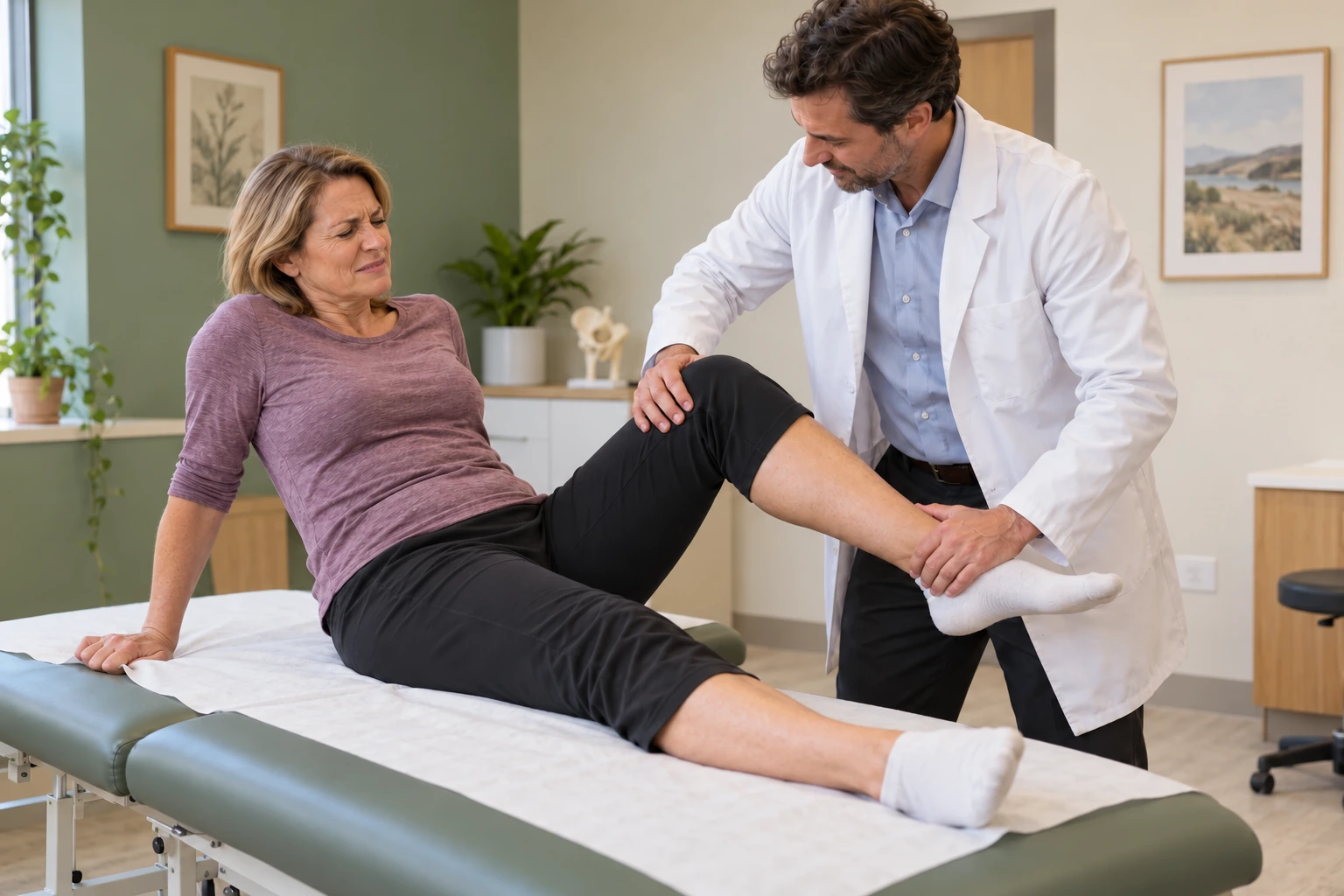
MAKE THE RIGHT DIAGNOSIS
Diagnosis is based on symptoms, clinical examination, and imaging. MRI is particularly useful for detecting bone edema and helping to distinguish transient osteoporosis from other conditions, such as osteonecrosis or a stress fracture. Depending on the context, X-rays or other tests may also be ordered.
01 — THE CLINICAL EXAMINATION
The doctor notes the onset of the pain, the activities that aggravate it, and the patient's ability to walk. He examines the hip and assesses its mobility as well as any pain caused by certain movements.
02 — X-RAYS
X-rays of the pelvis and hip may be taken. These allow examination of the bone structure, although they may not show signs of the condition in its early stages.
03 — MRI AND ADDITIONAL EXAMINATIONS
MRI scans are used to look for bone edema and help analyze its location and extent. Further tests or analyses may be recommended if the symptoms or images suggest another cause.
MRI helps to identify bone edema, but the images should always be interpreted with the symptoms and clinical examination.
→ Understanding the useful tests to investigate hip pain
RELIEVE PAIN AND PROTECT THE HIP
The management of’transient osteoporosis of the hip Treatment is generally non-surgical. It aims to reduce pain, prevent excessive stress on the bone, and support a gradual return to activities. Weight-bearing may be temporarily adjusted based on symptoms and medical assessment.
TEMPORARILY ADAPT THE SUPPORT
When walking is painful, the doctor may recommend temporarily reducing weight-bearing on the affected leg. Crutches can help limit strain while allowing for safer movement. The level of weight-bearing should be determined based on the symptoms and the results of the assessment.
RELIEVE THE PAIN
Pain relief treatment may be offered depending on the individual's medical condition. The choice of medication should take into account any treatments already being taken, medical history, and, in the case of pregnancy or breastfeeding, any special precautions.
RESUME THE MOVEMENTS GRADUALLY
Mobility is maintained without forcing painful movements. Physiotherapy may be offered to support recovery, maintain functional abilities, and gradually resume activities.
FOLLOW THE EVOLUTION
Follow-up appointments allow for the assessment of changes in pain, gait, and hip function. Further imaging tests may be considered if symptoms persist or to monitor progress, at the doctor's discretion.
Treatment generally aims to protect the hip during the painful phase, then to support a gradual return to activities. The duration and methods of follow-up vary depending on the symptoms and the results of the medical examination.

IS SURGERY NECESSARY?
In the vast majority of cases, Transient osteoporosis of the hip does not require surgery. Treatment typically involves temporary weight-bearing adjustments, pain relief, and medical follow-up. Intervention is only considered if examinations reveal another injury or complication.
THE TREATMENT IS GENERALLY NON-SURGICAL
Weight-bearing may be temporarily reduced, and walking aids offered if pain warrants it. Appropriate pain medication may also be prescribed. A return to activities is gradual, depending on symptoms and medical instructions.
THE DIAGNOSIS MUST BE CONFIRMED
Hip pain and bone swelling seen on MRI can also be indicative of a stress fracture, osteonecrosis, or another condition. Further tests may be necessary to identify the exact cause and choose the appropriate treatment.
ONE INTERVENTION CONCERNS A DIFFERENT INJURY
If the assessment reveals a fracture or complication requiring intervention, the strategy is then defined according to the nature of this injury. Surgery does not usually treat transient osteoporosis itself.
REHABILITATION AND RESUMPTION OF ACTIVITIES
Recovery is gradual and its duration varies from person to person. It depends in particular on the intensity of the pain, the ability to bear weight again, and the progress observed during follow-up. In most cases, symptoms and abnormalities seen on imaging improve over time, but the timeline cannot be the same for everyone.
01 – REDUCE ACTIVITIES THAT INCREASE PAIN
Prolonged walking, impact activities, or painful exertion may be temporarily modified according to the doctor's advice.
02 – SECURE TRAVEL
Crutches or other walking aids may be used when weight-bearing is painful or the gait becomes unstable.
03 – MAINTAINING MOBILITY WITHOUT FORCING
Hip movements are gradually resumed, respecting pain levels and the instructions of the healthcare team.
04 – INCREASE SUPPORT AS THE PROCESS EVOLVES
Walking and other activities can be resumed gradually as symptoms allow. The doctor may adjust instructions during follow-up appointments.
05 – RESUME USUAL ACTIVITIES
Returning to daily activities and sports depends on recovery and clinical assessment. Resuming activities too quickly can prolong pain.
The resumption of activities is decided based on the evolution of the pain and medical monitoring.


A CARE APPROACH TAILORED TO EACH PATIENT
Hip pain with bone edema on MRI is not sufficient on its own to establish a diagnosis. The doctor considers the history of symptoms, the clinical examination, and the images to differentiate transient osteoporosis from other conditions, including osteonecrosis or a stress fracture.
Treatment is tailored to the intensity of the pain and the patient's ability to walk. It may include pain medication, temporary weight-bearing adjustments, and a gradual resumption of movement. Follow-up appointments allow for reassessment of symptoms and modification of recommendations if necessary.
Pregnancy, the postpartum period, medical history and current treatments are also taken into account when choosing the most appropriate measures.
«"An accurate diagnosis allows for adjustments to support and activities during the painful phase, while monitoring the hip's progress."»
FREQUENTLY ASKED QUESTIONS
DO YOU WANT TO BETTER UNDERSTAND YOUR PAIN?
A clinical examination combined with appropriate imaging helps to determine the origin of symptoms and identify the most suitable treatments.
