
What is orthobiology?
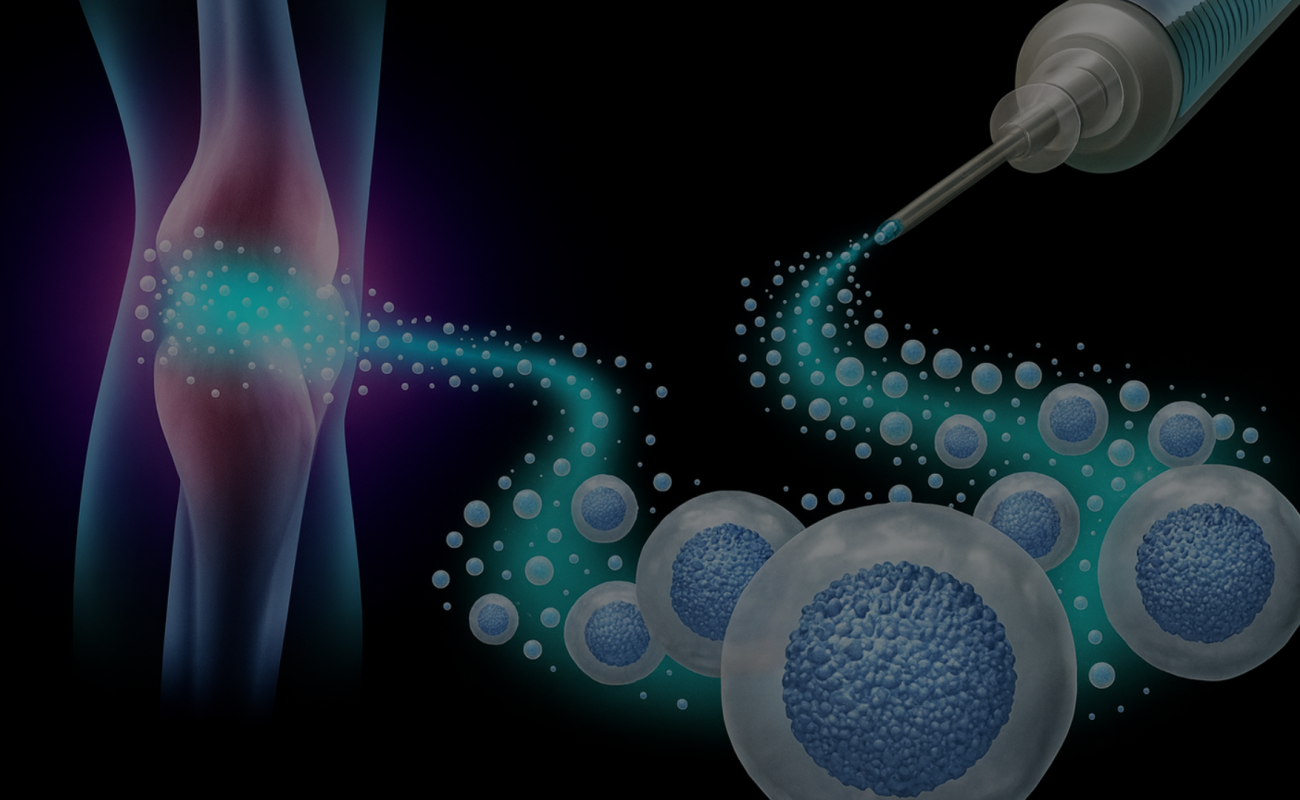
Orthobiology encompasses all treatments that utilize the natural resources of the human body (cells, plasma, growth factors) to promote the repair and regeneration of musculoskeletal tissues.
It is particularly suited to tendons, cartilage, ligaments and joints.
Unlike traditional drug-based approaches that primarily aim to mask pain, orthobiology in orthopedics is based on regenerative medicine.
Its objective is to stimulate the biological repair mechanisms and slow the progression of joint pathologies.
Dr. Coulin integrates orthobiological treatments into a personalized strategy, particularly for patients wishing to delay surgery, preserve their joint health and maintain an active quality of life.
When is orthobiology indicated?
Orthobiological treatments are useful in many situations where the joint or soft tissues are affected but remain partially functional. They are particularly suitable for:
- Osteoarthritis beginner or intermediate, especially at the level of the knee (gonarthrosis) or hip (coxarthrosis).
- Chronic tendinopathies, such as those of the shoulder (rotator cuff), Achilles tendon or hamstrings.
- Isolated cartilage lesions, resulting from trauma or localized wear.
- Sprains and ligament injuries, in the healing phase.
- The phase postoperative, in order to promote tissue recovery and optimize healing.
In these indications, orthobiology acts as a lever to slow the progression of lesions and sustainably improve joint function.
What treatments are used?
Dr. Coulin offers different protocols, always from the patient himself (autologous treatments), prepared under rigorously controlled conditions to ensure safety and efficacy.
- PRP (Platelet Rich Plasma)
Collected through a simple blood test, PRP is a platelet concentrate rich in growth factors. Injected directly into the joint or tendon, it stimulates healing, modulates inflammation, and promotes better tissue regeneration.
- Combination products or biological matrices
In certain situations, injections can be enriched with specific biomaterials or supports (collagen matrices, protective substances) in order to strengthen the biological effect and improve regeneration.
Each orthobiological treatment is chosen according to the location, the nature of the lesion, the age of the patient and their level of activity.
How does the treatment work?
The majority of orthobiology procedures are carried out in consultation :
- In a sterile environment, guaranteeing optimal safety.
- Without general anesthesia, with a quick and well-tolerated procedure.
- Often under ultrasound control, in order to precisely target the pathological area.
The patient can usually return to daily activities quickly after the injection, sometimes with a short period of joint rest.
What results can you expect ?
Orthobiology does not completely rebuild already destroyed cartilage, but it acts on the joint environment to improve its function and limit degradation. Observed benefits include:
- A lasting pain reduction.
- A improved joint mobility.
- A reduction in the consumption of painkillers.
- A delay in progression of osteoarthritis and, in some cases, the need for a prosthesis.
In well-selected patients, orthobiological therapies can prolong joint life by several years and maintain satisfactory physical activity.
A targeted and highly personalized approach
Dr. Coulin places particular importance on theprecise indication of each orthobiological treatment. It is not a universal or miraculous solution, but a powerful tool when integrated into a comprehensive care strategy:
- In-depth clinical analysis.
- Imaging study (MRI, X-rays, ultrasound).
- Planning a suitable protocol.
- Associated rehabilitation and regular monitoring.
This tailor-made approach allows us to optimize results and support each patient over time.
Are you looking for a natural treatment to protect your joints?
Dr. Coulin will see you for a consultation in Geneva to assess the relevance of a orthobiological treatment Depending on your condition, age, activity level, and goals, and following a thorough clinical examination and analysis of your imaging studies, he will propose a personalized treatment strategy aimed at relieving pain, preserving joint structures whenever possible, and delaying or even avoiding surgery. Each treatment plan is tailored to your specific situation to help you regain lasting comfort and mobility.