
Understanding osteoarthritis and its early signs
Osteoarthritis is a degenerative joint disease that mainly affects the knees and hips, but it can affect other joints such as the hands or spine.
It is characterized by a progressive wear of the cartilage, the tissue that acts as a cushion between the bones and allows the joint to move without pain.
As osteoarthritis progresses, the bone surfaces eventually come into contact, causing inflammation, stiffness, and chronic pain. But well before this advanced stage, early signs of osteoarthritis can provide warning and allow for preventative care.
Recognizing these signals is essential to preserving mobility and delaying the progression of the disease.
What are the first signs to watch for?
The onset of osteoarthritis is often subtle and gradual. Many patients ignore or downplay their symptoms, thinking they are simply aches and pains related to age or fatigue. However, certain signs of osteoarthritis should raise concern:
- Morning stiffness : temporary discomfort or blockage upon waking, which eases after a few movements.
- Mechanical pain: it appears during exertion, prolonged walking, climbing stairs or in a squatting position, then disappears at rest.
- Loss of mobility : difficulty bending the knee completely, putting on socks or crossing the legs.
- Joint cracking: noises or sensations of friction, not necessarily painful, indicating cartilage wear.
- Sensations of being blocked or giving way, sometimes accompanied by moderate swelling of the joint.
These symptoms should not be ignored. Even if mild, they can indicate early-stage osteoarthritis and warrant an orthopedic evaluation to establish a clear diagnosis.
The importance of early diagnosis
Identifying osteoarthritis at an early stage is crucial to slowing its progression. The earlier the disease is treated, the more likely it is to preserve the joint and prevent rapid deterioration.
During the consultation, Dr. Coulin performs a complete clinical examination, looking for signs of stiffness, loss of range of motion, or localized pain. Depending on the case, he may prescribe:
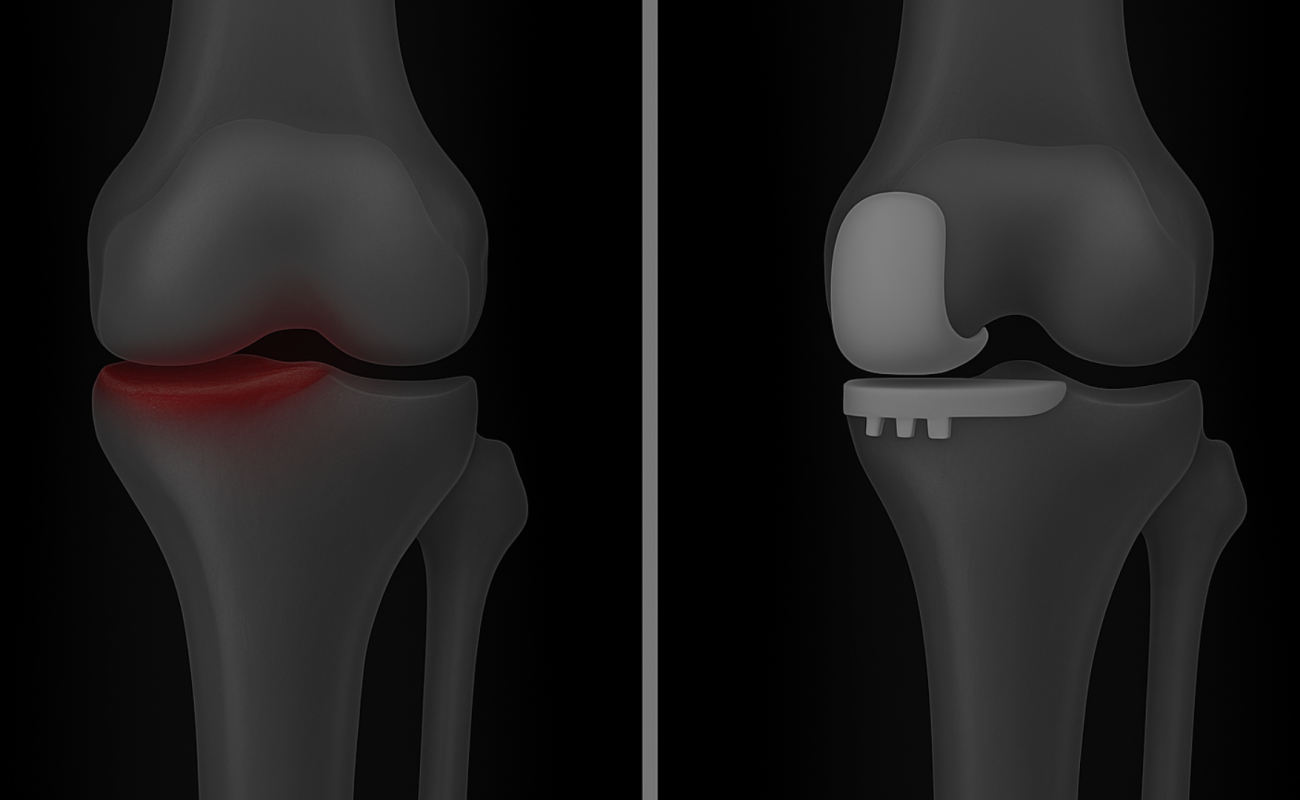
- An X-ray, which highlights cartilage wear and bone remodeling.
- An MRI is useful for exploring early damage that is invisible on X-ray.
These tests help confirm the diagnosis of osteoarthritis, specify the stage of the disease and adapt the treatment strategy.
What to do in case of early osteoarthritis?
Contrary to popular belief, surgical treatment is not always necessary.
When detected early, osteoarthritis can often be stabilized through a conservative approach:
- Adapted physical activity, to maintain mobility without overloading the joint.
- Targeted physiotherapy, in order to strengthen the muscles and protect the joint.
- Weight loss, if necessary, to reduce pressure on the knee or hip.
- Joint supplements, sometimes useful to support joint function.
- Targeted injections (hyaluronic acid, PRP), to relieve pain and slow down wear and tear.
Dr. Coulin develops a personalized strategy with each patient, taking into account age, lifestyle and expectations.
The goal is to avoid or delay surgery as much as possible, while maintaining an optimal quality of life.
Why not wait until the pain sets in?
Ignoring the early signs of osteoarthritis exposes the patient to progressive worsening. Pain then becomes chronic, mobility is reduced, and the everyday gestures become restrictive. In some cases, this leads to a loss of independence and earlier surgery than necessary.
Conversely, consulting at the first sign of symptoms allows for effective measures to be put in place to preserve the joint. Prevention is the key to living a long life with healthy joints.
Are you experiencing joint discomfort?
Stiffness upon waking, cracking sounds, pain during exertion… These signs may reveal early-stage osteoarthritis.
Dr. Coulin will see you in Geneva to make a precise diagnosis, analyze your tests, and implement appropriate care. Early intervention often means avoiding surgery and maintaining long-term mobility.