

PERIPROSTHETIC KNEE FRACTURE
A periprosthetic fracture of the knee occurs near a prosthesis already in place, most often after a fall or impact. It can involve the femur, tibia, or patella, and sometimes affect the stability of the implant.
Treatment depends on the location and displacement of the fracture, as well as the fixation of the prosthesis. The goal is to stabilize the bone and preserve knee function as much as possible.
UNDERSTANDING PERIPROSTHETIC KNEE FRACTURE

RECOGNIZING THE SYMPTOMS
The pain usually appears after a fall or impact. It may be accompanied by swelling and make bearing weight difficult or impossible.
Significant pain around the knee
It can be present at rest and increase during movement or weight-bearing.Swelling or bruising
Swelling may appear quickly after the injury.Difficulty bending or straightening the knee
Mobility may be limited by pain or instability of the fractured area.Inability to gain support
Some fractures make standing or walking very difficult.
These signs alone are insufficient to determine the type of fracture or the stability of the prosthesis. A prompt medical evaluation is necessary after an injury, especially if weight-bearing is impossible or if the knee appears deformed.
→ Recognizing the signs of a knee fracture
HOW DOES THIS FRACTURE OCCUR?
A periprosthetic fracture can occur after trauma or, more rarely, in a weakened bone. The context and the condition of the prosthesis help to understand the situation.
Fall or direct impact
A fall on the knee or side can cause a fracture around the implant, even if the impact seems moderate.
weakened bone
Osteoporosis or bone fragility can increase the risk of fracture after trauma.
Daily stresses and accidents
A loss of balance, a misstep, or a domestic accident can be enough to cause a fracture in some people.
Loose prosthesis
An implant that becomes less stable can alter the stresses exerted on the bone and complicate the fracture.

MAKE THE RIGHT DIAGNOSIS
The diagnosis combines the circumstances of the trauma, the clinical examination, and the analysis of imaging. It is also necessary to determine whether the prosthesis remains securely fixed.
01 — Assess the knee and the trauma
The doctor will describe the mechanism of the fall, the pain, swelling, mobility, and ability to bear weight. He will also check the condition of the skin and the circulation in the limb.
02 — Performing X-rays
X-rays generally allow the fracture to be located and the relationship between the bone and the prosthesis to be examined.
03 — Complete the imaging if necessary
A CT scan can help to define the shape of the fracture or to prepare the treatment strategy. The imaging technique is chosen based on the information already available and the clinical situation.
The stability of the prosthesis and the configuration of the fracture guide the treatment.
PROTECTING THE KNEE WITHOUT SURGERY
Non-surgical treatment may be considered for certain minimally displaced fractures when the prosthesis is stable. This requires medical monitoring and specific instructions regarding weight-bearing.
The objectives are to protect the fracture, control pain, and monitor healing. The strategy must be tailored to the location of the fracture and the patient's overall condition.
Protection and immobilization
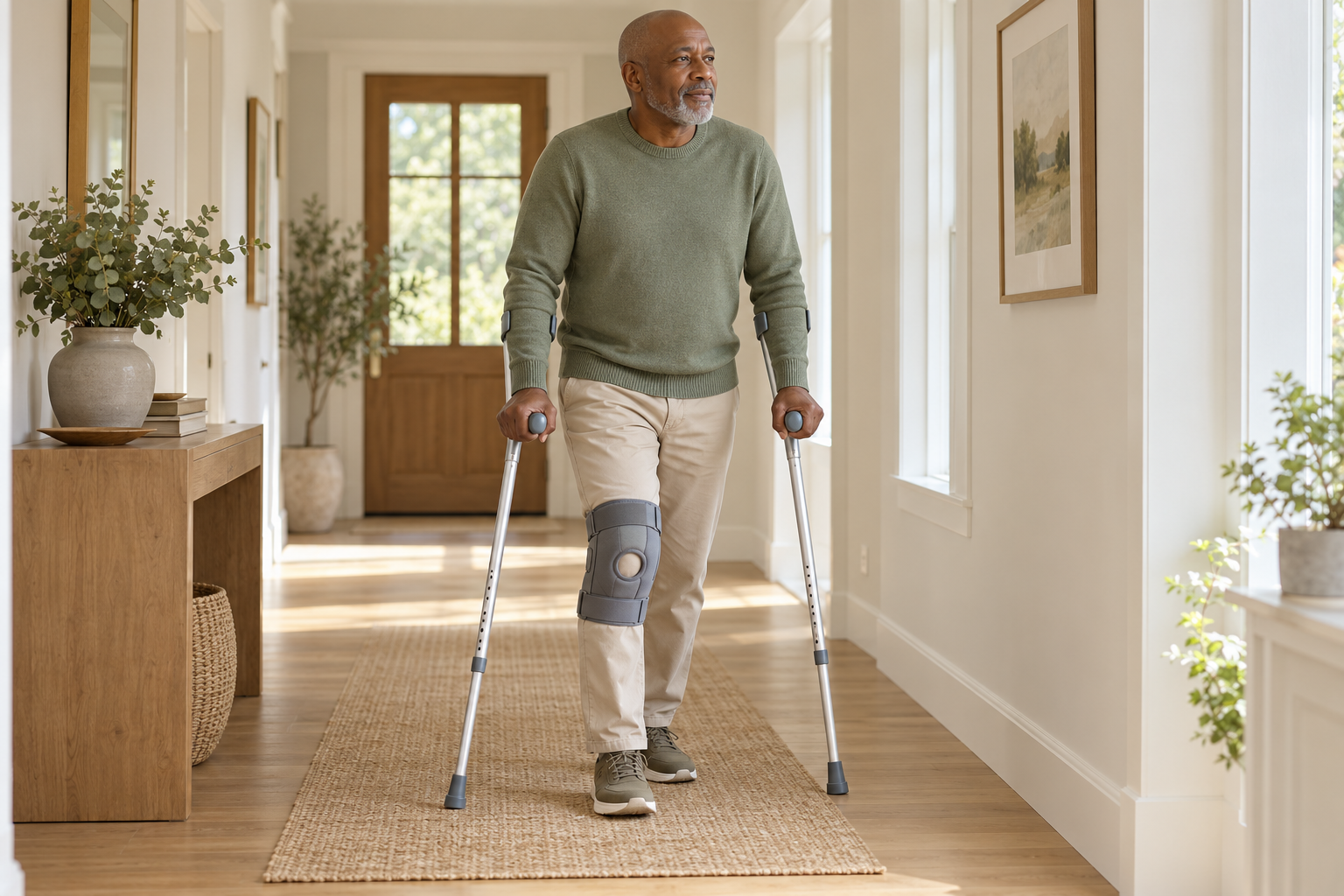
A brace or other support device may be prescribed to protect the knee. It must be worn according to medical instructions to limit movements that could displace the fracture.
Support adapted
Support may be limited or prohibited for a period determined by the healthcare team. Crutches or a walker can help with safe mobility.
Pain relief
Pain relief treatment may be offered depending on individual needs and medical history. All medication should be taken according to the doctor's recommendations.
Monitoring and gradual recovery
Consultations and follow-up examinations allow the medical team to monitor the alignment and progression of the fracture. Mobilization and physiotherapy are introduced at the time deemed appropriate by the medical team.
Non-surgical management requires regular monitoring to detect any displacement or consolidation problems.
WHEN DOES INTERVENTION BECOME NECESSARY?
Surgery may be considered if the fracture is displaced or unstable, if bone alignment is compromised, or if the prosthesis is no longer properly secured. The decision also depends on the condition of the bone, knee function, and the patient's overall health.
The choice of intervention is individualized: it may involve stabilizing the fracture, replacing a loose component, or revising the prosthesis. The options are evaluated based on the clinical examination and imaging.
Stabilize the fractured bone
When the prosthesis remains stable, fixation of the fracture can be considered with equipment adapted to its location and shape.
Replacing a loose component
If a component of the prosthesis becomes loose, intervention may be necessary to replace it and restore the stability of the whole.
Treating a complex fracture
Some extensive fractures or those associated with significant bone fragility require a specific surgical strategy, sometimes combining several procedures.
RESUME ACTIVITIES IN STAGES
Initially, movement and weight-bearing must adhere to fracture protection guidelines. Walking should not be attempted without medical advice immediately after a fracture has been diagnosed.
Depending on the treatment plan, appropriate movements can be gradually introduced to preserve mobility. Physiotherapy is tailored to the stability of the fracture and the observed progress.
Any unusual pain, increasing swelling, or new discomfort should be reported to the healthcare team. Activities are adjusted according to symptoms and medical check-ups.
Resuming walking, climbing stairs, and daily activities is done in stages, after medical clearance. The pace depends on the fracture, the prosthesis fixation, and the healing process.
Fracture protection guides each step of the recovery process.
→ Discover knee rehabilitation


A CARE APPROACH TAILORED TO EACH PATIENT
A periprosthetic fracture of the knee is not treated the same way in all patients. The location and displacement of the fracture, the stability of the prosthesis, and the quality of the bone influence the possible treatment options.
Dr. Benoît Coulin takes into account the patient's pain, mobility, independence, usual activities, medical history, and goals. Clinical examination and imaging help to define the characteristics of the fracture and the implant.
Conservative or surgical treatment is discussed depending on the situation. Follow-up aims to protect the bone, monitor the prosthesis, and organize a gradual and appropriate rehabilitation plan.
«"Each fracture must be assessed taking into account the bone, the prosthesis, and the individual."»
FREQUENTLY ASKED QUESTIONS
Have you fallen and is your prosthetic knee hurting?
A clinical examination and, if necessary, appropriate imaging can help to determine the origin of the symptoms and to propose a personalized treatment plan.
