

BURSITIS OF THE KNEE
Knee bursitis is an irritation of a bursa, a small fluid-filled sac that facilitates tissue movement. It can cause visible swelling, often in front of the kneecap, and discomfort when kneeling or putting pressure on the area.
Treatment depends on the cause and symptoms. It aims first to reduce irritation, protect the knee, and check that it is not an infection or other condition.
UNDERSTANDING KNEE OSTEOARTHRITIS

-
This is the area located on the inner side of the knee and is the most frequently affected by osteoarthritis. Its wear and tear can cause internal pain and gradually lead to leg deformity.
-
Located on the outer side of the knee, this compartment is less frequently affected. Its wear and tear can cause lateral pain and gradually alter the leg's alignment.
-
This joint is located between the kneecap and the femur. When it is affected, pain often appears when climbing stairs, squatting, or after sitting for a long time.
RECOGNIZING THE SYMPTOMS
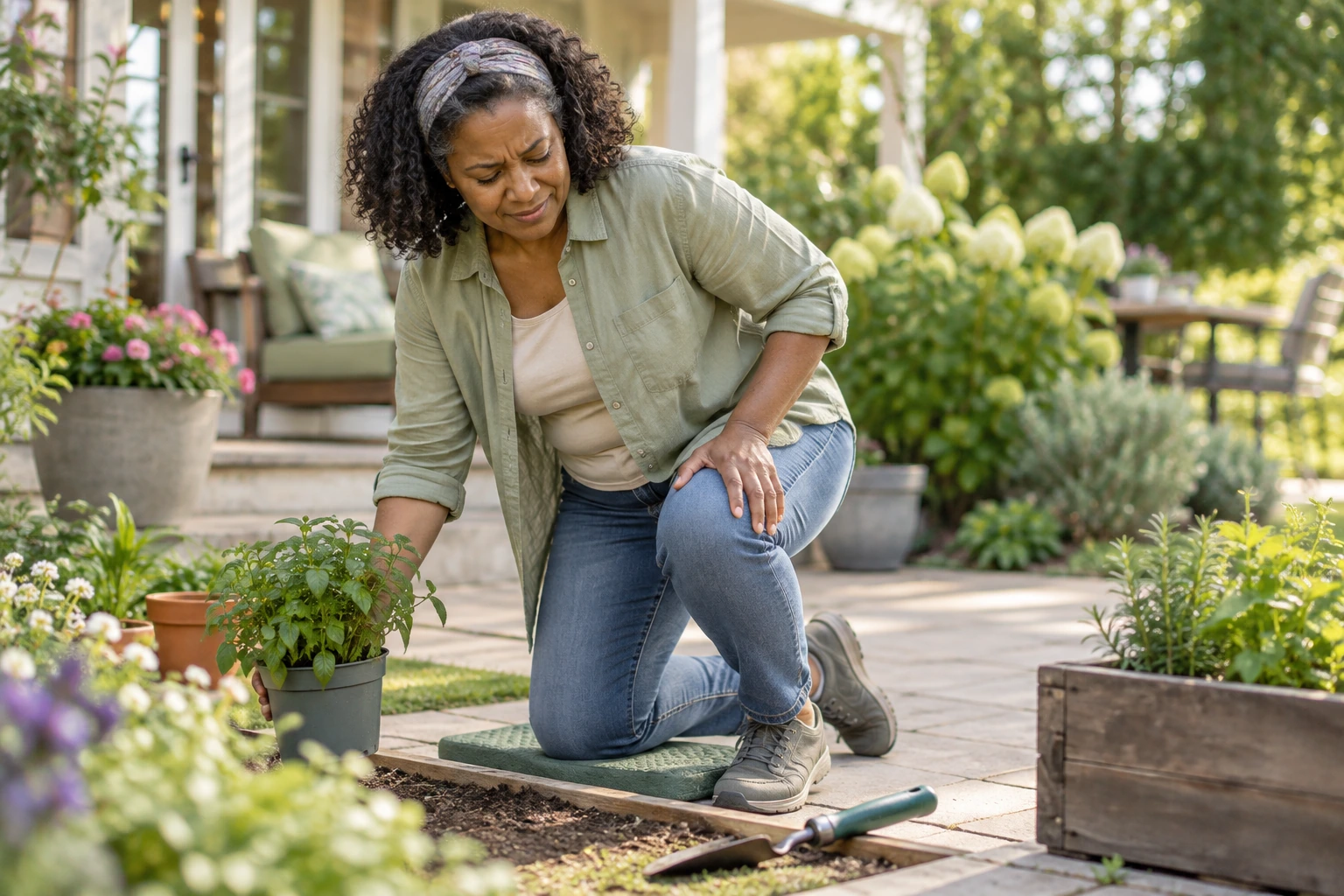
Symptoms depend on the affected bursa and the cause of its irritation. They may appear after repeated pressure on the knee or after a direct impact.
- Localized swelling — A visible pocket may form in front of or below the kneecap. It often remains limited to a specific area.
- Touch sensitivity — Pressure on the scrotum can be unpleasant or painful. Kneeling can increase the discomfort.
- Heat or redness — The skin may be hot or red, especially if the inflammation is significant. These signs require particular attention when accompanied by fever.
- Discomfort during movement — Full flexion may be uncomfortable, but the range of motion of the knee often remains relatively preserved.
Knee swelling can have other causes; a clinical examination helps to distinguish them. Spreading redness, rapidly increasing pain, or fever warrant prompt medical evaluation.
WHY DOES KNEE BURSITIS OCCUR?
Knee bursitis can occur when the bursa is irritated by repeated pressure, impact, or, more rarely, infection. The location of the swelling helps guide the diagnosis.
Repeated pressure on the knee
Frequent kneeling or prolonged pressure on the front of the knee can irritate the prepatellar bursa.
Direct collision
A fall or a blow to the knee can cause localized inflammation and swelling.
Local irritation
Repeated friction or stress can maintain inflammation, even in the absence of a specific trauma.
Bursa infection
A cut or small skin lesion near the knee can allow bacteria to reach the bursa. An infection should be investigated if suggestive signs are present.
MAKE THE RIGHT DIAGNOSIS
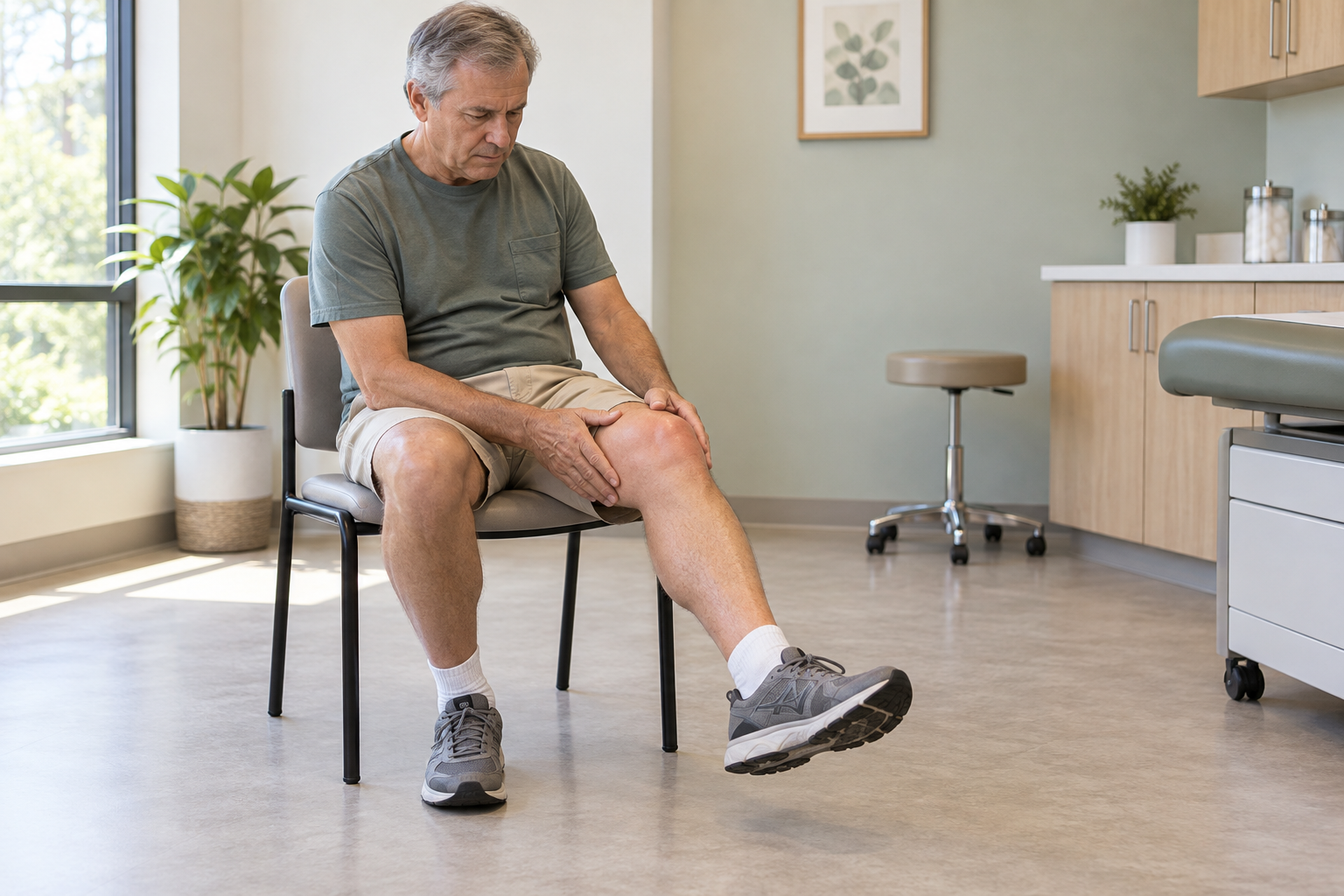
The diagnosis is based primarily on symptoms and examination of the knee. Imaging is not routinely performed; it is requested if it can clarify the situation or rule out another cause.
01 — Ask about the onset of the swelling
The doctor specifies when the symptoms began, their evolution, the pressure points or activities that trigger them, and the possible presence of shock, a wound, or fever.
02 — Examine the knee
The examination assesses the location of the swelling, sensitivity, heat, skin condition, and mobility. It also allows for the detection of other signs that might suggest a different condition.
03 — Choosing the right exams
An ultrasound can help visualize the scrotum and its contents. An X-ray or MRI is only considered if the context suggests another lesion; if infection is suspected, fluid analysis may be discussed.
Fever or significant redness requires prompt investigation for infection.
RELIEVING KNEE BURSITIS WITHOUT SURGERY
The approach is generally conservative. It begins by reducing pressure on the stock market and adapting activities that perpetuate irritation.
The goal is to alleviate symptoms while maintaining comfortable mobility. The course of action depends, in particular, on the possible presence of an infection.
Reduce the supports
Temporarily avoid kneeling and limit direct pressure on the swollen area. If kneeling is necessary for your activity, appropriate protective gear may be helpful.
Adapt the activities
Minimize any activity that significantly increases pain or swelling. Complete immobilization is not always necessary: activity is adjusted according to symptoms and diagnosis.
Relieve pain
Relative rest and applying cold compresses wrapped in a cloth can help reduce discomfort. The choice of medication depends on your medical condition and other treatments; consult a healthcare professional.
Treat any possible infection
If an infection is suspected, a medical evaluation is necessary. A puncture or specific treatment may be discussed depending on the results of the examination; these procedures are not routinely performed.
Most cases of bursitis do not require surgery.

WHY IS SURGERY RARE FOR KNEE BURSITIS?
Surgery is generally not necessary for bursitis of the knee. It may be considered in certain persistent or specific situations, after verification of the diagnosis and treatments already undertaken.
The decision takes into account the discomfort, the cause of the swelling, the condition of the skin, and the possible presence of an infection. The options are examined on a case-by-case basis.
Continue with conservative management
When symptoms improve with reduced pressure and adapted activities, surgery generally provides no further indication.
Reassess persistent swelling
If the swelling recurs or does not improve, further examination may be necessary to confirm the cause and adjust the treatment.
Request a specialist opinion
Surgery is rarely considered for persistent or complicated bursitis. The specialist will explain the expected benefits, limitations, and potential risks.
GRADUALLY RESUME ACTIVITIES
Movement can usually be maintained as long as it does not significantly worsen symptoms. However, direct pressure on the irritated bursa should be reduced.
WALKING AND DAILY ACTIVITIES
Walking and daily activities can be continued as comfortable as possible. Activities requiring kneeling or those that rub against the swollen area should be temporarily modified.
SENSITIVITY
Slight tenderness may persist, but a significant increase in pain, heat, or swelling should lead to reduced activity and seeking medical advice.
RESUMPTION OF ACTIVITIES
The return to activity is gradual, taking into account the progression and cause of the irritation. Knee protection may be considered if kneeling is difficult to avoid.
The recovery period depends on the evolution of symptoms and does not follow the same timeframe for everyone.

A CARE APPROACH TAILORED TO EACH PATIENT
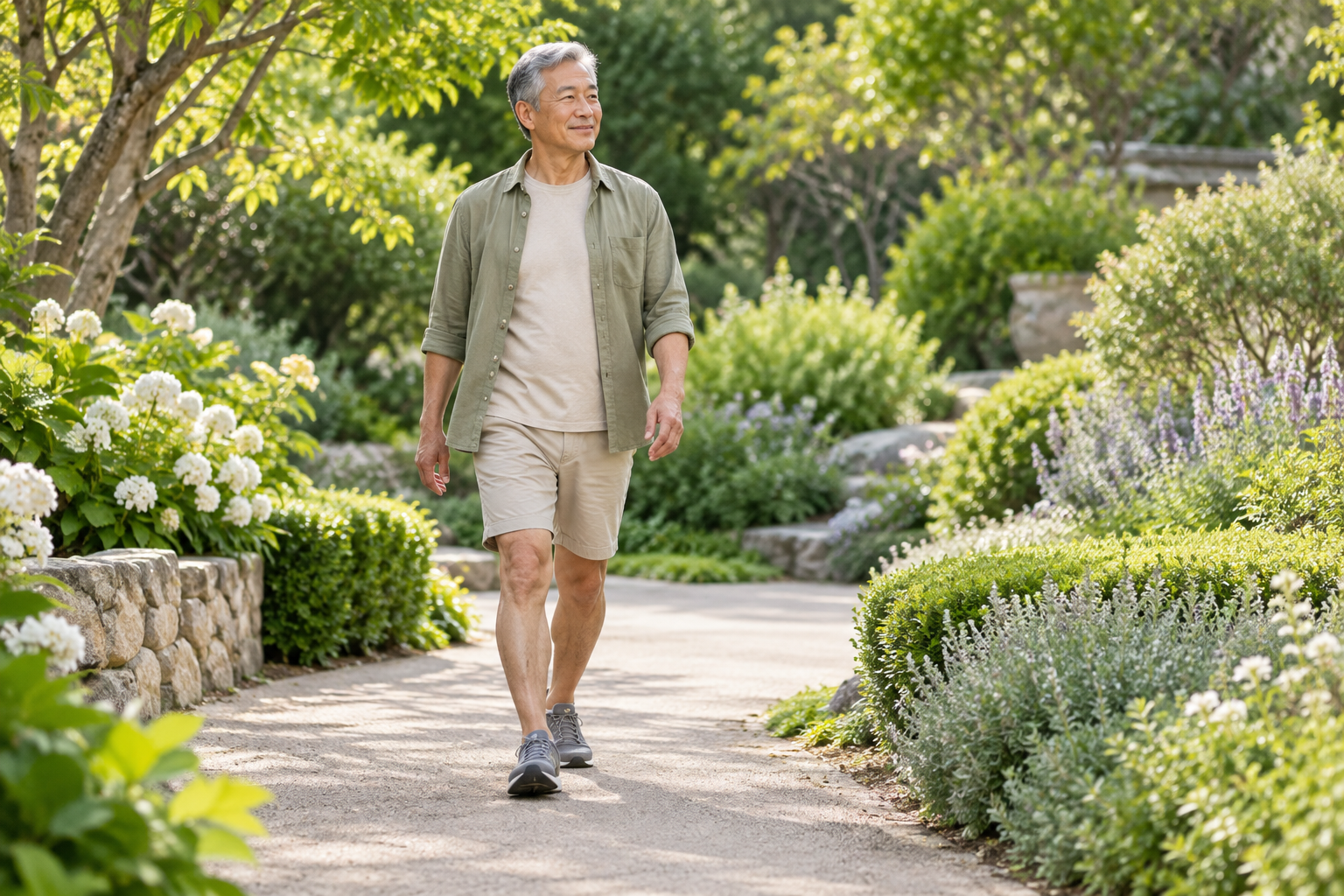
Knee bursitis does not manifest itself in the same way in everyone. The location, intensity of symptoms, and their progression guide the choice of treatment.
Dr. Benoît Coulin takes into account functional limitations, activities and occupation, the duration of swelling, skin signs, and the results of the clinical examination. Further tests are recommended when they can answer a specific question.
Reducing support and adapting activities are generally preferred. Intervention remains rare and is only discussed if the situation warrants it.
«"Treating bursitis of the knee begins with understanding what is irritating the bursa."»
FREQUENTLY ASKED QUESTIONS
Is the swelling in front of the knee persistent?
A clinical examination will help determine the cause of your symptoms and whether further imaging is necessary. Dr. Benoît Coulin can discuss a treatment plan tailored to your specific situation.
