

PATELLAR TENDINOPATHY
Patellar tendinopathy most often causes pain at the front of the knee, just below the kneecap. It frequently occurs during jumping, running, or quick changes of direction, but can also interfere with everyday activities when the tendon is under a lot of stress.
Treatment generally involves a temporary adjustment of activities and a gradual resumption of strengthening exercises. Dr. Benoît Coulin assesses the cause of the pain, its progression, and the patient's needs in order to propose an appropriate course of action.
UNDERSTANDING KNEE OSTEOARTHRITIS

-
This is the area located on the inner side of the knee and is the most frequently affected by osteoarthritis. Its wear and tear can cause internal pain and gradually lead to leg deformity.
-
Located on the outer side of the knee, this compartment is less frequently affected. Its wear and tear can cause lateral pain and gradually alter the leg's alignment.
-
This joint is located between the kneecap and the femur. When it is affected, pain often appears when climbing stairs, squatting, or after sitting for a long time.
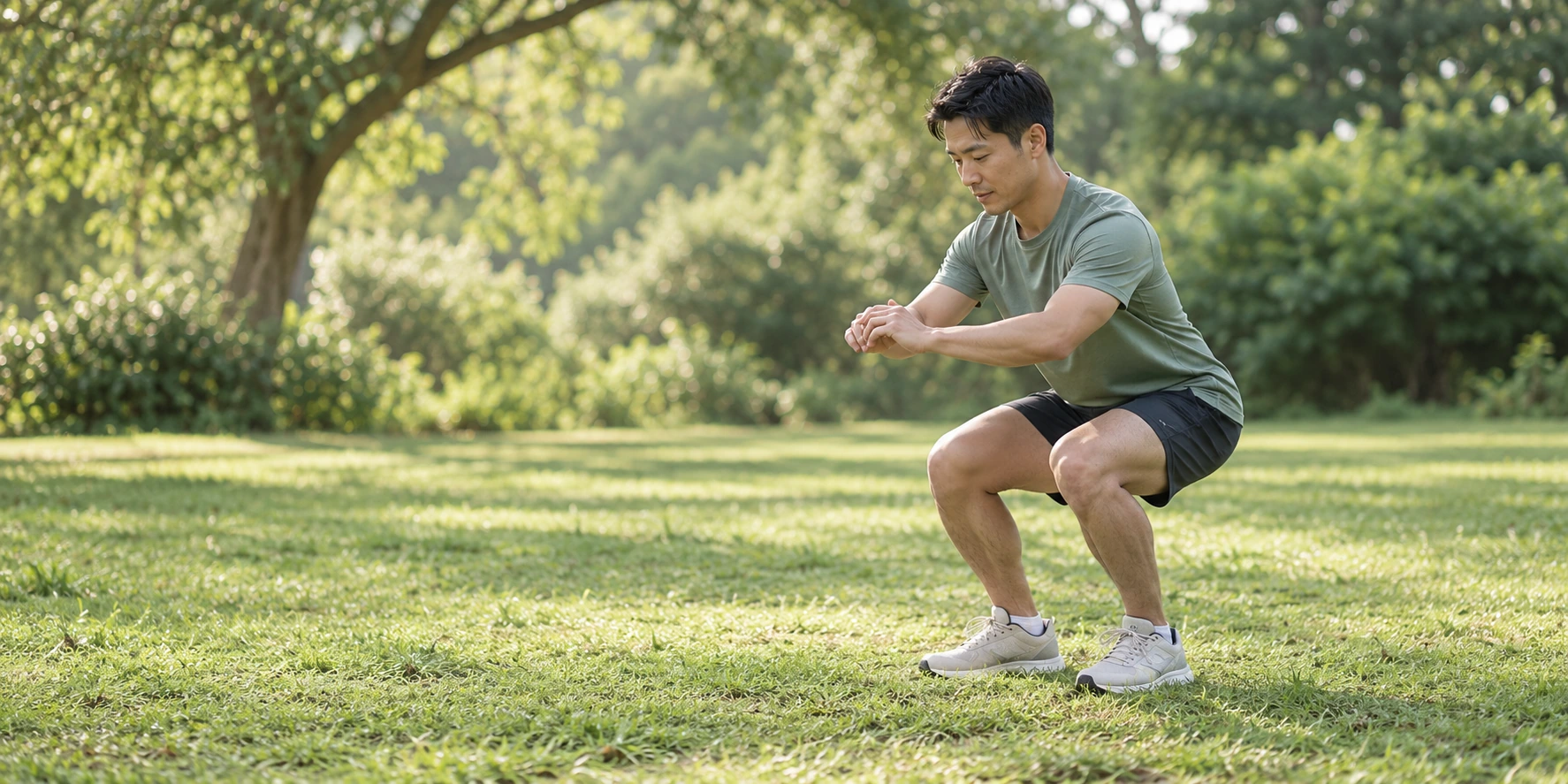
WHAT ARE THE SIGNS OF PATELLAR TENDINOPATHY?
The pain is usually located at the front of the knee, below the kneecap. It may appear gradually or worsen when the stress on the tendon increases.
- Pain below the kneecap — Localized sensitivity at the lower tip of the kneecap or along the tendon, sometimes tender to the touch.
- Pain during exertion — It often manifests itself during or after running, jumping, accelerating, and changing direction.
- Discomfort during bending — Going up or down stairs, squatting or standing up can become painful, especially when the knee is under more stress.
- Stiffness after a period of rest — The tendon may feel sensitive during the first movements, then become less noticeable as the activity starts.
Symptoms can fluctuate depending on the intensity and frequency of exertion. Continuing to increase the workload despite persistent pain may prolong the discomfort. Sudden pain following an injury, an inability to straighten the knee or bear weight, or significant swelling requires prompt evaluation. Persistent pain that limits activities also warrants a clinical examination.
In case of acute pain or associated trauma, consult the information on the diagnosis of knee pain and symptoms.
WHY DOES THE PATELLAR TENDON BECOME PAINFUL?
Patellar tendinopathy is often linked to repetitive or rapidly increased loads. The tendon may not have enough time to adapt to the stresses imposed by the activity.
Repeated requests
Sports involving jumping, sprinting, braking, and changes of direction place significant stress on the knee extensor mechanism. The risk of pain sometimes increases when the volume or intensity of training progresses rapidly.
Exceeded tendon capacity
Discomfort can occur when the demands placed on the tendon temporarily exceed its capacity to tolerate them. Periods of returning to sport, changes in playing surface or training program, and insufficient recovery can contribute to this overload.
Factors related to movement
The strength of the thigh and hip muscles, the coordination of movements, and how loads are managed can all influence the stresses placed on the tendon. These factors are assessed on a case-by-case basis; they do not mean that a single posture or movement explains the pain.
Pain in the front of the knee can also have other causes. A clinical examination can help distinguish it from a problem involving the kneecap or cartilage, such as... chondropathy patellae.
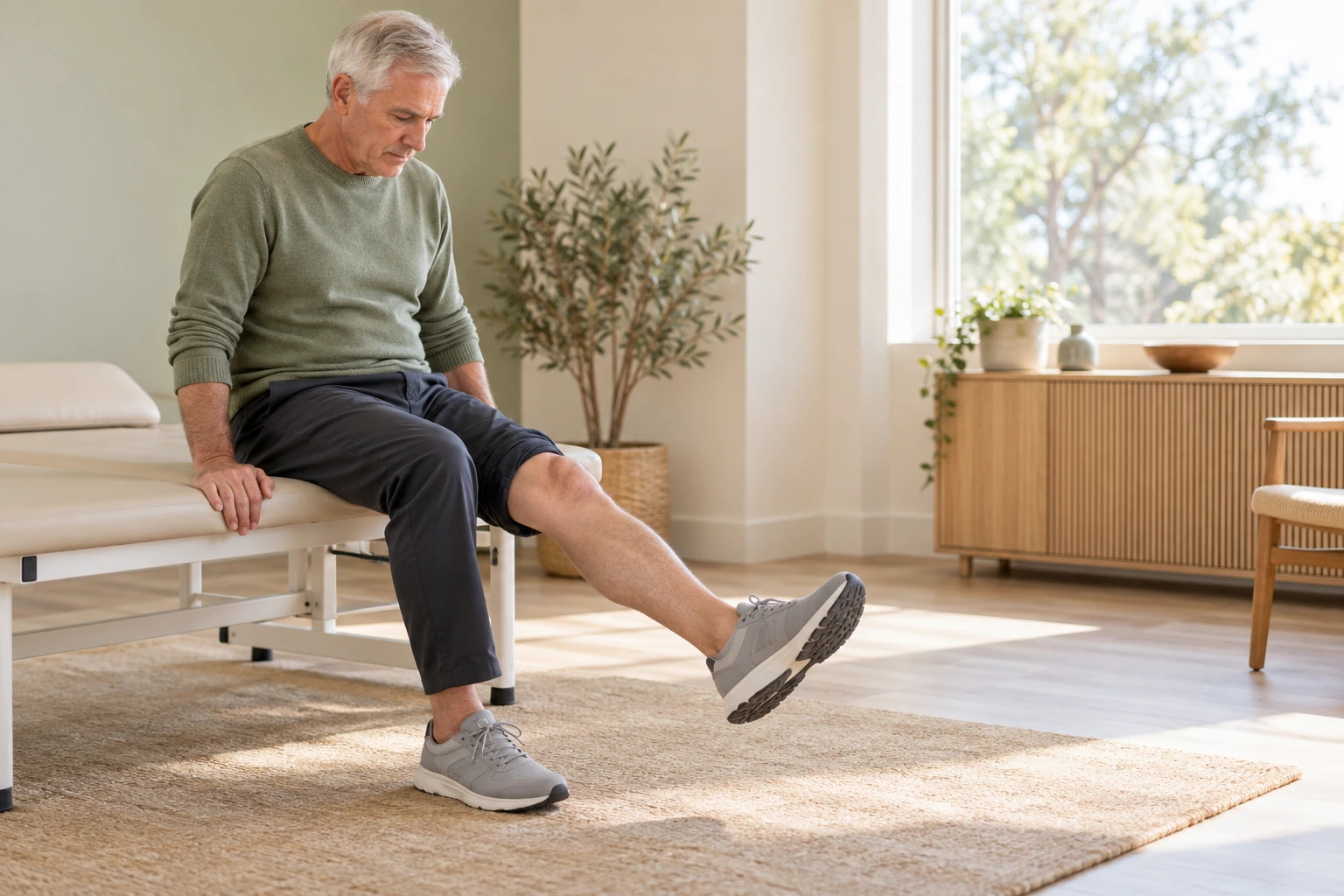
MAKE THE RIGHT DIAGNOSIS
The diagnosis is initially based on the patient's history of pain and examination of the knee. Imaging is chosen according to the symptoms and questions raised by the examination.
01 — CIRCUMSTANCES AND INTERROGATION
The doctor specifies the location of the pain, its onset, the activities that trigger it, its evolution, and any recent changes in training or daily life.
02 — CLINICAL EXAMINATION
Mobility, strength, tendon sensitivity, and the ability to straighten the knee are assessed. Functional movements can help reproduce discomfort and evaluate the tendon's load tolerance.
03 — X-RAYS IF NECESSARY
X-rays do not show the tendon in detail. However, they can be useful if the examination suggests bone damage or another cause of pain.
04 — ULTRASOUND OR MRI DEPENDING ON THE SITUATION
Ultrasound can clarify the appearance of the tendon. MRI is sometimes recommended if the diagnosis remains uncertain, if symptoms persist, or if an associated injury needs to be investigated. No imaging technique can replace a clinical examination.
The diagnosis is guided by the correlation between symptoms, examination, and any images.
RELIEVE THE PAIN AND ADJUST THE DEMANDS
The first step is to reduce activities that clearly trigger pain, while maintaining, if possible, well-tolerated movements. Prolonged complete rest is not always necessary; adjustments depend on the severity of the symptoms.
Temporarily adjust activities
A temporary reduction in jumping, sprinting, or painful exercises can help calm the tendon. Walking and low-impact activities can be maintained if they remain comfortable during and after exertion.
Monitor the knee's reaction
Pain that increases significantly during activity or persists longer afterward may indicate that the workload was too high. The intensity and duration should then be adjusted gradually.
Look for a rupture if the pain is sudden.
Sudden pain following exertion or injury, accompanied by weakness in straightening the knee or difficulty bearing weight, warrants prompt evaluation. The service SOS Knee Geneva presents the possibilities for managing acute pain and trauma of the knee.

TREATING PATELLAR TENDINOPATHY WITHOUT SURGERY
Surgery is not always necessary. In most cases, treatment begins with appropriate load management and a progressive physiotherapy program.
Progressive physiotherapy
Physiotherapy aims to gradually restore the tendon's ability to tolerate stress. The program may include progressive strengthening of the extensor mechanism, followed by functional exercises tailored to the patient's goals. Progression is monitored based on pain, strength, and knee response after sessions.
An adaptation of activities
Exercises that cause significant pain can be temporarily reduced or replaced with better-tolerated activities. Jumping and running should then be resumed gradually, without a sudden increase in workload.
Additional treatments on a case-by-case basis
Pain management and the potential use of complementary treatments are discussed based on the patient's history, examination, and goals. These treatments do not replace progressive rehabilitation and are not indicated in the same way for everyone.
Monitoring allows the program to be adjusted and progress to be checked. A reassessment is useful if the pain worsens, if progress stalls, or if symptoms persistently prevent desired activities.
Regularity and load adjustment are just as important as the choice of exercises.
To better understand the different causes of anterior pain, consult the page on...’patellofemoral osteoarthritis.
Patellar tendon surgery: a rarely necessary option
Surgery is rarely recommended for patellar tendinopathy. It may be considered when the pain remains severely debilitating despite well-conducted and sufficiently prolonged conservative management, and after confirmation of the diagnosis.
Depending on the situation, the procedure may involve treating the damaged tendon areas, sometimes using an arthroscopic approach or targeted surgery on the tendon itself. The choice of technique depends on clinical and imaging findings; there is no single procedure suitable for all patients.
The goal is to treat the identified injury and allow for a gradual return to function. Surgery involves certain constraints, including a period of rehabilitation and a return to activities that must respect the healing process. It does not guarantee the disappearance of all pain or a return to a specific athletic level.
The decision to operate is discussed after verifying the diagnosis and non-surgical options.
Dr. Benoît Coulin can also assess other causes of pain in the front of the knee, including damage to the cartilage or the patella.


Rehabilitation and resumption of activities
The recovery period depends on the pain, strength, and the tendon's ability to withstand increasing load. It is gradual and adapted to the activity being performed.
01 — CALM AND MAINTAIN MOVEMENT
Activities that cause significant pain are reduced. Tolerated movements and exercises are maintained to avoid unnecessary interruptions to any activity.
02 — RESTORE STRENGTH
Physiotherapy introduces tailored strengthening exercises. The load is increased gradually according to the knee's response.
03 — CONTROL THE MOVEMENT
The exercises evolve towards more functional movements, with attention paid to knee control and tendon tolerance.
04 — RESUME DAILY ACTIVITIES
Walking, stairs and other normal activities are resumed according to comfort and the knee's ability to recover after exertion.
05 — GRADUAL RETURN TO SPORT
Running, jumping, and changes of direction are reintroduced gradually. The return depends in particular on strength, movement control, and tolerance to specific exercises.
Recovery times vary depending on the duration of symptoms, activity level, response to treatment, and any associated conditions. They cannot be guaranteed in advance.
Progress is measured by the knee's ability to withstand stress, not by a predetermined date.
A strategy tailored to each patient
Treatment depends on the location and intensity of the pain, its duration, the activities performed, and the patient's goals. Dr. Benoît Coulin also takes into account the clinical examination, any previous tests, and the possible presence of other knee conditions.
Physiotherapy and load adjustments often allow treatment to begin without surgery. They require steady progress and sometimes a temporary modification of activities. Surgery may be considered in certain persistent situations, but it involves a recovery period and is not suitable for everyone.
The goal is to choose a realistic strategy, monitor the tendon's reaction, and reassess the treatment if the progress does not meet expectations.
«"A tendon gradually readjusts: each step must respect its tolerance."»

FREQUENTLY ASKED QUESTIONS
Need to assess pain under the kneecap?
Persistent pain in the front of the knee can have several causes. A clinical examination and, if necessary, appropriate imaging will help determine the origin of the symptoms and allow for discussion of treatment options.
