
A common surgery, better controlled and often simpler than one might imagine.
The installation of a total hip replacement Today, it is one of the most frequently performed procedures in orthopedic surgery. However, it remains surrounded by many questions and sometimes a certain apprehension. Many patients wonder if this operation is invasive, painful, risky, or difficult to recover from.
While this procedure does indeed involve replacing a joint, which may seem daunting, it has evolved considerably in recent years. Thanks to technological advancements, improved implants, and optimized overall care, hip replacement surgery has become a relatively simple procedure. reliable, standardized and well tolerated, with consequences often simpler than one might imagine
An impressive surgery… but very well codified
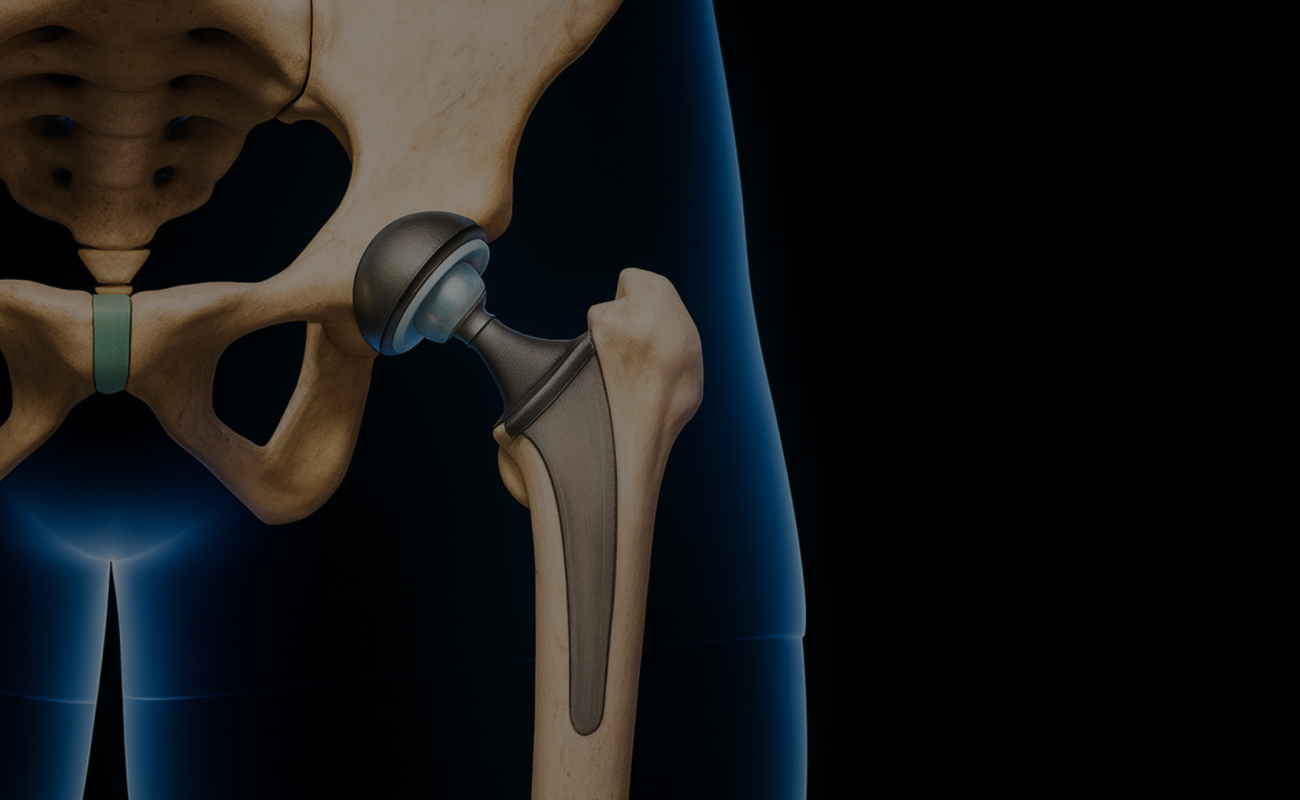
Hip replacement surgery involves replacing damaged joint surfaces, usually caused by osteoarthritis, with artificial implants. The femoral head is replaced with a sphere, and the acetabulum (part of the pelvis) with a cup, thus recreating a functional joint.
In principle, this is therefore a major surgery. But in reality, it is today perfectly mastered, with standardized techniques, precise instruments and well-established protocols.
In specialized centers, this procedure is performed daily. It benefits from decades of experience and constantly improving results. What might have been considered major surgery 20 or 30 years ago has now become a routine procedure current and secure.
Why are we talking about “major” surgery?
The term “heavy” is often used because it refers to an intervention:
- performed in the operating room, under anesthesia
- involving the replacement of an entire joint
- requiring a period of recovery and rehabilitation
However, it's important to make a distinction. Surgery is considered major when it results in a long recovery period, significant pain, or frequent complications. This is generally no longer the case for hip replacements today.
Less invasive modern techniques
Surgical techniques have evolved considerably. Today, many hip replacements are performed by minimally invasive approaches, which are more respectful of the muscles and surrounding tissues.
This allows:
- less post-operative pain
- faster recovery
- a reduced risk of complications
- an earlier resumption of walking
The goal is to make surgery the most accurate and least traumatic possible.
A better organized, comprehensive approach
Today, hip replacement is no longer simply a surgical procedure. It is part of a complete care pathway, often referred to as “enhanced recovery after surgery” (ERAS).
This protocol aims to optimize each step:
- patient preparation before the procedure
- pain management from the operating room onwards
- early mobilization
- quick and secure exit
Thanks to this organization, patients are better prepared, better informed, and recover more quickly.
Recovery is often faster than you think
Contrary to popular belief, recovery after hip replacement surgery is often rapid. In many cases, the patient can get up and take a few steps on the same day or the day after the procedure.
Walking is encouraged very early on, as it promotes recovery, reduces the risk of complications and restores confidence.
Rehabilitation begins immediately, with simple exercises aimed at restoring mobility and strengthening the muscles around the hip.
The main stages of recovery are generally:
- walks with help in the first few days
- resumption of daily activities in 2 to 4 weeks
- progressive improvement in endurance and mobility
- resumption of adapted physical activities in a few months
Each recovery is different, but the majority of patients regain their independence quickly.
Pain and post-operative effects: what to expect?
Pain is often the main concern before an operation. Yet, today it is They were very well taken care of..Modern pain management protocols are implemented from the outset of the procedure, combining different types of medication to minimize discomfort.
In most cases, post-operative pain is moderate and transient, It is well controlled by the treatments. It decreases rapidly over the course of several days.
What is often striking for patients is that the pain associated with the operation quickly becomes less significant than that caused by osteoarthritis before surgery.
What are the real risks?
Like any surgical procedure, hip replacement surgery carries risks. However, these risks are now rare and well-mastered.
The main possible complications include:
- prosthesis infection
- phlebitis or pulmonary embolism
- hip dislocation
- inequality in limb length
These risks are limited thanks to strict preventive measures: antibiotics, anticoagulants, precise surgical techniques and rigorous post-operative monitoring.
In the vast majority of cases, the procedure takes place without complications.
A major improvement in quality of life
The main objective of hip replacement is to eliminate pain and restore mobility. In the vast majority of cases, the results are very satisfactory.
Patients find:
- a pain-free walk
- improved autonomy
- the possibility of resuming physical activities
- a significantly improved quality of life
The lifespan of modern prostheses is generally between 15 and 25 years old, or even more.
Major surgery… but not as “heavy” as before
In the end, hip prosthesis It remains a serious surgical procedure, requiring preparation and recovery. But it no longer corresponds to the image of "major surgery" that was once attributed to it.
Today, it's an operation controlled, secure and very efficient, with simplified suites and often rapid recovery.
What makes the difference is not just the surgical technique, but the entire care pathway and patient support.
Key takeaways
Hip prosthetics may seem daunting, but today they are well-defined and largely optimized.
- It's not a minor surgery, but it is safe.
- modern techniques reduce its impact
- Recovery is often quick
- The results regarding pain and mobility are excellent.
Consulting and gathering information allows you to better understand the intervention and approach this step with more serenity.