

TOTAL KNEE REPLACEMENT
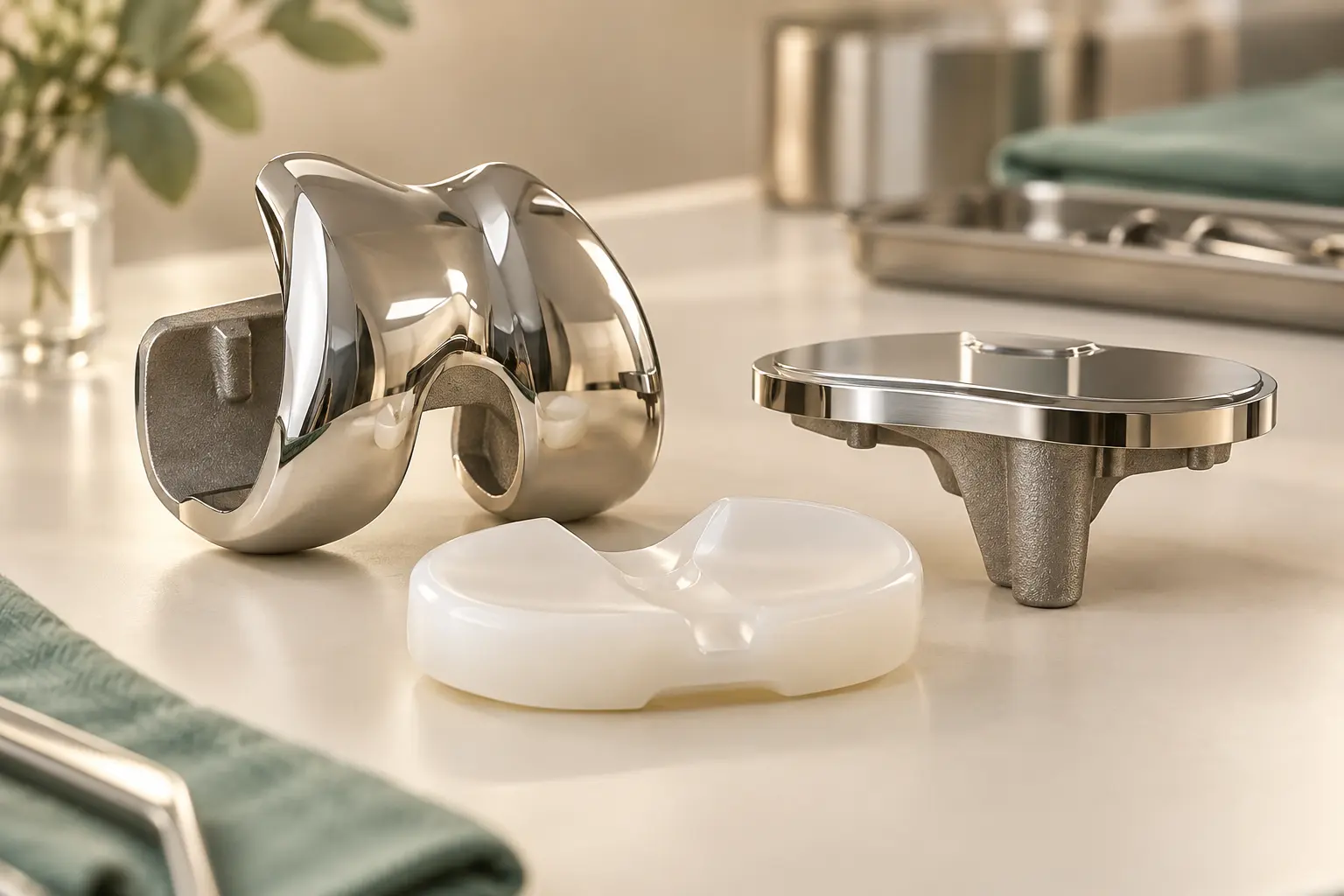
A total knee replacement replaces the worn articular surfaces of the femur and tibia with artificial components. A medical-grade plastic insert is placed between these components to allow them to glide smoothly. Depending on the situation, the articular surface of the patella may also be treated.
The decision to recommend a knee replacement takes into account pain, impairment in daily activities, clinical examination, and imaging. It also depends on treatments already tried and the patient's goals. A radiographic image of osteoarthritis, on its own, is not sufficient to decide on surgery.
UNDERSTANDING TOTAL KNEE REPLACEMENT

-
This is the area located on the inner side of the knee and is the most frequently affected by osteoarthritis. Its wear and tear can cause internal pain and gradually lead to leg deformity.
-
Located on the outer side of the knee, this compartment is less frequently affected. Its wear and tear can cause lateral pain and gradually alter the leg's alignment.
-
This joint is located between the kneecap and the femur. When it is affected, pain often appears when climbing stairs, squatting, or after sitting for a long time.

WHEN TO CONSIDER A TOTAL KNEE REPLACEMENT?
A total joint replacement may be discussed when pain and loss of function are significant and non-surgical treatments are no longer sufficient to improve daily life.
Persistent and significant pain
The pain is frequent or present at rest and persistently interferes with activities. Its impact should be assessed with the patient.Limitation of daily activities
Walking, moving around, or performing everyday tasks become difficult. The functional impairment is just as important as the images.Extensive joint damage
The examination and imaging show significant deterioration in several compartments of the knee, consistent with the symptoms.Insufficient relief with other treatments
The appropriate conservative measures do not provide sufficient or lasting improvement. Their relevance is reassessed on a case-by-case basis.
A prosthesis is not automatically necessary simply because of age, an X-ray showing osteoarthritis, or isolated pain. The patient's overall health, other health problems, and expectations are also taken into account.
PREPARE FOR THE INTERVENTION
The preparation allows for the assessment of general health, the organization of the return home, and the anticipation of the first stages of recovery.
PRE-OPERATIVE ASSESSMENT
The assessment includes a consultation with the surgeon and a pre-operative evaluation tailored to your health. Additional tests or examinations may be requested depending on your medical history and needs.
INTERVENTION PLANNING
The choice of components and technique depends on the anatomy, the condition of the bones and ligaments, as well as the desired balance. Examinations serve to prepare for the procedure and do not solely determine the choice of treatment.
PHYSICAL PREPARATION AND PRACTICE
Exercises or physiotherapy before surgery can help prepare mobility and strength. It is helpful to arrange home care, transportation, and assistance upon returning home, as well as to plan for any walking aids recommended by the team.
INSTRUCTIONS BEFORE THE OPERATION
The team will provide specific instructions regarding fasting, hygiene, and medication. No treatment should be interrupted or modified without consulting the medical team. Smoking and certain health issues may also be discussed during the preparation.
HOW DOES THE PROCEDURE WORK?
A total knee replacement is performed through an incision that provides access to the joint. The surgeon removes the damaged joint surfaces, prepares the bone, and positions the components. The precise technique and procedure vary depending on the anatomy and surgical plan.
INSTALLATION AND ANESTHESIA
The patient is positioned on the operating table, usually on their back. General or regional anesthesia, sometimes combined with sedation, may be offered after discussion with the anesthesia team. The skin is prepared under sterile conditions, and checks are performed to confirm the side to be operated on and the planned surgical approach.
ACCESS TO THE JOINT
The surgeon accesses the knee through an incision at the front. They carefully separate the tissues to expose the joint. This procedure is usually performed via open surgery, not arthroscopically.
PREPARATION AND REPLACEMENT OF SURFACES
The damaged joint surfaces are removed by preparing the ends of the femur and tibia to receive the components. The surgeon selects their size and position based on the anatomy and surgical plan. The components are then fixed to the bone, most often with surgical cement or, in some cases, without. A medical-grade plastic insert is placed between the metal components. The patella may be resurfaced if deemed appropriate.
BALANCE AND MOVEMENT CONTROL
The surgeon checks the position of the components, the mobility of the knee, and the balance of the tissues that stabilize it. They also check the movement of the patella and the range of motion achieved. Intraoperative radiographic examination is not routine and depends on the surgeon's practice and the surgical context.
CLOSURE AND END OF THE PROCEDURE
The tissues and skin are closed, and then a dressing is applied. The patient is transferred to the recovery room for postoperative monitoring. The duration of the operation and the length of hospital stay vary depending on the situation and the organization of the facility.
Accurate positioning and knee balance are essential to achieve stable and patient-appropriate movement.
WHAT ARE THE OPTIONS FOR TOTAL KNEE REPLACEMENT?
Several technical choices can be made during a total knee replacement. They do not all correspond to equivalent alternatives: some depend on the condition of the tissues, the bone, or surgical practices.
The choice is made based on anatomy, bone quality, ligament balance, and the patient's medical condition. It is explained to the patient before the procedure.
FIXING WITH CEMENT
Surgical cement secures the components to the bone. This method is commonly used and allows for immediate fixation. The choice of cement depends primarily on the type of bone and the surgical plan.
CEMENT-FREE FIXING
Some implants are designed to allow bone to gradually fuse to their surface. This option can be considered in certain situations, depending on bone quality and the type of implant. It is not suitable for all patients.
Patella preserved or resurfaced
The articular surface of the patella can be preserved or replaced with a suitable component. The decision depends on its condition, function, and the surgeon's assessment.
IMPLANT MODEL AND LIGAMENT BALANCE
Knee prostheses differ primarily in their design and the degree of stability they provide. The choice depends on the condition of the ligaments and the stability of the knee. The aim is to preserve stabilizing structures whenever possible.
Computer-aided planning or other tools can be used depending on the situation and the team's practice. They are not necessary in all cases and do not, on their own, guarantee a particular outcome.
Each option is chosen based on the characteristics of the knee and the desired functional outcome.
The immediate aftermath and hospitalization
Recovery Room Monitoring
After the operation, the team monitors the patient's general condition, pain levels, and the operated limb. Pain management is tailored to the individual situation and the facility's protocols.
FIRST MOVEMENTS
Mobilization and initial exercises begin as soon as they are possible and permitted. A professional assists the patient in standing and walking, using technical aids if necessary.
ORGANIZING THE RETURN
Discharge can be considered when the patient's general condition, pain level, mobility, and return home conditions allow. The length of hospital stay varies depending on recovery, overall health, and the organization of care.
REHABILITATION AND RETURN TO ACTIVITIES
1 – START OF REHABILITATION
Physiotherapy begins soon after the procedure, according to the team's instructions. It supports the gradual resumption of walking, knee mobility, and everyday activities.
2 – PROGRESSION OF REHABILITATION
The program aims to improve mobility, strength, and movement control. Its content evolves according to pain, swelling, gait quality, and observed progress.
3 – DAILY LIFE AND WORK
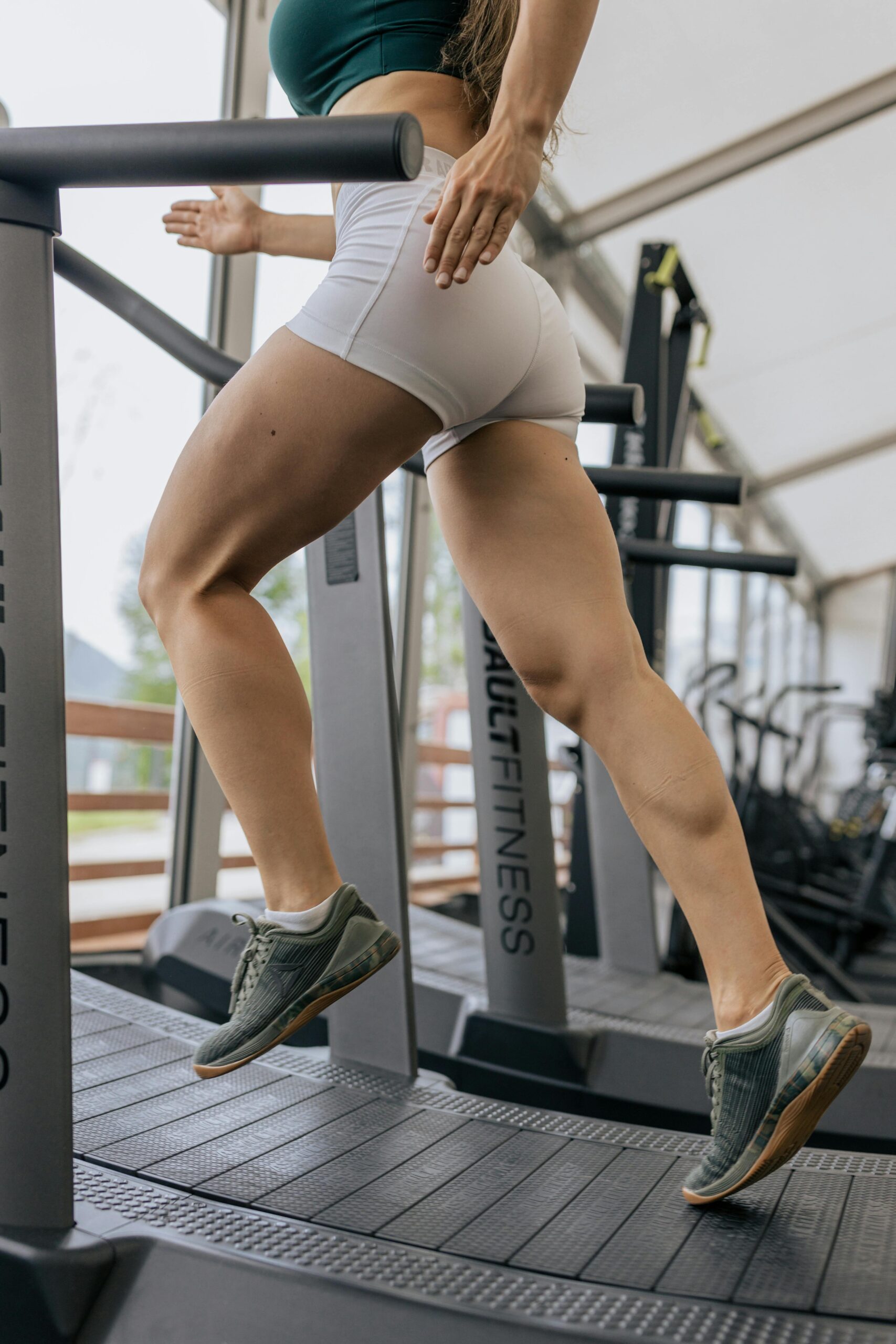
Walking with assistance, and then its gradual reduction, is done progressively according to the patient's balance and confidence. Driving, stairs, and returning to work are assessed individually, taking into account mobility, reflexes, medications taken, and job requirements.
4 – SPORT
Resuming activities is discussed with the medical team and depends on the patient's progress. Low-impact activities can sometimes be resumed gradually; high-impact activities or those involving pivoting movements require a specific discussion.
The resumption of activities depends on the observed recovery and the team's opinion, not solely on the time elapsed.

EXPECTED RESULTS, LIMITATIONS AND RISKS
OBJECTIVES AND EXPECTED RESULTS
The goal is to reduce pain associated with the damaged joint and to improve walking and daily activities. The extent of the benefit varies from person to person and cannot be guaranteed.
BOUNDARIES
The operated knee may remain different from a natural knee. Stiffness, swelling, discomfort with certain movements, or residual pain may persist. The outcome also depends on recovery, physiotherapy, and the patient's overall health.
RISKS AND COMPLICATIONS
Like any surgical procedure, knee replacement carries risks, including infection, bleeding, and hematoma. In the longer term, the implant may wear out or become loose, and further surgery may sometimes be necessary. The team implements monitoring and preventative measures tailored to each patient's individual needs.
AN INTERVENTION TAILORED TO EACH PATIENT
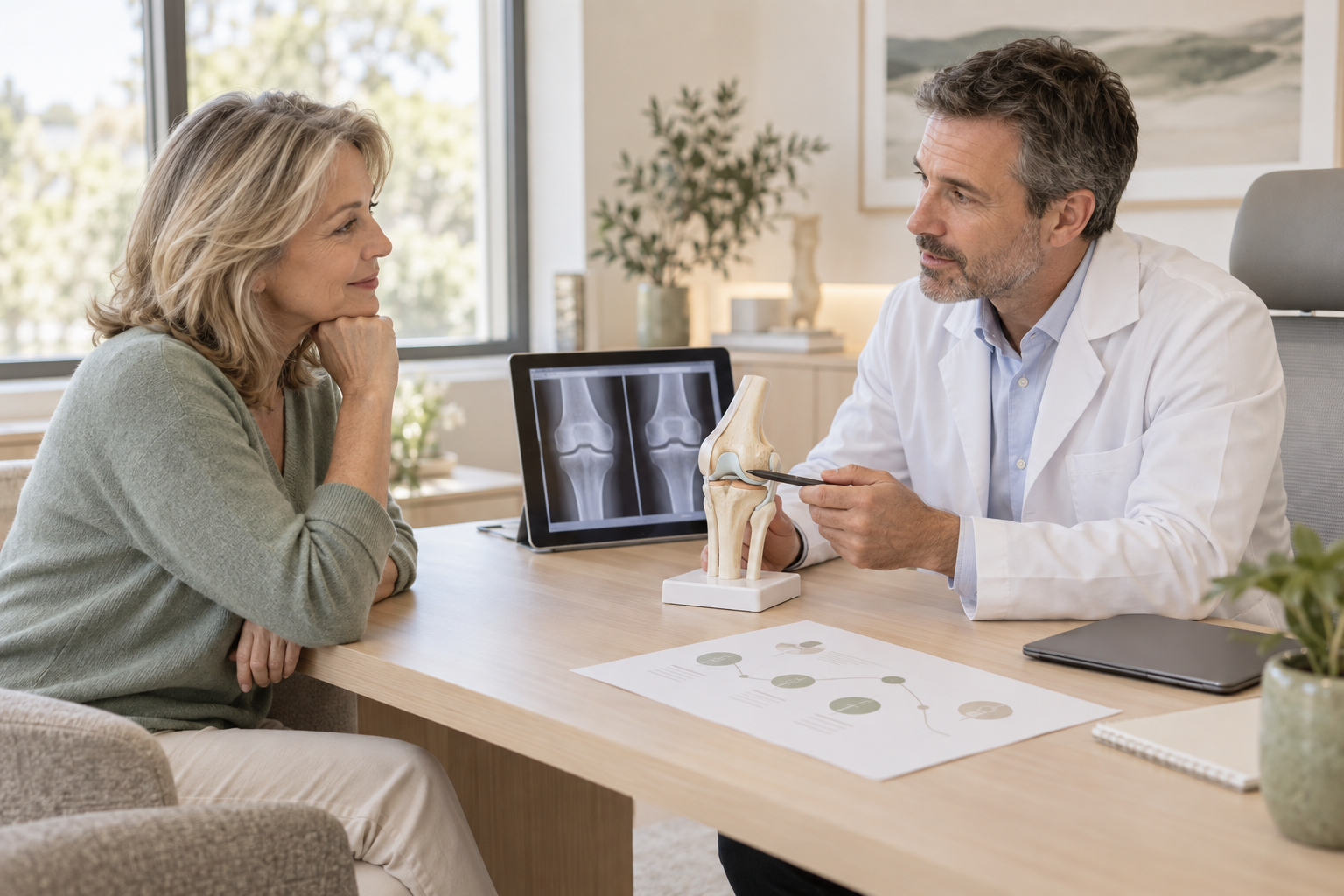
Two patients with advanced knee osteoarthritis do not necessarily require the same treatment. The indication and technical choices are discussed on a case-by-case basis.
Dr. Benoît Coulin takes into account age, anatomy, tissue and bone quality, the extent of the damage, activity level, profession, associated injuries, previous treatments, and personal goals.
The technique, timing of the intervention, and recovery program are tailored to these factors. Alternatives and limitations of the prosthesis are discussed so that the patient can make an informed decision.
«"The choice of a prosthesis is based on the patient's discomfort, their examination, and their objectives."»
FREQUENTLY ASKED QUESTIONS
HAVE YOU BEEN OFFERED A KNEE PROSTHESIS?
A clinical evaluation and imaging analysis help to confirm the indication, compare treatment options and discuss the technique best suited to your situation.
