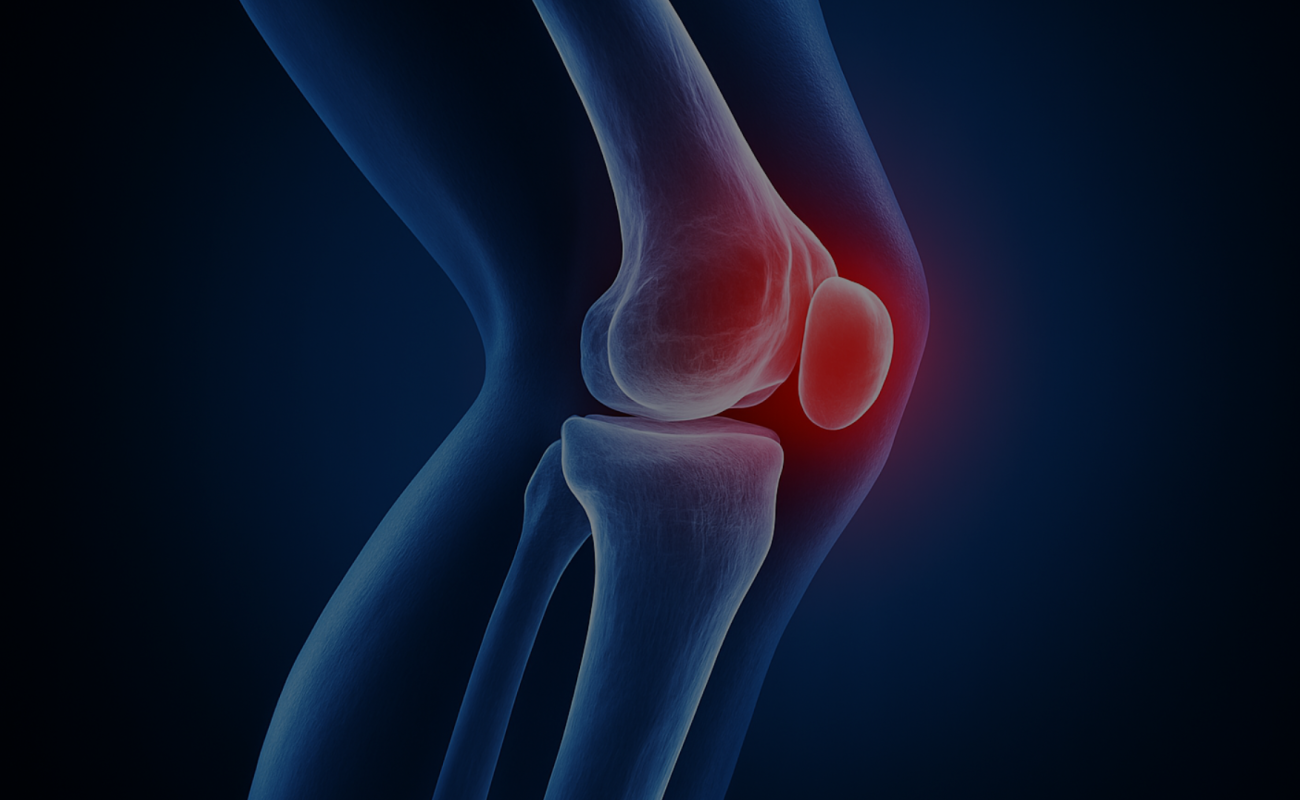

What is an osteotomy ?
Osteotomy is a surgical procedure that consists of correcting the axis of the lower limb by making a controlled bone cut, followed by precise realignment.
The goal is to rebalance joint pressures in order to relieve a worn, painful or overloaded area.
Rather than replacing the joint, osteotomy allows it to be preserved by modifying the way in which stresses are exerted on the cartilage.
It is part of a conservative surgery approach, particularly for young and active patients who wish to delay joint replacement as much as possible.
When should an osteotomy be considered ?
Knee osteotomy is indicated when the joint is still partially preserved, but a mechanical misalignment leads to accelerated wear of a single compartment (most often the inner one).
It is recommended in particular in the following cases :
- Unicompartmental osteoarthritis of the knee in a young patient.
- Genu varum (bowed legs) or genu valgum (X-shaped knees) leading to overwork on one side of the joint.
- Chronic instabilities or mechanical pain linked to a bad axis.
- There is a need to delay a prosthesis when the other compartments of the joint remain healthy.
This surgery is often offered as an alternative to a total joint replacement in patients under 60 years of age, who wish to maintain an active lifestyle and preserve their natural joint.
What does the intervention consist of ?
Osteotomy involves making a partial cut in the bone (femur or tibia), then opening or closing an angle to restore the ideal alignment of the lower limb. An anatomical plate and screws are used to maintain the correction during bone healing.
Osteotomy is most often performed :
- At the proximal tibia : in cases of genu varum (bow legs).
- At the distal femur : in cases of genu valgum (knock knees).
Each surgical procedure is carefully planned. Dr. Coulin uses state-of-the-art tools.precision imaging and, if necessary, a 3D planning to anticipate correction and obtain optimal alignment, adapted to the patient's anatomy and biomechanics.
What are the post-operative consequences ?
The aftermath after a knee osteotomy vary depending on the extent of the correction and the type of bone involved. In general:
- Partial weight-bearing is permitted for a few days after surgery.
- The transition to full support is done gradually, depending on bone consolidation.
- Rehabilitation begins quickly to maintain mobility, prevent stiffness and strengthen muscles.
- A resumption of normal activities is possible between 2 and 3 months.
- Sports recovery occurs between 4 and 6 months, depending on progress.
Control X-rays are taken regularly to check bone healing and adjust the recovery rate.
What results can you expect ?
Osteotomy offers excellent results in well-selected patients. It allows:
- Significant pain relief.
- A slowing of the progression of osteoarthritis.
- Improved joint function and walking.
- A delay, or even avoidance, of fitting a prosthesis.
It is important to remember that osteotomy does not cure osteoarthritis, but it allows for a lasting rebalancing of the joint, giving a second life to a knee that is still partly healthy.
Precise, personalized and scalable surgery
Dr. Coulin places particular emphasis on preoperative planning, radiological analysis of the joint axis, and rigorous patient selection. Osteotomy is a powerful tool in the joint-preserving strategy.
It can also be combined with other surgical procedures if necessary:
This comprehensive approach helps optimize results and ensure better joint longevity.
Are you young, active and suffering from the beginnings of knee osteoarthritis?
Dr. Coulin will see you for a consultation in Geneva to assess the relevance of a osteotomy in your case. The indication is made taking into account your functional objectives, your activity level and your anatomy.
Knee osteotomy represents a modern and conservative solution, offering patients an effective alternative to preserve their joint and maintain their quality of life.