
TENDON INJURIES AND RUPTURES
Tendons connect muscles to bones and transmit the force necessary for movement. A tendon injury can be an irritation, a partial tear, or a complete rupture, occurring gradually or after trauma.
Clinical examination and, if necessary, imaging help to identify the affected tendon and the extent of the damage. Treatment aims to relieve symptoms and restore adequate function, favoring conservative solutions when appropriate.
UNDERSTANDING TENDON INJURIES AND RUPTURES

RECOGNIZING THE SYMPTOMS
Pain from a tendon injury can develop gradually or occur suddenly after movement or exertion. Symptoms vary depending on the tendon involved and the severity of the injury.
- Localized pain: It manifests itself near the tendon or its insertion. It may increase during a specific movement or exertion.
- Pressure sensitivity: The affected area may be painful to the touch.
- Weakness : Some movements become more difficult or less powerful.
- Functional discomfort: Walking, climbing stairs, straightening the knee or lifting the leg can become uncomfortable depending on which tendon is affected.
These symptoms may have other causes. A clinical examination is necessary to determine the diagnosis, particularly after trauma or in cases of sudden loss of strength.
HOW DO TENDON INJURIES OCCURRENT?
A tendon injury can occur after a single accident or develop gradually. Its mechanism depends on the tendon, the stresses it has undergone, and the individual context.
Sudden trauma
A fall, a sudden movement or an intense contraction can cause a partial injury or a rupture.
Repeated requests
Repetitive movements can irritate a tendon and promote the gradual onset of pain.
Degenerative evolution
Over time, some tendons can lose some of their strength and become more vulnerable to stress.
Excessive constraints
A rapid increase in the intensity of an activity or an effort exceeding the tendon's capacity can contribute to its overload.
MAKE THE RIGHT DIAGNOSIS
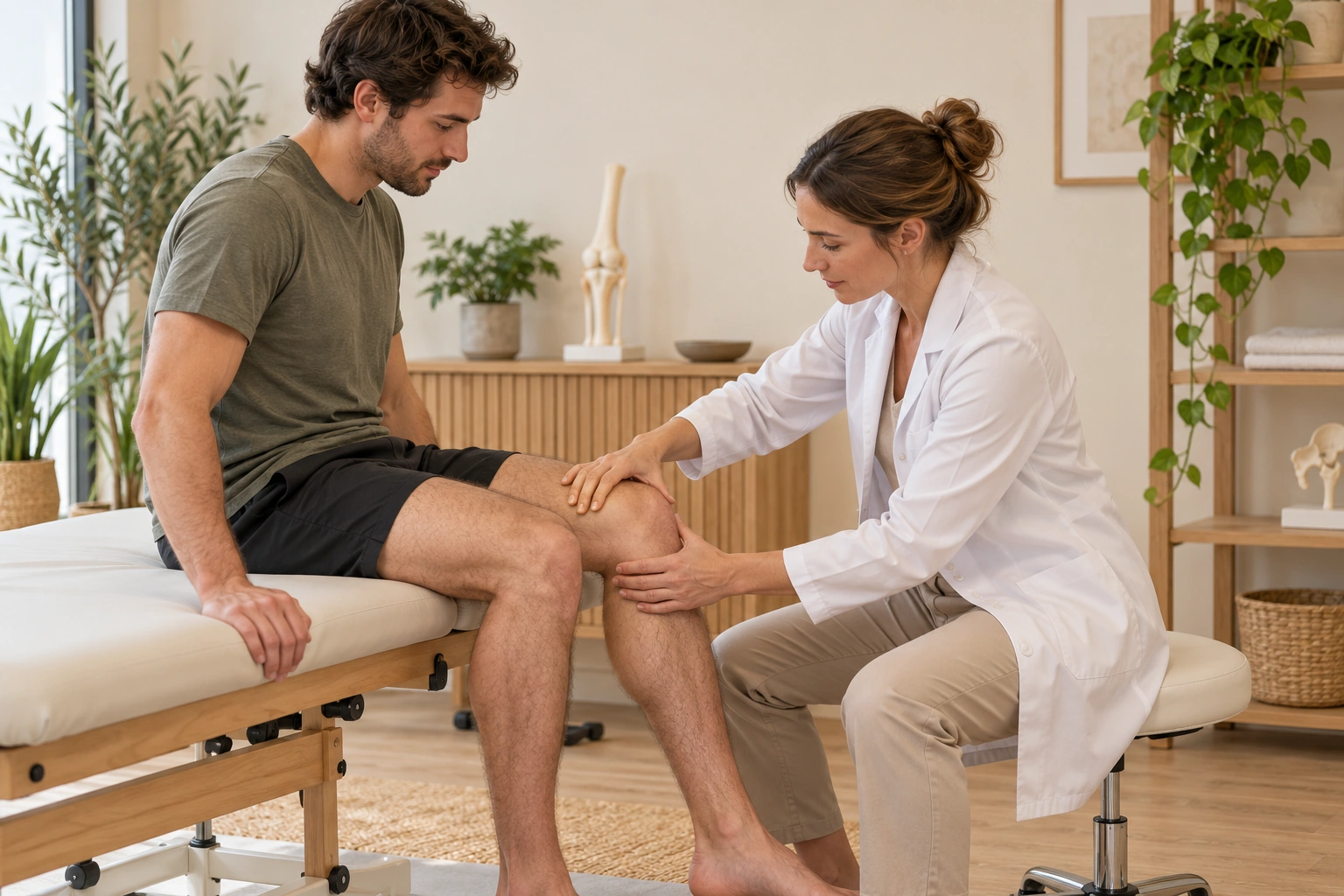
The assessment aims to identify the affected tendon, the nature of the injury, and its impact on movement. Tests are selected based on symptoms and the clinical examination.
01 – EXCHANGE ABOUT SYMPTOMS
The doctor specifies the circumstances of onset, the location of the pain, the activities hindered, and the evolution of the symptoms.
02 – CLINICAL EXAMINATION
The examination assesses pain, mobility, strength, and tendon function. The tests performed depend on the area involved.
03 – IMAGING IF NECESSARY
An ultrasound or MRI can help determine the extent of the lesion. The choice of examination depends on the clinical situation.
A PROGRESSIVE APPROACH TO CARE
Treatment depends on the affected tendon, the type of injury, and the degree of functional impairment. For many injuries, non-surgical management can be considered as a first-line approach.
Adapt the activities
Temporarily reducing the movements that trigger pain can help prevent excessive strain on the tendon. The goal is to maintain an activity level compatible with the symptoms, without prolonged, unprescribed immobilization.
Relieving the symptoms
Pain relief measures or medication can be discussed with a healthcare professional depending on the patient's profile. Their suitability depends on the patient's medical history and clinical situation.
Physiotherapy
Physiotherapy can help to gradually restore mobility, strength, and function. Exercises are tailored to the affected tendon and progress according to tolerance.
Reassess the evolution
Monitoring allows observation of the evolution of pain and function, and then adjustments to activities or the rehabilitation program. Additional imaging may be considered if it helps to clarify the course of action.

WHEN TO CONSIDER SURGERY?
Intervention is not necessary for all tendon injuries. It can be discussed depending on the type of rupture, its functional consequences, and the progression despite appropriate treatment.
Complete rupture with loss of function
A complete rupture can lead to significant loss of strength or prevent certain movements. The affected tendon and the possibilities for repair must be assessed.
Traumatic injury depending on the tendon involved
Some ruptures occurring after trauma require rapid specialist evaluation. The decision depends in particular on the location and extent of the injury.
Symptoms persist despite treatment
Surgery may be considered when pain or functional impairment persists despite appropriate conservative management. The decision is made on a case-by-case basis, after discussion of the expected benefits and limitations.
KEEP MOVING OR RESUME ACTIVITIES
Resumption of activities is gradual, depending on symptoms, function, and the recommendations of the healthcare professional treating the patient. Movements that cause significant pain may be temporarily modified and then reintroduced as the patient's condition improves.
Physiotherapy can support the return to normal movement and activities. The time frame varies depending on the affected tendon, the extent of the injury, and the chosen treatment.


A CARE APPROACH TAILORED TO EACH PATIENT
Each Tendon injury must be assessed within its context. The tendon involved, the age of the injury, daily activities, and level of discomfort all contribute to the choice of treatment.
Dr. Benoît Coulin examines the symptoms and function to determine if further tests are needed. Conservative and surgical options can then be discussed depending on the situation.
Follow-up care allows treatment to be adapted to the patient's progress and goals. The therapeutic decision is based on clinical findings and available imaging.
«"The choice of treatment depends on the tendon affected, the extent of the injury, and the discomfort experienced on a daily basis."»
FREQUENTLY ASKED QUESTIONS
ARE YOU WORRIED BY PAIN OR LOSS OF STRENGTH?
A clinical examination and, if necessary, appropriate imaging can help to determine the origin of the symptoms and to discuss a personalized treatment plan.
