

BUCKET HANDLE LESION
A bucket-handle tear is a tear of the meniscus where a fragment can shift towards the center of the joint. It can cause pain, swelling, and sometimes locking, preventing the knee from fully straightening.
Treatment depends on the discomfort, the examination of the knee, and the characteristics of the tear. The goal is to relieve symptoms and, when possible, to preserve the meniscus.
UNDERSTANDING THE BUCKET HANDLE INJURY

-
This is the area located on the inner side of the knee and is the most frequently affected by osteoarthritis. Its wear and tear can cause internal pain and gradually lead to leg deformity.
-
Located on the outer side of the knee, this compartment is less frequently affected. Its wear and tear can cause lateral pain and gradually alter the leg's alignment.
-
This joint is located between the kneecap and the femur. When it is affected, pain often appears when climbing stairs, squatting, or after sitting for a long time.

RECOGNIZING THE SYMPTOMS
A bucket-handle tear often occurs after a twisting of the knee, sometimes during a bending movement. Symptoms vary depending on the position of the fragment and the extent of the tear.
Pain on the side of the knee
It can appear during movement or when bearing weight. It is sometimes more pronounced when the knee bends or rotates.Swollen knee
Swelling may appear after the injury or increase in the hours that follow.Knee locking
The knee may remain partially bent and be difficult to fully straighten. A persistent locking should be evaluated promptly.Stumbling or feelings of instability
Certain movements can cause mechanical discomfort, a feeling of catching, or difficulty in moving the knee.
These symptoms can also have other causes. A clinical examination is necessary to determine the origin of the discomfort and whether imaging tests are helpful.
→ Learn more about meniscus injuries
HOW DOES THIS INJURY OCCUR?
A bucket-handle tear typically corresponds to a longitudinal tear of the meniscus. The fragment may remain in place or shift within the joint, where it may restrict certain movements.
Knee twist
A rapid change of direction while the foot remains on the ground can exert significant stress on the meniscus.
Flexion with rotation
A movement combining a bent knee and rotation can cause a tear, particularly during a sporting activity or an everyday movement.
Longitudinal tear
The tear follows the length of the meniscus. As the fragment moves towards the center of the knee, it takes on a shape resembling a bucket handle.
Associated lesions
A meniscus tear can sometimes coexist with ligament damage. Clinical examination helps to identify these associated injuries.
→ Understanding the different types of meniscus injuries

MAKE THE RIGHT DIAGNOSIS
The diagnosis is based on the circumstances of the injury, the symptoms, and the examination of the knee. Imaging complements this assessment when it can clarify the form of the lesion or look for associated damage.
01 — ASK ABOUT SYMPTOMS
The doctor inquires about the movement causing the pain, the evolution of the swelling, and the possible presence of a blockage or snagging.
02 — EXAMINE THE KNEE
The clinical examination assesses mobility, pain, swelling, and stability. It also helps to look for other injuries that could explain the symptoms.
03 — CHOOSING USEFUL IMAGES
An MRI may be requested to better define the meniscal tear and look for any associated damage. X-rays may be useful depending on the context, particularly for examining bone structures.
The treatment decision is based on all clinical and radiological elements.
PROTECT THE KNEE AND RELIEVE THE SYMPTOMS
Initial management aims to limit pain and swelling while avoiding movements that worsen symptoms. The course of action depends in particular on the knee's mobility and the presence of any locking.
It may include a temporary adaptation of activities and, if necessary, walking aids. Physiotherapy is considered at the appropriate time, depending on the medical assessment and the progress of the knee.
ADAPT THE ACTIVITIES
It is best to temporarily reduce movements that trigger pain, such as pivoting, deep bending, or activities involving sudden changes of direction. Rest is relative: movements that remain comfortable can be continued as advised by the doctor.
REDUCE PAIN AND SWELLING
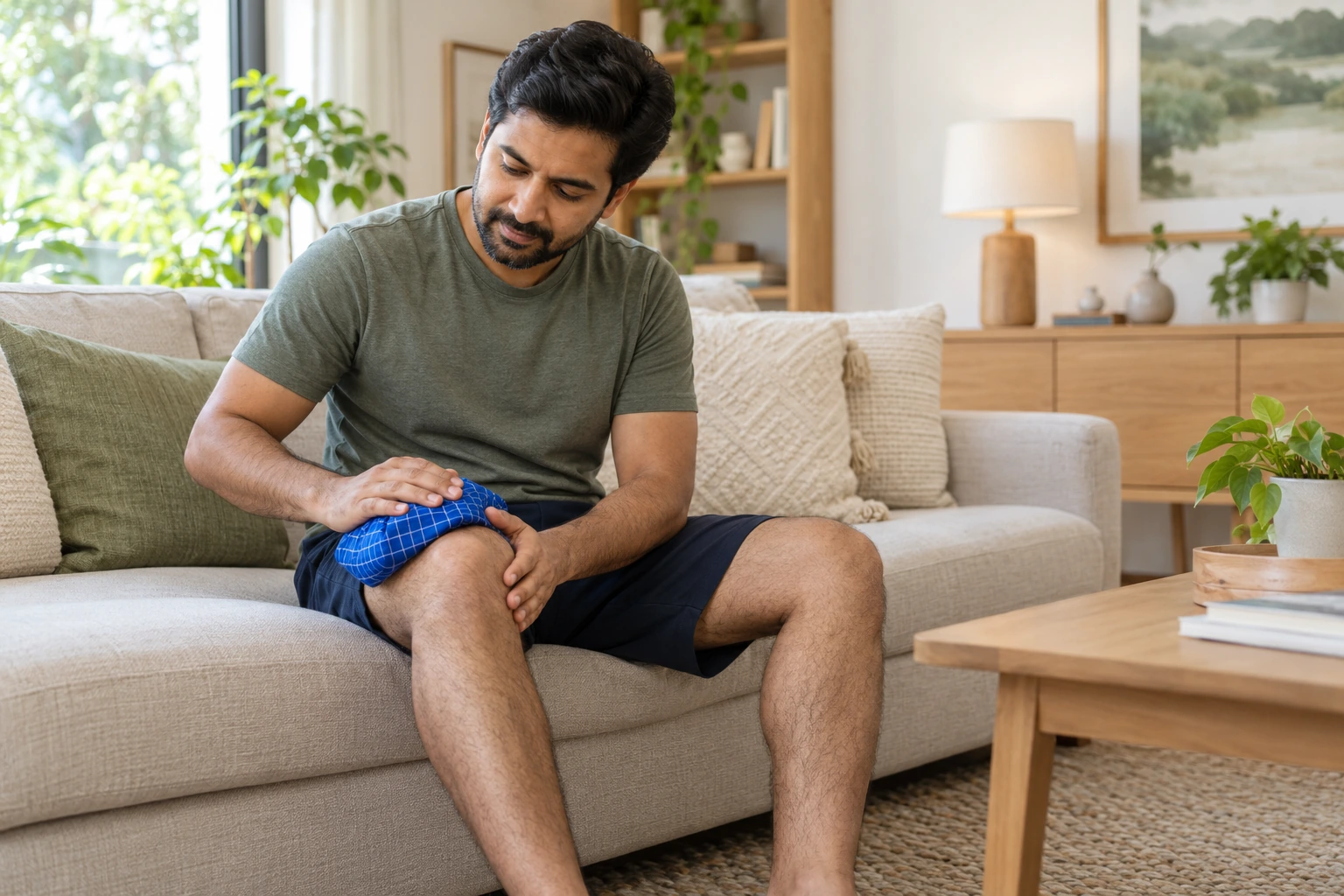
Simple measures, such as applying cold compresses with a cloth and elevating the leg, can contribute to comfort. Medication can be discussed with a healthcare professional depending on each individual's medical condition.
SUPPORT THE MARCH IF NECESSARY
If weight-bearing is painful or difficult, crutches may be offered temporarily after assessment. A brace is not always necessary: its usefulness depends on the knee's mobility and the clinical situation.
RESUME PHYSIOTHERAPY AT THE RIGHT TIME
When pain and mobility allow, physiotherapy can help gradually regain movement, strengthen muscles, and improve knee control. Exercises are tailored to the symptoms and the progression of the injury.
A knee that remains locked or cannot be fully extended requires prompt medical evaluation.
Preserving the natural joint remains a priority as long as conservative treatments allow for maintaining a satisfactory quality of life.
WHEN TO CONSIDER INTERVENTION?
Surgery may be considered when a displaced meniscal fragment significantly impedes movement, particularly in cases of persistent locking. The decision depends on the examination, imaging, the age of the injury, and its potential for repair.
The choice also takes into account pain, the patient's activities, the condition of the meniscus, and any associated injuries. When surgery is indicated, the strategy aims to preserve as much functional meniscal tissue as possible.
Persistent blockage
A knee that remains locked in flexion or cannot be fully extended warrants prompt evaluation. Surgery may be considered if the displaced fragment explains this limitation.
A tear that can be repaired
Depending on the shape of the tear and the quality of the tissue, meniscus repair may be considered. The goal is to preserve the meniscus when the characteristics of the injury allow it.
Unstable, irreparable fragment
In some situations, if a fragment is causing symptoms and cannot be repaired, the surgeon may discuss limited removal of the unstable portion. The procedure is tailored to the injury and aims to preserve the rest of the meniscus.
RESUME ACTIVITIES GRADUALLY
Until the injury has been assessed, avoid putting strain on the knee or attempting to unlock it with sudden movements. The course of action depends on the patient's mobility, pain level, and medical recommendations.
Activities without pivoting or deep bending can sometimes be maintained if they remain comfortable and do not worsen symptoms. In case of locking, difficulty bearing weight, or significant pain, limit movement and seek medical advice.
After treatment begins, walking and exercise are gradually resumed according to the knee's progress. Returning to sports requires sufficient recovery of mobility, strength, and movement control.
Pain or swelling that increases after activity may indicate a need to reduce its intensity or duration. Persistent stiffness or loss of mobility should be reported to a doctor.
The recovery plan is based on the symptoms and the progress of the knee.
→ Discover the stages of knee rehabilitation


A CARE APPROACH TAILORED TO EACH PATIENT
A bucket-handle injury is not treated the same way in all patients. The presence of a blockage, the level of pain, and the impact on activities guide the discussion.
Dr. Benoît Coulin takes into account the clinical examination, imaging when indicated, the age of the lesion, and any associated conditions. Age, occupation, activities, and personal goals are also considered in the evaluation.
Conservative treatment and surgery are discussed based on the profile and characteristics of the tear. When surgery is considered, the possibility of preserving the meniscus is one of the factors taken into account.
«"Each decision takes into account the injury and the daily inconvenience it causes."»
FREQUENTLY ASKED QUESTIONS
IS YOUR KNEE STILL LOCKED OR DIFFICULT TO EXTEND?
A clinical examination, combined if necessary with appropriate imaging, helps to determine the origin of the symptoms and to discuss a personalized treatment plan.
