

Fracture of the olecranon (proximal ulna)
There olecranon fracture It affects the part of the ulna that forms the tip of the elbow. When the fragments are displaced or the elbow extension mechanism is affected, surgery may be recommended to realign and stabilize the bone.
The decision depends on the displacement and configuration of the fracture, the stability of the elbow, the clinical examination, the condition of the skin, and the patient's functional goals. Some minimally displaced fractures can be treated without surgery.
UNDERSTANDING OLECRANA FRACTURE

WHEN SHOULD SURGERY BE CONSIDERED FOR AN OLECRANON FRACTURE?
Surgery may be considered when the fracture compromises elbow alignment or function. The evaluation involves examining the arm and analyzing X-rays, supplemented if necessary by a CT scan.
Fragments moved: Fixation can help restore bone alignment.
Active extension of the elbow is compromised: The fracture can interrupt the transmission of force from the triceps to the forearm.
Unstable joint or misaligned articular surface: The fracture configuration may require stabilization to preserve joint congruity.
Open fracture or complex configuration: A wound adjacent to the fracture or multiple fragments requires specialist evaluation and may alter the strategy.
A stable, minimally displaced fracture does not automatically require surgery. Treatment also takes into account the patient's functional age, general condition, activity level, and needs.
NON-SURGICAL TREATMENT
When a greater tuberosity fracture is minimally displaced and stable, it can often be treated without surgery. Initial management focuses on protecting the shoulder, verifying the position of the fragment, and gradually introducing movement to reduce stiffness.
COMFORT IMMOBILIZATION
A sling supports the arm and can help relieve pain. Its duration depends on the healing of the fracture and medical instructions.
FRACTURE CHECK-UPS
Consultations and imaging examinations verify that the fragment remains in the correct position and that consolidation is progressing.
GRADUAL MOBILIZATION
Hand, wrist, and elbow movements are resumed according to instructions. Shoulder mobilization begins gradually, at the appropriate time.
PHYSIOTHERAPY
Rehabilitation supports the return of mobility and function of the shoulder, while respecting consolidation and pain.

HOW DOES THE PROCEDURE WORK?
Surgery most often involves putting the fragments back in place and then fixing them. The precise technique depends on the shape of the fracture.
Installation and anesthesia
The patient is positioned to allow access to the elbow. The procedure is performed under general or regional anesthesia, sometimes combined with general anesthesia. After safety checks, the arm is prepared under sterile conditions.
Access to the fractured zone
The surgeon makes an incision at the back of the elbow, at the level of the olecranon. He exposes the fragments while protecting the surrounding tissues and nerve and vascular structures.
Reduction and fixation of the fracture
The fragments are realigned. The surgeon then chooses the hardware based on the fracture: a pin and cerclage wire for some simple fractures, or a plate with screws for more complex fractures or those involving multiple fragments. The fixation must maintain the reduction while allowing for healing. The triceps tendon and adjacent tissues are taken into account during the procedure.
result check
The surgeon checks bone alignment, fixation stability, and elbow mobility. X-rays can help confirm the position of the fragments and hardware.
Closure and end of the intervention
The incision is closed and protected with a dressing. A splint may be applied to protect the elbow, depending on the stability achieved and the rehabilitation instructions. The patient is then monitored in the recovery room.
The goal is to stabilize the fracture while allowing appropriate mobilization as soon as the team deems it safe.
The duration of the procedure varies depending on the fracture and any associated procedures. The type of anesthesia, the length of hospital stay, and the use of a splint are determined by the medical team.
WHICH FIXING TECHNIQUE SHOULD I CHOOSE?
The fixation method is chosen based on the fracture line, displacement, and stability of the elbow. There is no single technique suitable for all olecranon fractures.
The surgeon also considers bone quality, functional needs, and any associated injuries. The goal is to achieve a sufficiently stable fixation to allow for healing and a gradual return of movement.
Pins and bands
This method can be used for certain simple fractures, particularly transverse fractures. The pins and cerclage wire hold the fragments together. The choice depends on the fracture configuration and the stability achieved.
Plate and screws
A plate fixed with screws may be preferred for comminuted, oblique, or more complex fractures. It allows for the stabilization of several fragments, but the hardware can sometimes be sensitive under the skin at the tip of the elbow.
Adaptation to bone quality and fragments
The size of the fragments and the strength of the bone influence the choice and positioning of the hardware. In certain specific situations, the surgeon must adapt the setup to achieve stable fixation.
Temporary protection and mobilization
A splint can protect the elbow initially. The duration of protection and the initiation of movement depend on the stability of the fixation and the surgeon's instructions.
The final choice is individualized after analysis of the fracture and the patient's needs.

EVOLUTION, LIMITATIONS AND POSSIBLE COMPLICATIONS
The decision weighs the discomfort caused by the fracture, the expected benefits of fixation, and the risks inherent in the procedure.
The goal is to improve the stability and function of the elbow, while taking into account the limitations specific to each fracture and the risks of the intervention.
Objectives and expected results
The intervention aims to realign and stabilize the fracture, promote its consolidation, and preserve elbow function as much as possible.
Boundaries
Recovery varies depending on the fracture, bone quality, and any associated injuries. Stiffness, discomfort when bearing weight on the tip of the elbow, or loss of mobility may persist. The fixation hardware may be palpable or uncomfortable under the skin.
Risks and complications
Like any surgical procedure, this surgery carries risks of infection, hematoma, wound healing problems, stiffness, or persistent pain. The fracture may heal slowly, or the fixation may become unstable; further surgery may sometimes be necessary, particularly if the hardware causes discomfort.
REHABILITATION AFTER SURGERY FOR A TROCHIERAL FRACTURE
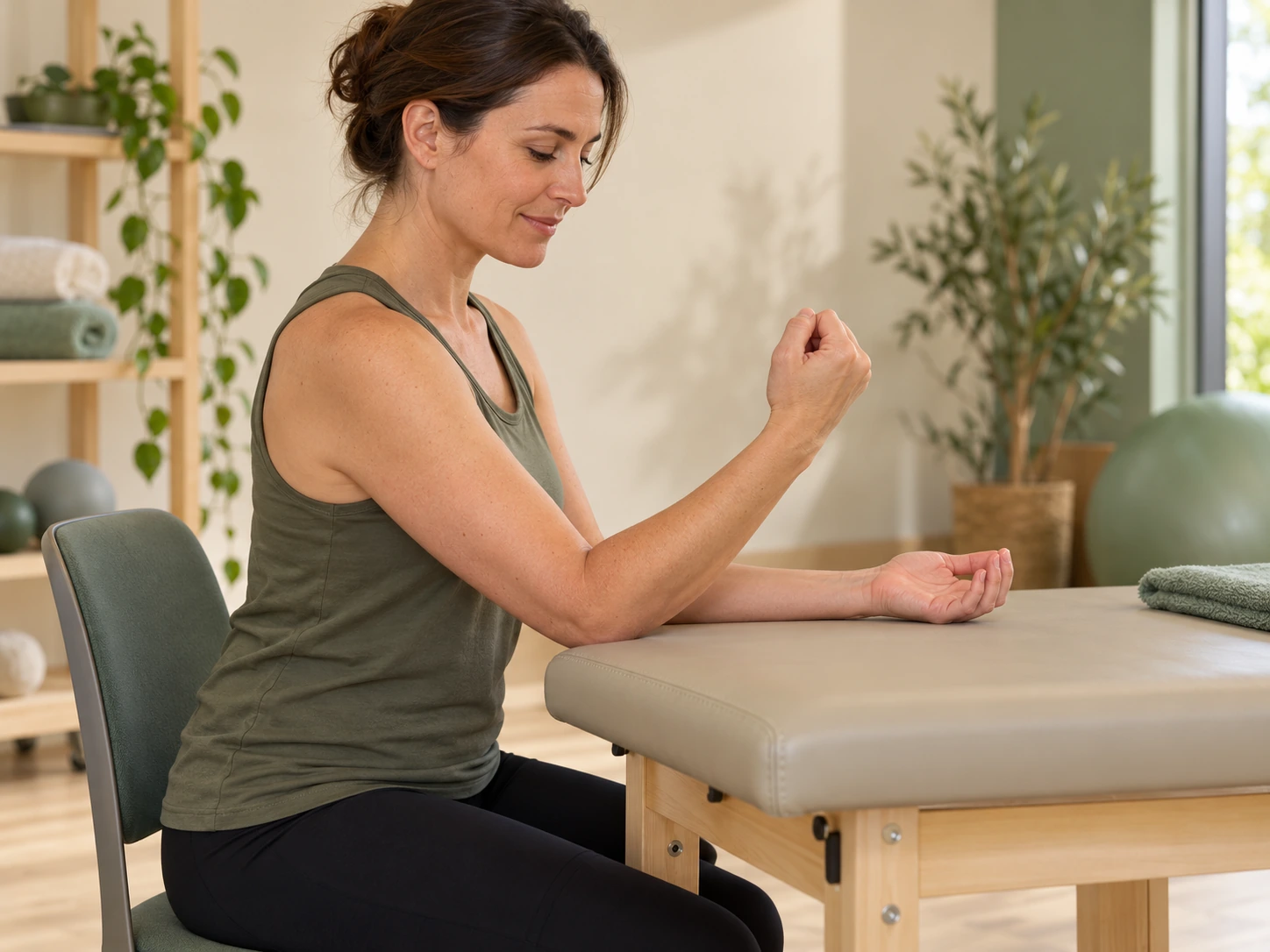
Initially, rehabilitation aims to control pain and swelling, protect the scar, and preserve finger and shoulder mobility. The elbow is only moved according to the surgeon's instructions.
Progress is then made with tailored exercises to regain flexion and extension, then strength and control of the arm. The program depends on the consolidation and stability of the fixation.
Daily activities and work are gradually resumed. Driving, carrying loads, and activities requiring pushing or pulling with the operated arm await approval from the medical team.
Resuming sports activities depends on bone healing, mobility, strength, and the demands of the activity. It is a gradual process that takes place after medical approval, depending on progress and in the absence of complications.
The recovery of movement must respect the consolidation and stability of the fixation.
A CARE APPROACH TAILORED TO EACH PATIENT
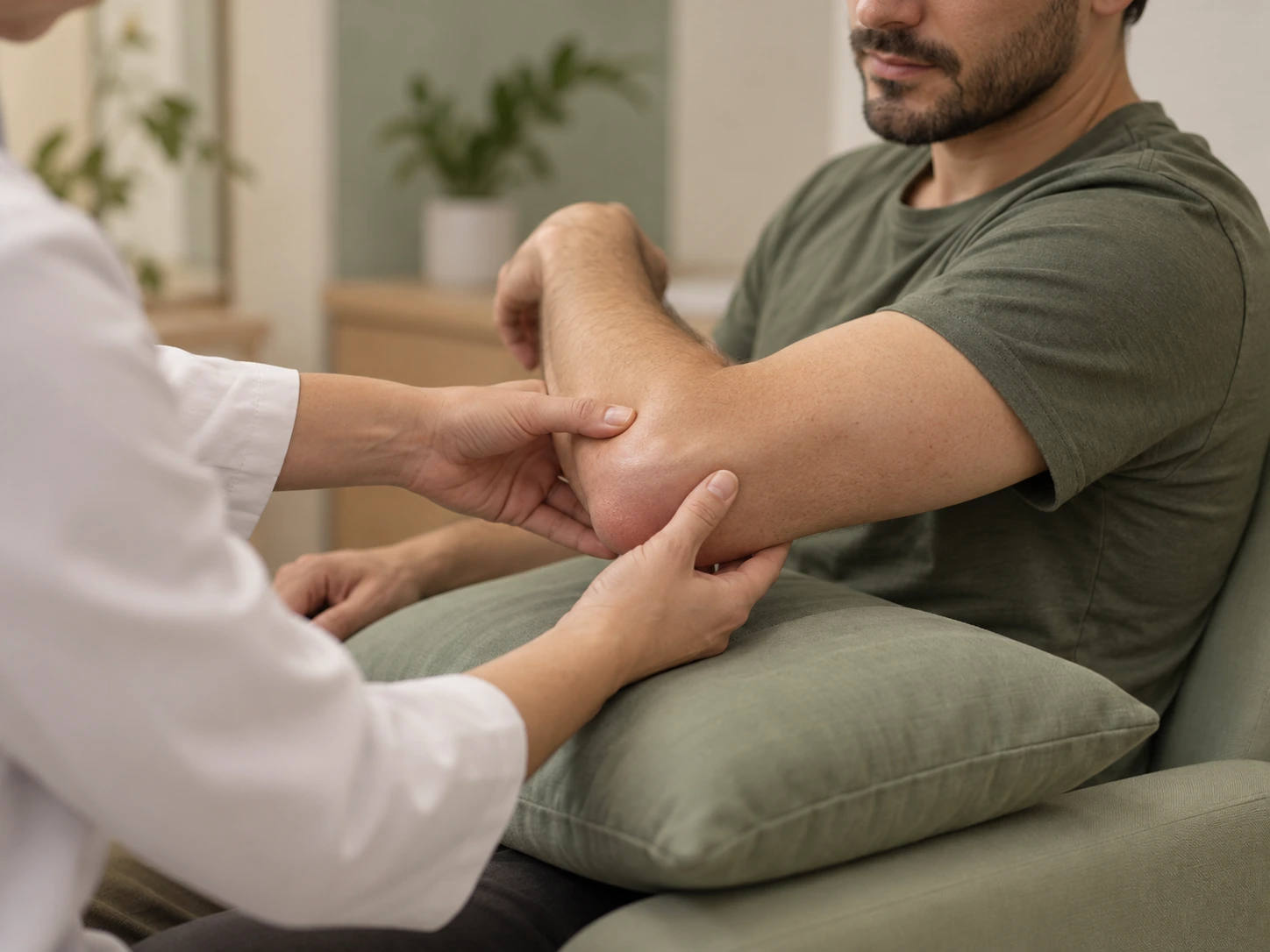
Two patients with a similar olecranon fracture on images do not necessarily need the same treatment.
Dr. Benoît Coulin takes into account age, anatomy, bone quality, fracture displacement and complexity, associated injuries, activity level, occupation, and previous treatments. Personal expectations and goals also play a role in the decision.
The technique, the timing of the intervention, and the recovery program are adapted to these elements and to the clinical evolution.
«"Treatment is decided based on the fracture, the function of the elbow, and the needs of each patient."»
FREQUENTLY ASKED QUESTIONS
Do you have a fracture of the olecranon?
A clinical examination and imaging analysis allow us to assess elbow stability and discuss the treatment best suited to your situation.
