

Radial head fracture
A fracture of the radial head affects the upper end of the radius, near the elbow. It often occurs after a fall onto an outstretched hand or arm. Depending on its displacement and associated injuries, it may be treated without surgery or require intervention.
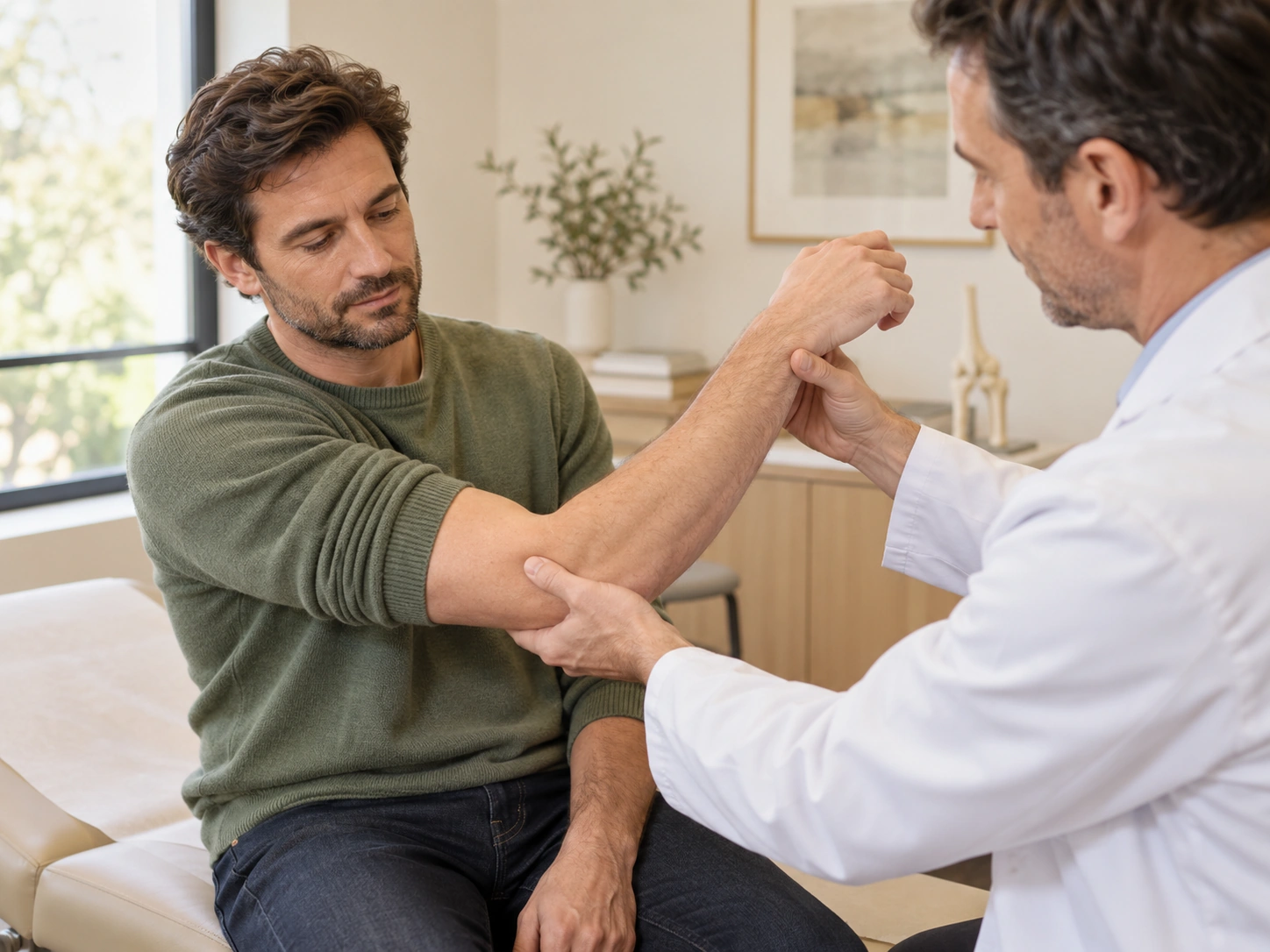
The choice depends on the clinical examination, imaging, elbow stability, and the ability to rotate the forearm. A fracture visible on imaging does not automatically mean that surgery is necessary.
UNDERSTANDING THE FRACTURE OF THE TROCHIERE

WHEN TO CONSIDER SURGERY?
Surgery may be discussed after a radial head fracture when mobility, elbow stability, or fragment configuration make non-surgical treatment insufficient.
- Fragments displaced : their position can compromise the mobility or congruence of the joint.
- Mechanical locking : a fragment may interfere with the flexion, extension or rotation of the forearm.
- Fractured into several fragments Reconstruction can be considered if the fragments are sufficiently repairable.
- Instability or associated injuries Treatment may need to take into account any associated ligament damage or fracture.
A stable, minimally displaced fracture can sometimes be treated without surgery. The image alone is not sufficient to decide whether to operate: functional impairment, clinical examination, mobility, and the patient's needs are also important factors.
NON-SURGICAL TREATMENT
When a radial head fracture is stable and minimally displaced, it can often be treated without surgery. Management initially protects the elbow, then gradually reintroduces movement to limit stiffness.
The duration of support and the pace of recovery are tailored to each fracture. Surgery is considered only if displacement, blockage of movement, or instability warrants it.
COMFORT IMMOBILIZATION
A sling can support the arm and help relieve pain. It is used temporarily, according to medical instructions.
FRACTURE CHECK-UPS
Clinical examination and, if necessary, imaging studies allow monitoring of the position of the fragments and the evolution of the fracture.
GRADUAL MOBILIZATION
Elbow movements and forearm rotation are resumed at the appropriate time, without forcing.
PHYSIOTHERAPY
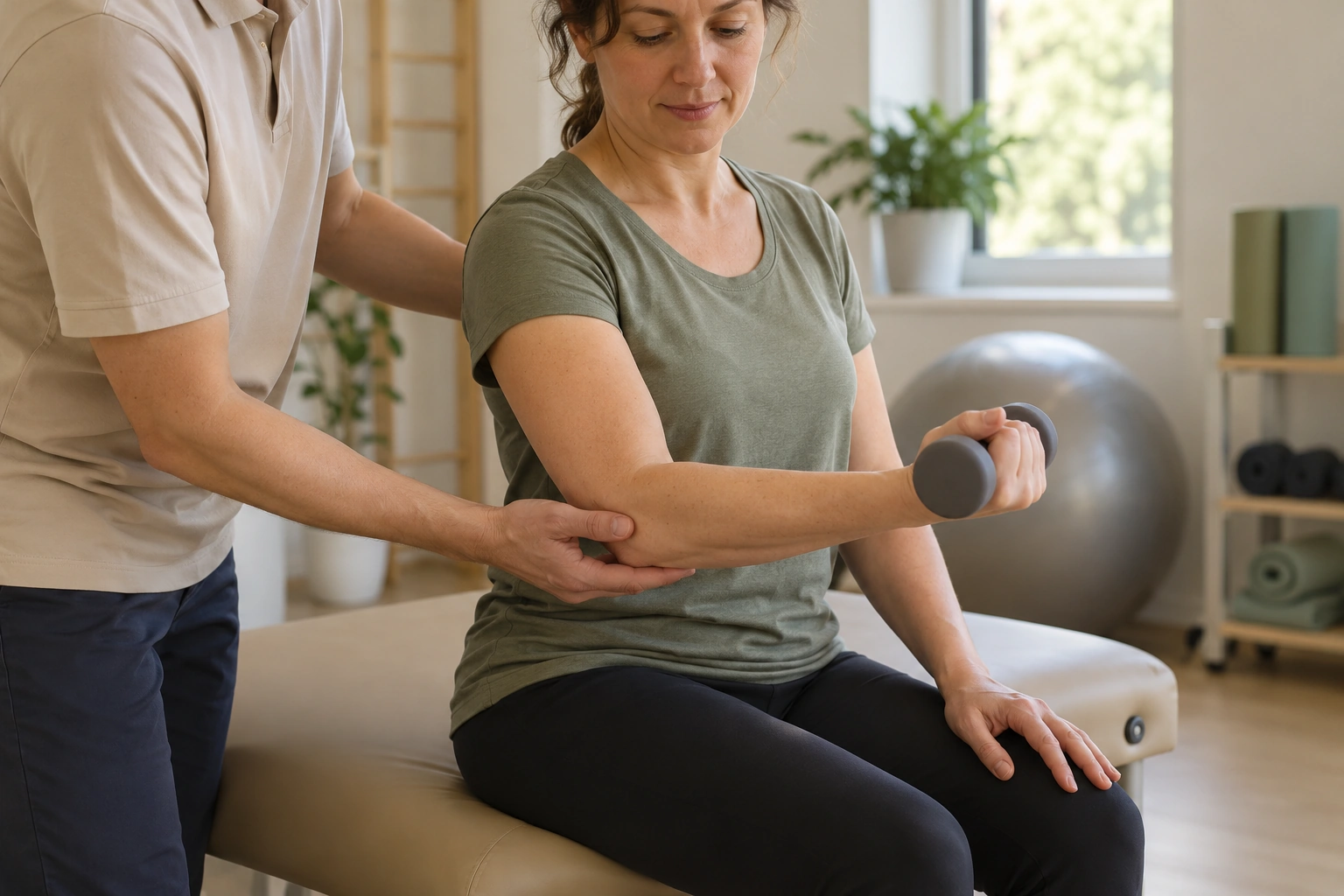
Rehabilitation can support the return of mobility and strength, while respecting fracture stability and pain.
HOW DOES THE PROCEDURE WORK?
The procedure varies depending on the fracture. The principle is to restore a stable radial head, or to replace it if it cannot be properly reconstructed.
Installation and anesthesia
The patient is positioned to allow access to the elbow and control of the limb. General anesthesia or another anesthetic strategy may be used depending on the anesthesiologist's assessment. The skin is prepared using sterile techniques, and the team verifies the side to be operated on and reviews the images.
Access to the fractured zone
The surgeon makes an incision near the elbow to access the radial head. The approach is chosen based on the fracture and the structures to be protected. The procedure is performed under direct visual control; it is not necessarily arthroscopic.
MAIN SURGICAL PROCEDURE
When fragments are reconstructible, they are repositioned and then stabilized with appropriate hardware, such as screws or a plate, depending on their size and location. If the radial head is too fragmented or cannot be satisfactorily reconstructed, replacement with a prosthesis may be considered. Associated injuries are assessed and treated as needed.
result check
The surgeon checks the stability of the fixation or prosthesis, as well as the mobility of the elbow and the rotation of the forearm. He ensures that the hardware is correctly positioned and that the surrounding structures are preserved.
Closure and end of the intervention
After the checks, the incision is closed and a dressing is applied. Temporary arm support may be prescribed depending on the stability achieved. The patient is then transferred to the recovery room for monitoring.
The choice between fixation and replacement depends on the possibility of reconstructing the fracture and the stability of the elbow.
The duration of the procedure, the type of anesthesia, and the length of hospital stay depend on the procedure and the patient's medical condition. These details will be specified by the team before the operation.
WHICH SURGICAL TECHNIQUE SHOULD BE CHOOSED?
The fixation aims to reconstruct the radial head when the fragments can be repositioned and stabilized. It allows for the preservation of the patient's bone, but depends on the fracture configuration.
When the fracture is too fragmented for reliable reconstruction, a radial head prosthesis may be considered. The choice also takes into account elbow stability and any associated injuries.
Reduction and fixation of fragments
The fragments are repositioned and then stabilized with appropriate materials. This option depends on their size, number, and condition.
Radial head replacement
A prosthesis can replace the radial head when the fragments cannot be satisfactorily reconstructed. Its positioning must respect the anatomy and stability of the elbow.
Management of associated injuries
Ligament damage or another fracture may require further intervention. This is determined after an assessment of the entire elbow.
Appropriate postoperative mobilization
The mobilization schedule depends on the stability achieved and the procedures performed. It is established by the surgical and rehabilitation team.
The chosen technique must correspond to the fracture and allow for the protection of the shoulder during consolidation.

AFTER THE PROCEDURE: THE FIRST STEPS
After the operation, the team monitors the elbow, pain, and sensation in the hand. Movement instructions depend on the procedure performed and the stability of the fracture.
WAKE-UP AND PAIN ROOM
The patient is monitored after anesthesia. The team assesses pain, dressing, and sensitivity of the arm and hand, then adapts care as needed.
ARM SUPPORT AND MOBILIZATION
A sling or brace can be used temporarily. The timing of when elbow and forearm movement can begin depends on the fixation, the prosthesis, and any associated injuries.
RETURN HOME AND MONITORING
Discharge may be considered depending on the patient's condition and the facility's organization. Instructions cover dressing changes, arm protection, and follow-up care. Any worsening pain, fever, discharge, or an unusually cold, pale, or numb hand should be reported to the medical team.
REHABILITATION AFTER A RADIAL HEAD FRACTURE
Initially, rehabilitation aims to control pain and swelling, protect the scar, and begin permitted movements. The arm may need to remain supported outside of exercises.
The progression then focuses on elbow mobility and forearm rotation, followed by strength and functional movements. The exercises are adjusted according to the stability of the fixation or prosthesis.
Driving, work, and daily activities are resumed according to the affected arm, the demands of the activity, and the patient's progress. Resuming physical work may require more precautions than resuming sedentary work.
Sport is resumed gradually, generally after sufficient recovery of mobility and strength, and after medical clearance. No timeframe can be guaranteed.
Rehabilitation must respect the limits set by the surgical team.

A CARE APPROACH TAILORED TO EACH PATIENT
Two people with a similar fracture do not always require the same technique. The displacement of the fragments and the stability of the elbow can differ.
The surgeon takes into account the patient's age, anatomy, bone quality, the severity of the fracture, any associated injuries, the affected arm, occupation, and activity level. The patient's expectations and previous treatments are also discussed.
The technique, the timing of mobilization, and the recovery program are adapted to these elements and to the progress after the intervention.
«"The decision is based on the fracture, the stability of the elbow, and each patient's recovery goals."»
FREQUENTLY ASKED QUESTIONS
Is surgery appropriate for your radial head fracture?
Clinical examination and imaging analysis allow us to discuss the indication and the possible technique with the team that is treating you.
