

PROSTHESIS REVISION
Prosthesis revision is a procedure that involves reworking all or part of a previously implanted joint. It can involve a hip or knee prosthesis. The procedure depends on the joint and the identified problem.
A new operation is not decided solely on the basis of an image or pain. The indication is assessed based on symptoms, clinical examination, the condition of the implant and bone, as well as additional tests. The goals and recovery possibilities are also discussed with the patient.
UNDERSTANDING PROSTHETIC REVISION

-
This is the area located on the inner side of the knee and is the most frequently affected by osteoarthritis. Its wear and tear can cause internal pain and gradually lead to leg deformity.
-
Located on the outer side of the knee, this compartment is less frequently affected. Its wear and tear can cause lateral pain and gradually alter the leg's alignment.
-
This joint is located between the kneecap and the femur. When it is affected, pain often appears when climbing stairs, squatting, or after sitting for a long time.

WHEN TO CONSIDER A PROSTHETIC REVISION?
A revision may be considered when a specific problem with the implant or its environment explains the symptoms or compromises the function of the joint.
Loosening or wear of components
A loss of fixation or wear of certain parts can cause pain or functional impairment. The assessment must confirm that these findings correspond to the symptoms.
Instability or malfunction
A feeling of instability, abnormal mobility, or unusual discomfort may lead to an investigation of a problem with tissue positioning or balance.
Infection around the implant
An infection requires specific tests. Treatment and the recovery schedule depend in particular on the results of the tests and the condition of the tissues.
Fracture or bone loss around the prosthesis
A fracture around an implant or bone loss can affect its stability. The strategy depends on the joint and the remaining bone.
Persistent pain does not always mean that a revision is necessary. An assessment may lead to recommendations for monitoring or other treatment, depending on the underlying cause.
PREPARING FOR A PROSTHETIC REVISION PROSTHESIS
The procedure depends on the joint involved, the reason for the revision, the condition of the implant, and the amount of available bone. A revision can be more complex than the initial placement.
Preoperative assessment
The patient is taken to the operating room. General or regional anesthesia may be offered depending on the procedure and the patient's health. The team checks the safety equipment before beginning and prepares the surgical area according to aseptic techniques.
Intervention planning
The surgeon accesses the implant through an incision adapted to the joint and the previous scar. Revision surgery generally requires direct exposure of the surgical area.
Physical preparation and practice
The preparation is tailored to the individual's mobility and general condition. It may be helpful to organize the home environment, arrange for temporary assistance, and prepare walking aids if needed.
Instructions before the operation
The team outlines guidelines for fasting, hygiene, and skin preparation. Regular treatments should not be interrupted without consulting the medical team. Smoking and other factors that can affect recovery are also discussed.
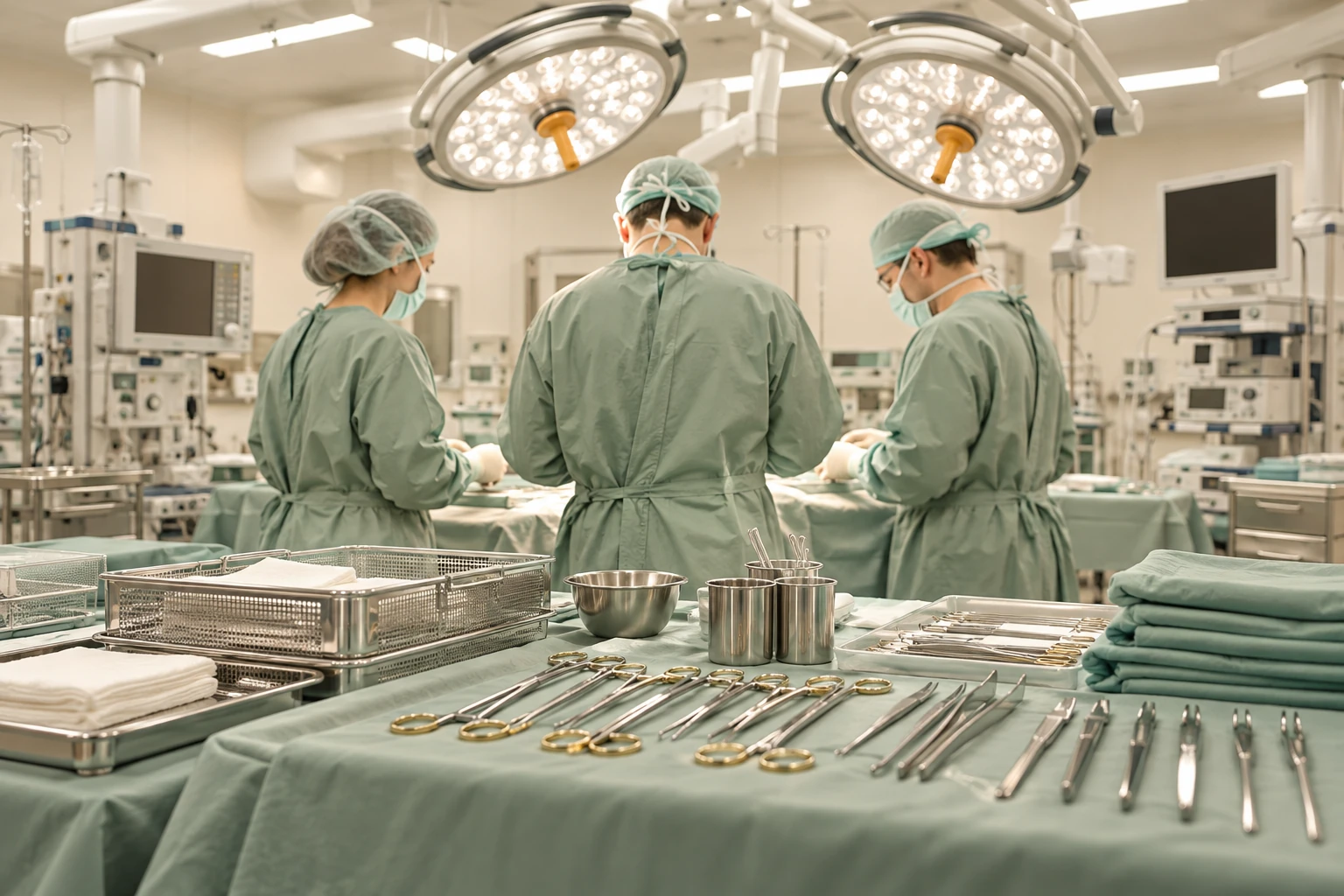
HOW DOES THE PROCEDURE WORK?
The procedure depends on the reason for the revision, the condition of the prosthesis, and the amount of available bone. A revision is generally more complex than an initial prosthesis implantation.
Installation and anesthesia
The patient is taken to the operating room. General or regional anesthesia may be offered depending on the procedure and the patient's health. The team checks the safety equipment before beginning and prepares the surgical area according to aseptic techniques.
Access to the knee
The surgeon accesses the implant through an incision adapted to the joint and the previous scar. Revision surgery generally requires direct exposure of the surgical area.
Addressing the identified problem
The components and tissues surrounding the implant are examined. Depending on the assessment, some elements are retained and others removed. The bone surfaces are prepared to receive the new components. If bone loss is present, bone grafts or a bone transplant may be considered. If an infection is confirmed, a specific treatment strategy is chosen; in some cases, treatment is carried out in several stages.
result check
The surgeon checks the position and fixation of the components, as well as the stability and mobility of the joint. The checks vary depending on whether it is a hip or a knee and depending on the procedures performed.
Closure and end of the intervention
The tissues are closed and a dressing is applied. Technical assistance or immobilization may be provided depending on the situation. The patient is then transferred to the recovery room for monitoring after the anesthesia wears off.
The duration of the operation and hospitalization varies depending on the joint, the extent of the revision, and the patient's general condition.
The goal is to correct the identified problem and restore a sufficiently stable and functional joint, preserving as much of the remaining structures as possible.
WHICH REVISION STRATEGY SHOULD I CHOOSE?
A prosthesis revision can involve a single component or the entire prosthesis. The choice depends on the joint, the cause of the problem, the condition of the bone, and the stability of the remaining components.
The assessment can also determine whether an infection needs to be treated before or during the procedure. The techniques and implants are not the same for the hip and the knee.
Reusing a component
When certain components remain securely fixed and properly fitted, they can sometimes be retained. This option depends on the overall assessment and the feasibility of achieving satisfactory fixing and operation.
Complete review
When several components are worn, loose or misaligned, all or part of the prosthesis can be replaced with implants designed for revision.
Bone reconstruction
If the bone has been weakened or resorbed, bone grafts or fillers may be considered. The choice depends on the location and extent of the bone loss.
Revision in one or more stages
In case of infection, the strategy depends on the tests, samples, and condition of the tissues. A phased approach may be necessary in some situations, but it is not always required.
3D planning can help prepare for certain complex hip or knee revisions.
→ Discover 3D planning in orthopedic surgery
No single technique is suitable for all patients: the choice is based on the joint involved and the problem identified.

AFTER THE PROCEDURE: THE FIRST STEPS
After the operation, the patient is monitored in the recovery room and then in the ward. Mobilization and weight-bearing are organized according to the joint and the movements performed.
The instructions vary depending on the fixation achieved, the condition of the bone, the possible presence of an infection and the general condition of the patient.
Recovery room and pain
The team monitors general parameters, pain levels, and the operated area. Pain medication is tailored to the patient. Resumption of fluids and food follows medical instructions.
Support, walking and technical assistance
Walking is resumed with the team when permitted. Weight-bearing may be immediate, limited, or delayed depending on the joint and the reconstruction process. Crutches or other walking aids may be necessary. A splint is not always required.
Return home and monitoring
The length of hospital stay depends on the procedure, mobility, pain level, and the organization of care. The team will explain how to monitor the dressing and incision, and what signs should be reported. The first follow-up appointment is scheduled before discharge.
REHABILITATION AND RETURN TO ACTIVITIES
Recovery depends on the joint operated on, the extent of the revision, the mobility before the procedure, and the condition of the tissues and bone. It may take longer than after a first placement.
Initially, rehabilitation aims to manage pain and swelling, protect the healing process, and gradually restore the permitted range of motion. Exercises are performed according to weight-bearing guidelines.
The progression can then work on strength, balance, and everyday movements. The program is tailored to the specific joint and evolves according to recovery.
→ Discover knee rehabilitation
Resuming walking, climbing stairs, driving, and work depends on mobility, the technical assistance still needed, and the requirements of each activity. These steps are discussed with the medical team.
The return to sport, if adapted, is gradual and depends on the condition of the joint, strength, balance and medical validation.
The resumption of play does not depend solely on the time elapsed: it must follow the evolution of the joint and the instructions of the team.
→ Discover the postoperative follow-up after orthopedic surgery

EXPECTED RESULTS, LIMITATIONS AND RISKS
After the procedure, the patient is monitored in the recovery room and then in the ward. Mobilization is organized with the team according to the stability achieved and the procedures performed.
The instructions for support and movement depend in particular on the bone condition, the fixation of the implants and any associated procedures.
Objectives and expected results
Prosthesis revision aims to address the identified problem, improve implant fixation or stability, and facilitate daily activities when a mechanical issue is the cause of discomfort. Results vary depending on the cause and condition of the joint.
Boundaries
Prosthesis revision does not guarantee the complete disappearance of pain or the same level of mobility as a joint without a prosthesis. Stiffness, discomfort, or weakness may persist, particularly if the tissues or bone are damaged or if several procedures have already been performed.
Risks and complications
The risks depend on the joint and the situation. They can include infection, hematoma, phlebitis, stiffness, persistent pain, fracture around the implant, or fixation failure. Further surgery may sometimes be necessary. The team tailors prevention and monitoring to individual risks.
The decision to revise a prosthesis involves weighing the problem to be treated, the expected benefits, the possible limitations and the risks specific to the patient.

A CARE APPROACH TAILORED TO EACH PATIENT
Two patients with a prosthesis can present similar symptoms but have different underlying causes. The treatment strategy also depends on the joint involved.
THE Dr. Benoît Coulin takes into account age, anatomy, bone and tissue quality, the severity of the problem, activity level, previous treatments, and the patient's personal goals.
The technique, the timing of the intervention, and the recovery program are tailored to these factors. For a hip replacement revision, the assessment aims in particular to determine which components need to be addressed and to anticipate any technical difficulties.
«"The strategy for prosthesis revision depends on the specific problem and what can be preserved."»
FREQUENTLY ASKED QUESTIONS
HAVE YOU BEEN OFFERED A PROSTHESIS REVISION?
A clinical examination and analysis of tests help to determine the cause of the problem, compare options and discuss a strategy tailored to your situation.
