

Osgood-Schlatter disease
Osgood-Schlatter disease is a common cause of pain in the front of the knee in growing adolescents. It is located at the anterior tibial tuberosity, the small bony bump located just below the kneecap.
Pain often occurs during running, jumping, or changes of direction. Diagnosis is primarily based on clinical examination; appropriate management helps adjust activities and support a gradual return to activity.
UNDERSTANDING KNEE OSTEOARTHRITIS

-
This is the area located on the inner side of the knee and is the most frequently affected by osteoarthritis. Its wear and tear can cause internal pain and gradually lead to leg deformity.
-
Located on the outer side of the knee, this compartment is less frequently affected. Its wear and tear can cause lateral pain and gradually alter the leg's alignment.
-
This joint is located between the kneecap and the femur. When it is affected, pain often appears when climbing stairs, squatting, or after sitting for a long time.
RECOGNIZING THE SYMPTOMS
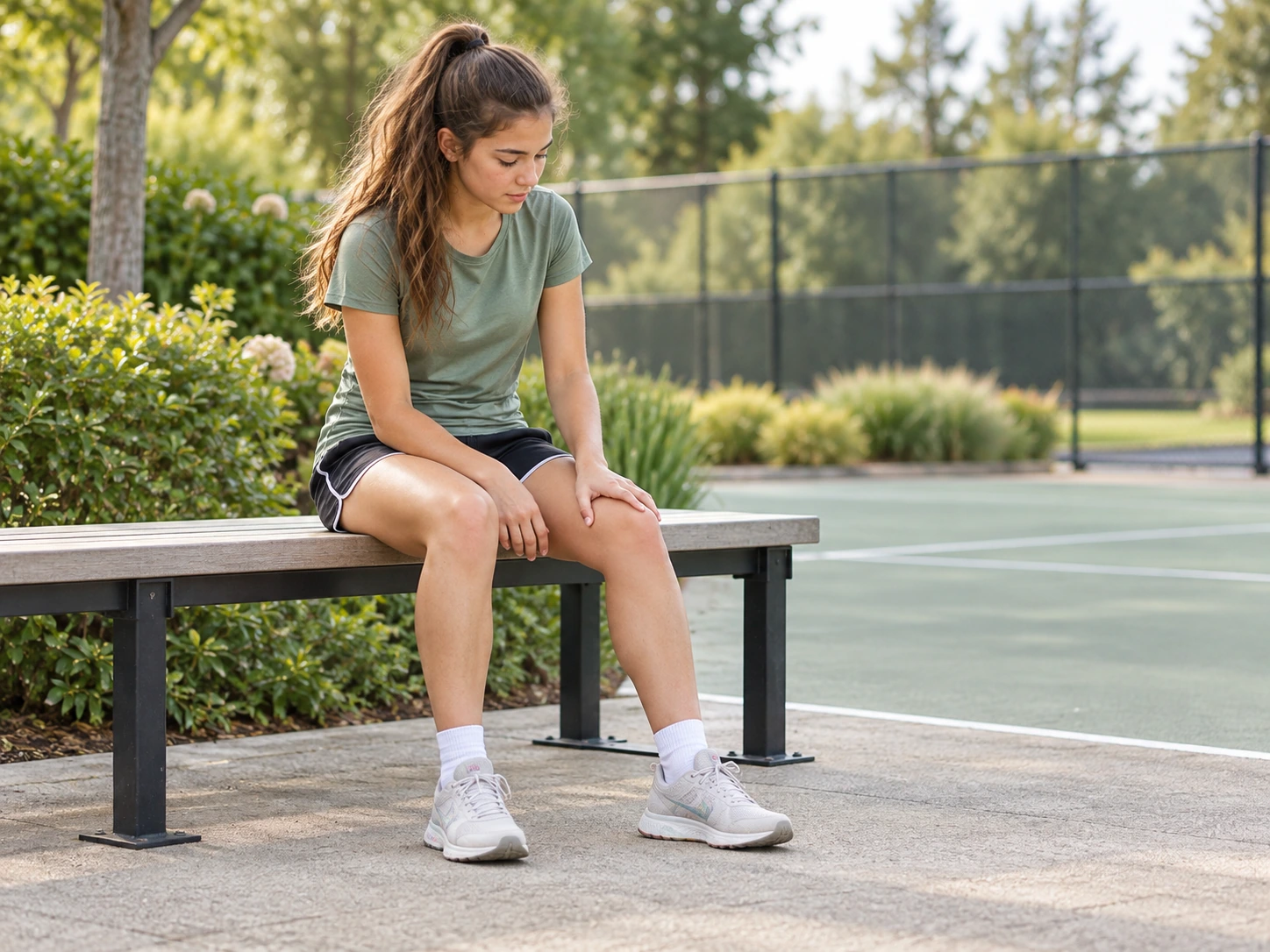
Osgood-Schlatter disease primarily causes pain directly below the kneecap, at the level of the bony bump located on the top of the tibia. It generally affects active adolescents during their growth spurts.
- Pain below the kneecap: It is located at the level of the tibial tuberosity and often increases when pressure is applied to this area.
- Pain during exertion: Running, jumping, kicking or kneeling can arouse discomfort.
- Local tenderness or swelling: The area may be sensitive and sometimes slightly swollen after activity.
- More visible bump: The tibial tuberosity may become more prominent. This prominence may persist even when the pain subsides.
Symptoms can vary depending on the intensity and frequency of activities. Pain that recurs with every workout or interferes with walking warrants medical attention. Sudden pain after an impact, an inability to bear weight, a very swollen knee, or a red and hot joint also warrants prompt evaluation.
Anterior knee pain can have other causes. In case of significant pain after an injury, consult the information in SOS Genou Genève on the assessment of knee pain and injuries.
WHY DOES OSGOOD-SCHLATTER DISEASE OCCUR?
Osgood-Schlatter disease most often occurs in growing adolescents who frequently engage in activities that put stress on the knee. It is linked to repeated traction of the patellar tendon on the tibial tuberosity, where there is still a growth area.
AN AREA STILL UNDER DEVELOPMENT
During growth, the tibial tuberosity has not yet fully matured. The traction exerted by the patellar tendon can irritate this area. Pain usually develops gradually, without a single injury being necessary.
REPEATED SPORTING MOTIONS
Sports involving running, jumping, accelerating, changing direction, or repetitive striking can put extra stress on the patellar tendon. Training frequency and knee response also play a role.
A PAIN THAT SHOULD BE DISTINGUISHED FROM OTHER CAUSES
Pain below the kneecap is not always related to Osgood-Schlatter disease. Other knee conditions, or, more rarely, pain originating in the hip, may require a different evaluation. Therefore, the diagnosis must take into account the patient's age, the location of the pain, and the circumstances of its onset.
Osgood-Schlatter disease is distinguished in particular from pain located at the lower tip of the kneecap, which may correspond to another growth-related condition.
MAKE THE RIGHT DIAGNOSIS
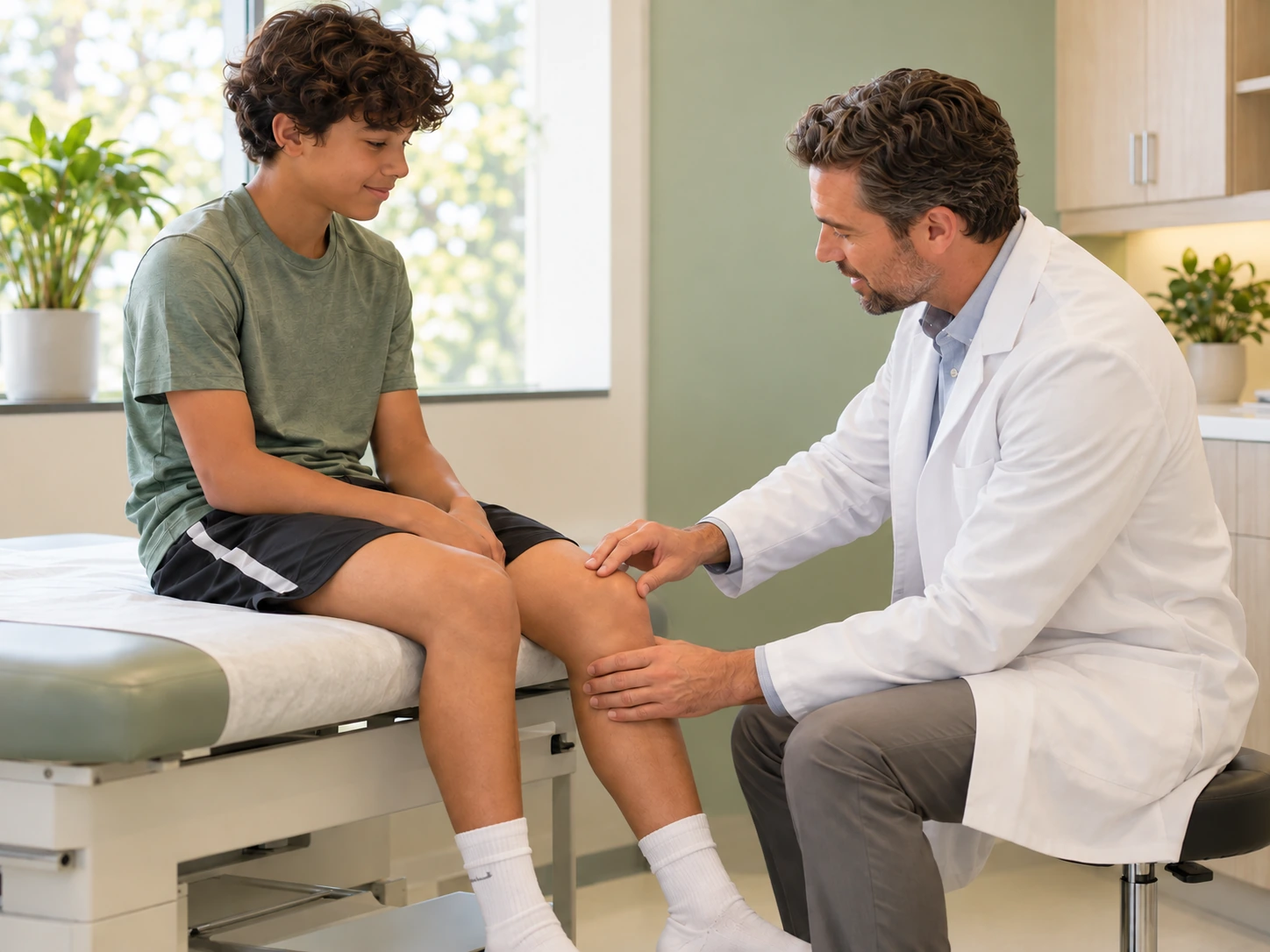
The diagnosis is based primarily on the patient's history of pain and physical examination of the knee. Imaging is not always necessary when symptoms and examination are typical. An X-ray may be ordered if the diagnosis is uncertain or if an injury needs to be investigated.
01 — THE CIRCUMSTANCES AND THE INTERROGATION
The doctor specifies the location of the pain, how long it has been present, which activities trigger it, and whether it developed gradually or after an impact. Age, growth, and sports activities are also taken into account.
02 — THE CLINICAL EXAMINATION
The knee is examined for pain upon pressure on the tibial tuberosity, any prominence, or local swelling. The doctor also observes gait and mobility and looks for other possible causes.
03 — X-RAYS IF NECESSARY
X-rays are not routinely performed. They can be helpful when the signs are atypical, when trauma has occurred, or when another bone condition needs to be ruled out.
04 — ADDITIONAL EXAMINATIONS ACCORDING TO THE SIGNS
An MRI or other examination is usually not necessary for a classic presentation. It may be considered if the symptoms are unusual, persistent, or if the clinical examination suggests another lesion.
The diagnosis combines the history of the pain and the examination of the knee: an image alone is not enough to explain the symptoms.
RELIEVE KNEE PAIN AND ADAPT ACTIVITIES
The first step is to temporarily reduce activities that clearly trigger pain, while maintaining well-tolerated movements. Complete immobilization of the knee is generally not recommended.
ADJUST THE EFFORT
Running, jumping, or intensive training can be reduced or temporarily stopped if the pain increases. Resumption of activity depends on the knee's response, not just the sporting schedule.
SOOTHING THE PAIN
A recovery period after exertion and the application of cold wrapped in a cloth can be considered if they provide relief. Pain medication should be chosen in consultation with a healthcare professional, especially for adolescents, and based on their medical history.
MAINTAIN A TOLERATED ACTIVITY
Activities that cause little or no pain can sometimes be continued. Physiotherapy can help adjust the workload, improve flexibility, and gradually strengthen muscles as needed.
If the pain follows a significant injury, prevents weight-bearing, or is accompanied by marked swelling, seek prompt evaluation from SOS Knee Geneva.
A CONSERVATIVE APPROACH IN THE VAST MAJORITY OF CASES
Osgood-Schlatter disease is usually managed without surgery. Treatment aims to limit painful flare-ups while allowing the adolescent to maintain an activity level compatible with their symptoms. Surgery is rarely necessary.
ADAPT THE ACTIVITIES
Running, jumping, or any movements that trigger pain can be temporarily reduced. Well-tolerated activities can be continued. A gradual return to activity should be undertaken, depending on how the knee responds.
PHYSIOTHERAPY TO SUPPORT THE KNEE
When appropriate, physiotherapy can help maintain mobility and gradually rebuild strength. Exercises are tailored to the adolescent's pain level and activities.
→ Discover knee rehabilitation
RELIEVE AND MONITOR THE SYMPTOMS
A recovery period after exercise can help when the knee is painful. Pain management can be discussed with a healthcare professional depending on age and situation. Follow-up appointments allow for reassessment of symptoms and resumption of activities.
→ When should I consult a doctor for knee pain?
SURGERY: A RARE OPTION AND DEBATED ON A CASE-BY-CASE BASIS
Surgery is not the usual treatment for Osgood-Schlatter disease in growing adolescents. It may be considered in exceptional cases when pain persists after growth has ceased and remains very bothersome despite appropriate conservative management.
Depending on the situation, an intervention may target a bone fragment or a symptomatic growth on the tibial tuberosity. The technique depends on the anatomy, bone maturity, and precise origin of the pain. Intervention during growth should be considered with caution.
Surgery aims to treat a persistent, identified discomfort, without guaranteeing the disappearance of all symptoms or a return to sports by a fixed date. The recovery and limitations are assessed on a case-by-case basis.
Surgery is rarely indicated and requires confirmation of the cause of the pain.
To understand the role of interventions in knee care, see the page on the knee surgery.
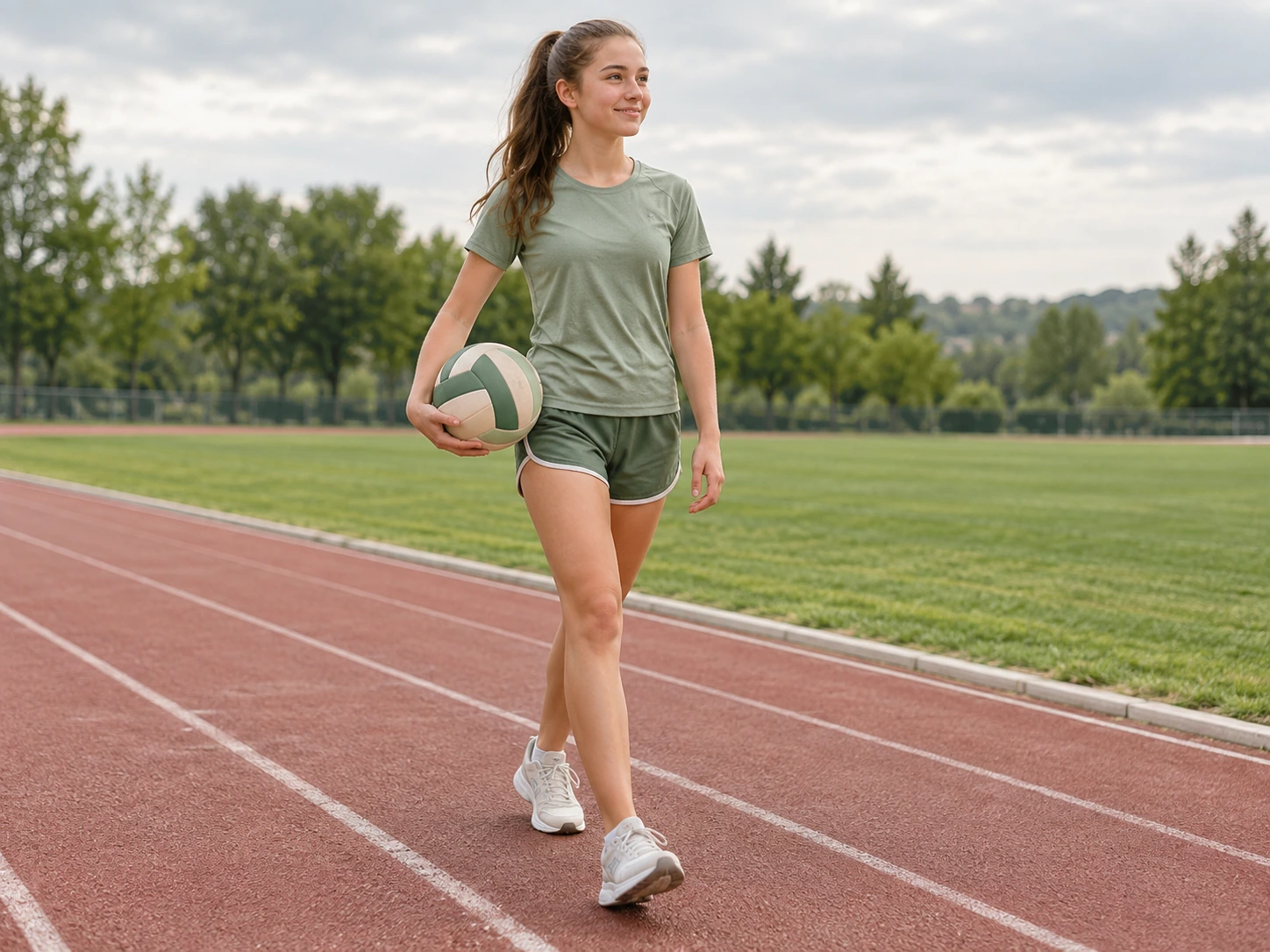
GRADUALLY RESUME ACTIVITIES
The return to activity depends on pain, mobility, strength, and tolerance for athletic movements. There is no universal timeframe: the progression must be adjusted to each adolescent's development.
01 — SOOTHE THE PAINFUL AREA
Activities causing significant pain are temporarily reduced. The knee remains mobile within the limits of comfort.
02 — MAINTAINING MOBILITY
Knee flexion and extension are maintained without putting stress on the sensitive area. Exercises are adapted if certain movements trigger pain.
03 — RESTORE STRENGTH
Progressive strengthening of the thigh and hip muscles may be recommended depending on the examination and individual needs. The load is increased only if the knee can tolerate it.
04 — RESUME DAILY ACTIVITIES
Walking, stairs and usual activities are resumed while observing the knee's reaction during and after exertion.
05 — RETURN TO SPORT IN STEPS
Returning to sport begins with tolerated activities, then progresses to running, jumping, and sport-specific movements. Pain that increases significantly or persists after activity indicates that the workload needs to be adjusted.
A strategy tailored to each patient
Osgood-Schlatter disease does not progress in the same way in all adolescents. Dr. Benoît Coulin takes into account age, stage of growth, location of pain, sports activities, daily discomfort, and the results of the clinical examination.
Adapting activities can reduce painful strain, but sometimes requires a break or a temporary modification of training. Physiotherapy can support the return to activity when indicated, but its content must be tailored to the young patient's needs.
The strategy is reassessed if symptoms persist, worsen, or do not follow the expected progression. The goal is to alleviate discomfort and allow for a gradual return to normal activities, without imposing surgery when it is not indicated.
«"Understand the pain, adjust the effort, and resume at the knee's pace."»

FREQUENTLY ASKED QUESTIONS
Does the pain under the knee return with every workout?
A clinical examination can determine whether the symptoms are consistent with Osgood-Schlatter disease or have another cause. Appropriate imaging may be recommended if the signs are atypical or if trauma is suspected.
