
HIP DYSPLASIA
There hip dysplasia This corresponds to a particular development of the joint: the pelvic cavity, called the acetabulum, does not sufficiently cover the head of the femur. This configuration can alter the distribution of stress on the hip.
Some people experience no discomfort. In others, dysplasia may be associated with pain, strain on the labrum or cartilage, or progressive wear. Imaging alone is not sufficient to determine treatment: symptoms, clinical examination, and the individual's goals are also taken into account.
UNDERSTANDING HIP DYSPLASIA

-
The acetabulum is the cavity in the pelvis that receives the head of the femur. In dysplasia, its shape or orientation can reduce the coverage of the femoral head.
-
This rounded end of the femur articulates with the pelvis. When its coverage is insufficient, the stresses can be distributed differently within the joint.
-
This fibrocartilaginous rim surrounds the edge of the acetabulum. It contributes to hip stability and may be under greater stress in certain dysplasias.
-
Cartilage covers the joint surfaces. It may remain intact or show signs of wear depending on the morphology of the hip and its evolution.

RECOGNIZING THE SYMPTOMS
There hip dysplasia It may not cause any symptoms. When discomfort does occur, it may be felt in the groin, on the side of the hip, or in the thigh. It varies from person to person and depending on the activities.
- Pain during exertion: discomfort during prolonged walking, running or repetitive movements.
- Groin discomfort: pain sometimes exacerbated by certain hip movements.
- Fatigue or discomfort after activity: sensation that appears or increases after exertion.
- Limited mobility: Some movements may become difficult or uncomfortable.
These symptoms can also have another origin, such as a tendon, back, or other structure in the hip. An examination will help determine the cause.
WHY IS THE HIP DYSPLASTIC?
Hip dysplasia refers to a developmental abnormality of the hip. It can be discovered during childhood or later, in adulthood, sometimes following pain or an imaging examination.
JOINT DEVELOPMENT
The acetabulum may have developed with a depth or orientation that does not sufficiently cover the head of the femur.
HIP MORPHOLOGY
The shape of the acetabulum and the degree of femoral head coverage vary from person to person. The severity of dysplasia must be assessed through examination.
STRESS ON JOINT STRUCTURES
A different distribution of stress can place greater strain on the acetabular rim, the labrum, or the cartilage. This does not necessarily mean that these tissues are damaged.
VARIABLE EVOLUTION
Some dysplasias remain asymptomatic to a limited extent. Others can lead to persistent discomfort or premature wear of the joint. The progression is not the same for all.
MAKE THE RIGHT DIAGNOSIS
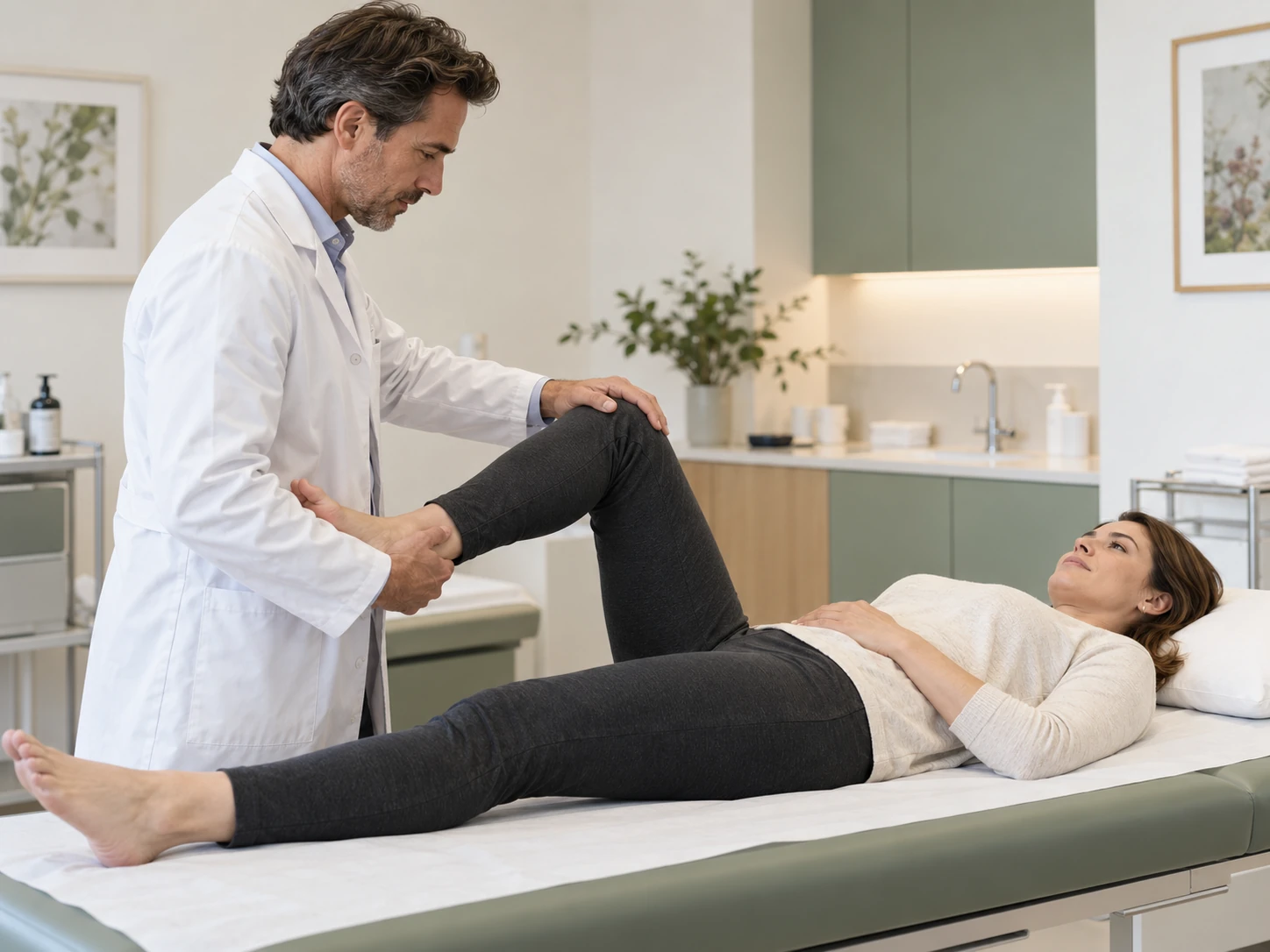
The assessment combines symptoms, examination of the hip, and appropriate imaging. It allows for a precise determination of the joint's morphology and the detection of any potential damage to the labrum or cartilage.
01 – CLINICAL EXAMINATION
The location of the pain, the activities that trigger it, mobility, and any bothersome movements are assessed. The person's history and goals also guide the evaluation.
02 – X-RAYS
X-rays of the pelvis and hip allow us to study the shape of the acetabulum, the coverage of the femoral head and the general condition of the joint.
03 – ADDITIONAL EXAMINATIONS
An MRI or CT scan may be requested to answer a particular question, clarify the anatomy, or evaluate the labrum and cartilage.
Imaging alone does not determine treatment: symptoms and hip function remain crucial.
Relieve hip pain without surgery
The management of hip dysplasia It depends on the discomfort and the condition of the joint. Non-surgical measures primarily aim to preserve function and improve comfort; they do not alter the bone structure of the hip.
PHYSICAL ACTIVITY AND PHYSIOTHERAPY
Appropriate exercises can maintain mobility, strengthen the muscles that support the hip, and improve movement control. The program is chosen according to individual abilities and symptoms.
→ Discover the useful tests in case of hip pain
ADAPTATION OF DAILY LIFE
Adjusting certain activities, temporarily avoiding movements that clearly trigger pain, and alternating exertion and recovery can help manage discomfort. The goal is to maintain appropriate activity rather than imposing prolonged rest.
PAIN MANAGEMENT
Pain medication can be discussed based on symptoms, medical history, and contraindications. The choice and duration of treatment should be determined in consultation with a healthcare professional.
JOINT MONITORING
When symptoms are mild, clinical and radiological monitoring may be recommended. This allows for tracking progress and reassessing treatment if pain or mobility changes.
Preserving movement and improving comfort remain the primary objectives when non-surgical treatment is possible.

WHEN TO CONSIDER SURGERY?
Surgery may be considered when symptoms remain bothersome despite appropriate treatment. The choice depends on age, hip morphology, cartilage condition, and the possible presence of osteoarthritis.
PRESERVING THE JOINT: PERICATEBULAR OSTEOTOMY
In some adults with sufficiently preserved cartilage, this procedure aims to reorient the acetabulum to improve coverage of the femoral head. It requires a specialized evaluation of the anatomy and condition of the joint.
CORRECTING THE FEMUR IN CERTAIN SITUATIONS
A femoral osteotomy may be considered in selected cases, depending on the shape of the hip and the desired correction. It is not necessary for all dysplasias.
REPLACE: TOTAL HIP REPLACEMENT
When dysplasia is accompanied by advanced osteoarthritis, a total hip replacement may be considered. This option is discussed based on the pain, discomfort, and condition of the joint.
KEEP MOVING AND RECOVERING
Hip dysplasia does not necessarily require stopping all activity. Movements and exercises are adapted to the level of discomfort and mobility.
Walking, cycling, or strengthening exercises can be considered if well tolerated. The choice of activity depends on each individual's symptoms and goals.
After an intervention, the resumption of walking and exercises is done gradually, depending on the movement performed and the instructions of the medical team.
Activity and recovery follow the capabilities of the hip and the stages of treatment.


A CARE APPROACH TAILORED TO EACH PATIENT
The presence of dysplasia on X-ray is not, on its own, sufficient to explain pain or indicate the need for surgery. The consultation takes into account the symptoms, the clinical examination, the imaging, and the person's goals.
Treatment can range from monitoring and activity adjustments to joint-sparing surgery or, when the joint is severely worn, a prosthesis. Each option depends on the medical situation and the condition of the hip.
«"A painful hip must be assessed holistically, taking into account the person and their goals, not just their appearance."»
FREQUENTLY ASKED QUESTIONS
DO YOU WANT TO BETTER UNDERSTAND YOUR PAIN?
A clinical evaluation and appropriate examinations will help to identify the source of the pain and discuss treatment options for your hip.
