

REPLACE
When knee osteoarthritis As hip or joint problems progress, the pain gradually becomes a daily occurrence. Walking for long periods, climbing stairs, getting up from a chair, or simply resuming normal activities can become difficult. Hip replacement surgery eliminates the mechanical pain associated with cartilage wear and provides a lasting restoration of mobility when conservative treatments are no longer sufficient.
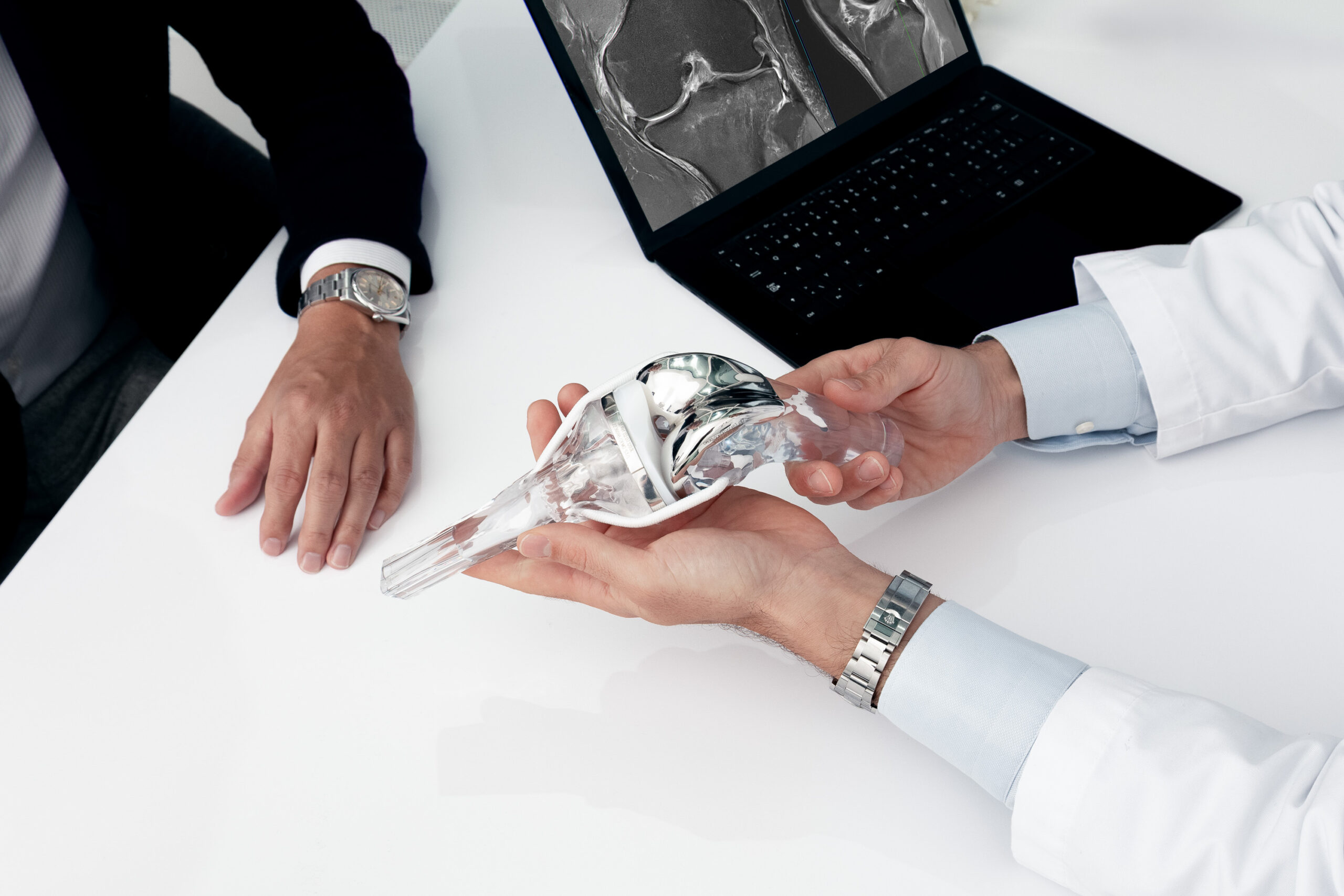
This procedure involves replacing only the damaged part of the knee, while preserving the remaining healthy areas. The goal is to preserve the natural joint as much as possible.
It is indicated when the wear only affects a specific area of the knee and the rest of the joint functions properly.
By treating only the damaged part, this solution relieves pain and improves knee function while maintaining a more natural feel than a complete replacement.
This procedure involves replacing the entire knee joint with an artificial prosthesis. It is necessary when osteoarthritis or other conditions have impacted the entire knee, resulting in severe pain and significantly limited mobility.
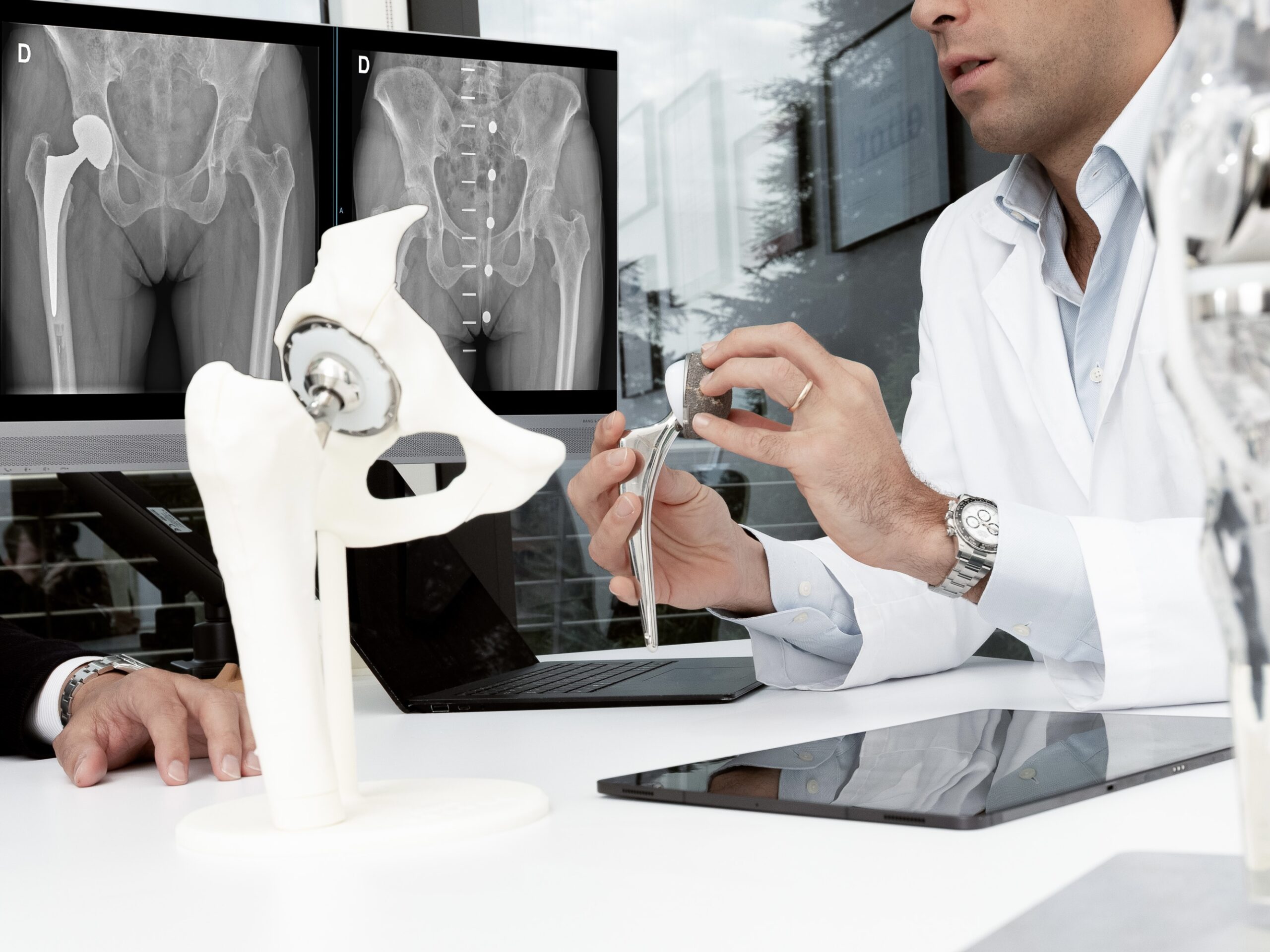
Replacing the diseased hip joint, this procedure delivers remarkable results, allowing patients to enjoy a pain-free hip in all activities. Dr. Coulin primarily uses the anterior approach, which enables the prosthesis to be implanted through a small incision, sliding between muscles without cutting them. This technique supports a rapid recovery, allowing the patient to walk on the day of the surgery.
Recent technological advances have significantly improved this surgery. 3D planning performed using a scan before the procedure allows for a precise analysis of each patient's anatomy.
This customized preparation helps to adapt the size and position of the implants to the individual's morphology. It is particularly useful in complex situations, where wear and tear has altered the natural alignment of the knee.
By customizing the positioning of the implants, the goal is to regain a balance close to the initial anatomy, in order to ensure a stable joint and optimal function.
KNEE AND HIP PROSTHESIS
Partial knee prosthesis
This procedure involves replacing only the damaged part of the knee, while preserving the remaining healthy areas. The goal is to preserve the natural joint as much as possible.
It is indicated when the wear only affects a specific area of the knee and the rest of the joint functions properly.
By treating only the damaged part, this solution relieves pain and improves knee function while maintaining a more natural feel than a complete replacement.
Knee prosthesis
This procedure involves replacing the entire knee joint with an artificial prosthesis. It is necessary when osteoarthritis or other conditions have impacted the entire knee, resulting in severe pain and significantly limited mobility.
Hip prosthesis
Replacing the diseased hip joint, this procedure delivers remarkable results, allowing patients to enjoy a pain-free hip in all activities. Dr. Coulin primarily uses the anterior approach, which enables the prosthesis to be implanted through a small incision, sliding between muscles without cutting them. This technique supports a rapid recovery, allowing the patient to walk on the day of the surgery.
Bespoke surgery
Recent technological advances have significantly improved this surgery. 3D planning performed using a scan before the procedure allows for a precise analysis of each patient's anatomy.
This customized preparation helps to adapt the size and position of the implants to the individual's morphology. It is particularly useful in complex situations, where wear and tear has altered the natural alignment of the knee.
By customizing the positioning of the implants, the goal is to regain a balance close to the initial anatomy, in order to ensure a stable joint and optimal function.
When should a prosthesis be considered?
Prosthesis implantation is indicated when the joint is too damaged to be relieved by conservative treatments.
It is considered when:
- The pain is present daily, sometimes even at rest or at night.
- Non-surgical treatments (medication, injections, physiotherapy) are no longer sufficient to control symptoms.
- Mobility gradually decreases, making simple movements more difficult.
- The quality of life is impaired, with a limitation of usual activities.
At this stage, advanced cartilage wear leads to direct contact between bone surfaces. This "bone-on-bone" phenomenon causes chronic inflammation, stiffness, and progressive functional loss.
Surgery then makes it possible to replace the damaged surfaces with a stable and painless joint, in order to restore smooth and lasting movement.
What is the recovery process like after a prosthesis?
Recovery begins in the first few days following the procedure, with gradual mobilization and supervised support. Walking is quickly encouraged, sometimes as early as the next day, to reduce stiffness, stimulate circulation, and promote muscle recovery.
A tailored rehabilitation program is implemented to gradually restore range of motion and strengthen the muscles around the joint. This phase is essential for regaining stability and confidence in weight-bearing.
Over the weeks, the pain associated with osteoarthritis diminishes significantly, mobility improves, and everyday tasks become easier. Progress continues over several months, with continuous improvement in function, allowing for a lasting return to an active and more comfortable life.


Dr. Coulin's philosophy
The goal is not simply to replace a worn joint.
The aim is to provide a prosthesis that:
It integrates perfectly with your anatomy.
Provides fast and lasting pain relief
It works harmoniously with your muscles.
Withstands the test of time
Allows for a gradual and safe resumption of activity
Modern prosthetic surgery is now truly precision surgery.
