
What is a partial knee replacement?
Partial knee replacement (or unicompartmental knee replacement) is a surgical alternative to total knee replacement when osteoarthritis affects only one part of the joint. Most often, this involves the medial compartment, but it can also involve the lateral or patellofemoral compartment.
Unlike a total knee replacement, which replaces the entire knee, a partial knee replacement preserves the ligaments, healthy cartilage, and much of the natural anatomy. It better respects the biomechanics of the joint, promoting faster recovery and a joint sensation closer to that of the original knee.
Dr. Coulin offers this option whenever the conditions are right, as it is a modern, conservative and effective solution for treating localized osteoarthritis of the knee.
Who is it suitable for?
A partial knee replacement is intended for patients with limited wear and tear, whose knee is still largely functional. It is particularly indicated when the following conditions are present:
- A localized osteoarthritis single compartment (internal, external or patellofemoral).
- A ligament stability preserved, in particular a anterior cruciate ligament (ACL) intact.
- A satisfactory mobility of the joint.
- A correct knee alignment or easily correctable.
- Moderate to vigorous activity, without excessive overload.
This surgery can be suitable for both young patients, wishing to delay a total prosthesis, and older patients, seeking a rapid recovery and a quality functional return.
What are the advantages of a partial denture?
Compared to a total prosthesis, a unicompartmental prosthesis offers several advantages:
- An intervention less invasive, with a reduced incision.
- Preservation of healthy knee structures (ligaments, preserved cartilage).
- A faster recovery with an earlier return to autonomy.
- A more natural joint sensation, with a fluid gait and less apprehension.
- Less bleeding, post-operative pain and risk of complications.
- This intervention facilitates a possible future revision, as it leaves a large part of the joint intact.
Thus, partial knee replacement makes it possible to combine effectiveness, safety and preservation of joint function.
How does the procedure with Dr. Coulin take place ?
Partial prosthesis placement is performed under local or general anesthesia. It is a minimally invasive surgery, using small incisions and maximizing tissue preservation.
On average, the procedure lasts about an hour. The patient is up within a few hours and usually returns home within 48 hours.
Dr. Coulin uses modern surgical guidance techniques and, when necessary, 3D imaging-assisted planningThis precision guarantees optimal positioning of the implant, perfectly adapted to the morphology and biomechanics of each patient's knee.
What are the post-operative consequences ?
The recovery after a partial knee replacement is generally simple and quick:
- Weight bearing is permitted immediately after surgery.
- The gradual resumption of walking takes place in the following days.
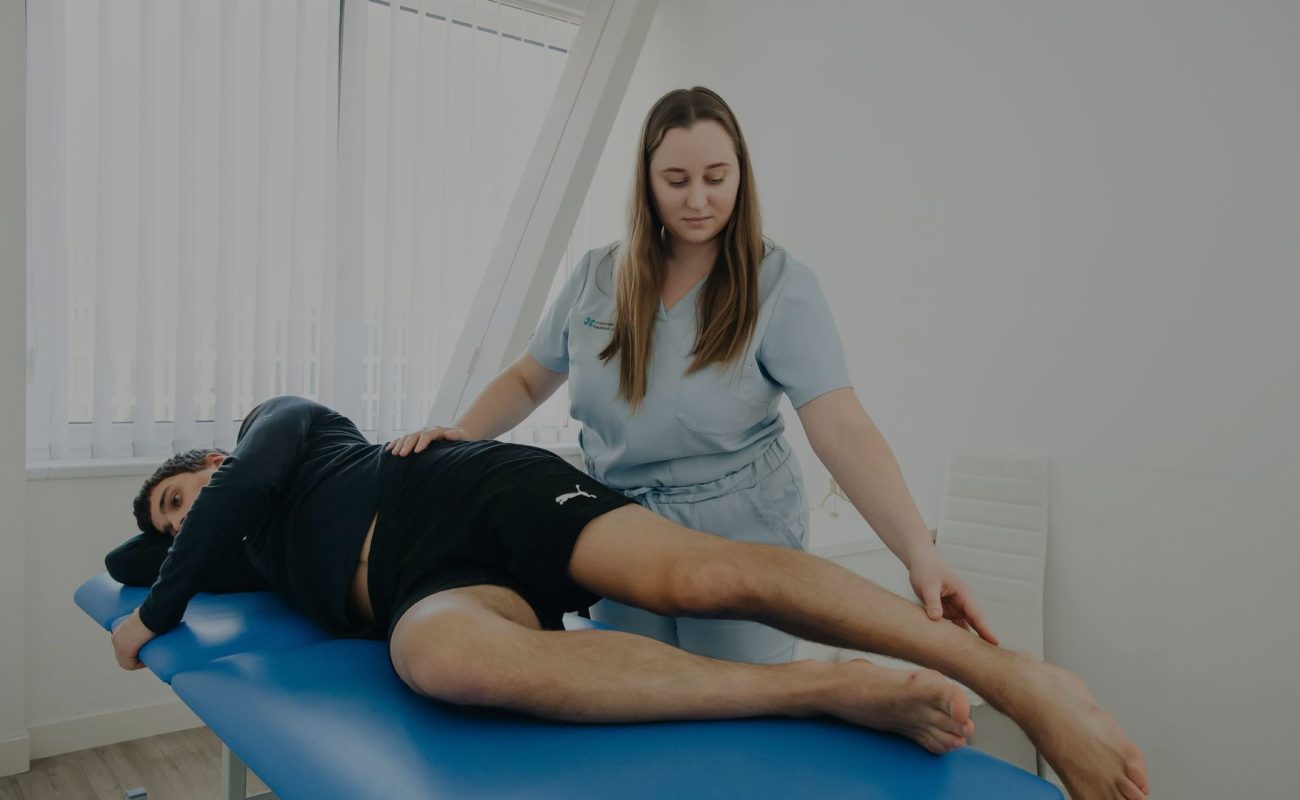
- Rehabilitation begins very early, with a targeted program to regain mobility, strengthen muscles and retrain proprioception.
Most patients return to an active life quickly, with a gradual return to sporting activities between 2 and 3 months, depending on the profile and individual motivation.
What results can you expect ?
In well-selected patients, partial dentures offer very satisfactory results:
- A clear and lasting reduction in pain.
- A significant improvement in movement quality.
- A feeling closer to the natural knee than with a total prosthesis.
- A lifespan comparable to total prostheses, in the right indications.
Satisfaction rates are high and most patients regain smooth mobility, complete autonomy and good confidence in their joint.
A tailor-made approach, on a case-by-case basis
The choice between a partial or a total prosthesis always depends on a complete assessment: analysis of symptoms, precise imaging and patient expectations.
Dr. Coulin favors preserving natural structures whenever possible. However, he only recommends a partial denture when it provides a reliable, durable, and long-term solution.
Do you suffer from localized osteoarthritis of the knee?
Dr. Coulin will see you for a consultation in Geneva to assess your situation, analyze your examinations and determine if a partial prosthesis may be the ideal solution in your case.
Thanks to personalized care and cutting-edge surgical techniques, he will guide you towards a rapid, secure and lasting recovery.