

Rupture of the quadriceps tendon
The quadriceps tendon connects the muscles at the front of the thigh to the upper part of the kneecap. Along with the patellar tendon, it contributes to the mechanism that allows the knee to straighten and the leg to be controlled during walking.
A quadriceps tendon rupture often occurs after a sudden contraction of the thigh muscle, a fall, or an impact. Sudden pain, swelling, and difficulty straightening the knee should prompt immediate medical attention, especially if walking is difficult.
UNDERSTANDING KNEE OSTEOARTHRITIS

-
This is the area located on the inner side of the knee and is the most frequently affected by osteoarthritis. Its wear and tear can cause internal pain and gradually lead to leg deformity.
-
Located on the outer side of the knee, this compartment is less frequently affected. Its wear and tear can cause lateral pain and gradually alter the leg's alignment.
-
This joint is located between the kneecap and the femur. When it is affected, pain often appears when climbing stairs, squatting, or after sitting for a long time.

RECOGNIZING THE SYMPTOMS
The rupture often occurs during a sudden movement or after a fall. Symptoms vary depending on whether the tear is partial or complete.
- Sudden pain above the kneecap — It often appears at the time of injury and can worsen when the patient tries to move the knee.
- Swelling or bruising — Swelling may appear rapidly around the knee; bruising may develop in the following hours or days.
- Difficulty straightening the knee — The patient may be unable to actively straighten the leg or keep it straight.
- Instability while walking — The leg may give way, making support and movement difficult.
- Hollow above the kneecap — An interruption of the tendon can sometimes be seen above the kneecap, but swelling can make this sign difficult to distinguish.
A complete rupture can make active knee extension very difficult or even impossible. In cases of sudden pain accompanied by an inability to straighten the leg or walk normally, prompt evaluation is advised. See the information for a rapid assessment of a knee injury.
WHY DOES OSTEOARTHRITIS APPEAR?
A quadriceps tendon rupture occurs when the force exerted on the tendon exceeds its capacity to withstand it. It can affect a previously healthy tendon or a weakened tendon.
A sudden contraction in a bent knee
The injury frequently occurs when the quadriceps muscle contracts forcefully while the knee is bent and the foot remains planted. This can happen when landing from a jump, misstepping, or recovering after a loss of balance.
A fall or a direct impact
A fall on the knee or a direct impact to the front of it can damage the tendon. The severity depends on the force of the trauma and the prior condition of the tendon.
An already weakened tendon
Certain chronic illnesses and treatments can be associated with tendon fragility. The doctor takes into account medical history and medications taken, without assuming that they are necessarily the cause of the rupture.
An injury to the extensor mechanism
The quadriceps tendon is part of the knee extensor mechanism, along with the patella and patellar tendon. After trauma, the examination should also look for a fracture or other associated injury.
The page surgery for muscle and tendon tears of the knee presents the principles for managing these injuries.

MAKE THE RIGHT DIAGNOSIS
The diagnosis is based on the circumstances of the injury, examination of the knee and, if necessary, imaging. It allows for determining the extent of the tear and distinguishing between a partial tear and a complete rupture.
01 — Circumstances and symptoms
The doctor specifies the mechanism of the trauma, the time of onset of pain, the swelling, and the ability to bear weight or straighten the leg.
02 — Clinical examination
The examination assesses pain, swelling, tendon continuity, and the ability to contract the quadriceps and extend the knee. Pain may limit some tests; these are adapted to the individual situation.
03 — X-rays
X-rays can be used to look for a fracture or unusual displacement of the kneecap. They do not directly show the tendon fibers, but they provide useful information about the bone structures.
04 — MRI or ultrasound
An MRI can pinpoint the location and extent of the rupture, particularly when the clinical examination is inconclusive or when an associated injury is suspected. An ultrasound may also be considered depending on the circumstances.
The ability to straighten the knee and the extent of the tear guide treatment decisions.
Initial care
A suspected quadriceps tendon rupture warrants prompt medical evaluation, especially if the patient cannot actively straighten their leg. In the meantime, it is best to limit movement and avoid putting stress on the knee.
Protect the knee
Avoid movements that trigger significant pain and do not repeatedly test leg strength. A walking aid may be helpful if weight-bearing is painful or unsteady.
To reduce swelling and relieve pain
Applying cold, with a protective barrier between the ice and the skin, can provide temporary relief. Pain medications should be chosen based on medical history and any potential contraindications.
Consult quickly
An inability to straighten the knee, acute pain after a fall, or significant swelling requires prompt medical attention. SOS Knee Geneva indicates offering a rapid assessment after a knee injury.
Preserving the natural joint remains a priority as long as conservative treatments allow for maintaining a satisfactory quality of life.

When can a non-surgical treatment be discussed?
Surgery is not always necessary for all quadriceps tendon injuries. Conservative management may be considered in some partial tears, when the extension mechanism remains sufficiently functional and the medical assessment allows it.
Protect the tendon
Depending on the extent of the injury, a knee brace and crutches may be prescribed temporarily. Their use and duration will depend on the examination and treatment plan.
Gradually resume the movement
Physiotherapy is initiated at the time deemed appropriate by the healthcare team. Its aim is to gradually regain mobility, then to restore strength and control of the knee, without prematurely stressing the tendon.
Monitor the evolution
Follow-up assessments check pain, active extension, and functional progress. Re-evaluation is necessary if the leg remains difficult to straighten, if pain worsens, or if function does not progress as expected.
The choice of conservative treatment depends primarily on the functional integrity of the extensor mechanism. knee physiotherapy can be integrated into the treatment plan when the doctor deems it appropriate.
surgical treatment
Surgery is generally considered in cases of complete rupture, when active knee extension is compromised. Certain significant partial ruptures or those associated with tendon fragility may also warrant surgical intervention. The decision takes into account the injury, the patient's overall health, and their functional needs.
REATTACH THE TENDON TO THE PALLUS
The procedure aims to restore the continuity of the tendon with the kneecap. Depending on the injury, the surgeon may perform a suture and fix the tendon to the bone, for example using threads passed through the kneecap or anchoring devices.
INTERVENE WITHIN AN APPROPRIATE TIMEFRAME
When repair is indicated, it is usually scheduled without undue delay after diagnosis. Over time, the tendon may retract or shorten, which can make repair more complex.
SET REALISTIC GOALS
The goal is to restore the extension mechanism and allow for a gradual functional recovery. Recovery requires time and supervised rehabilitation; stiffness, persistent weakness, or a new rupture are among the risks that must be discussed with the surgeon.
To learn more about the muscle and tendon tear surgery, consult the dedicated page.

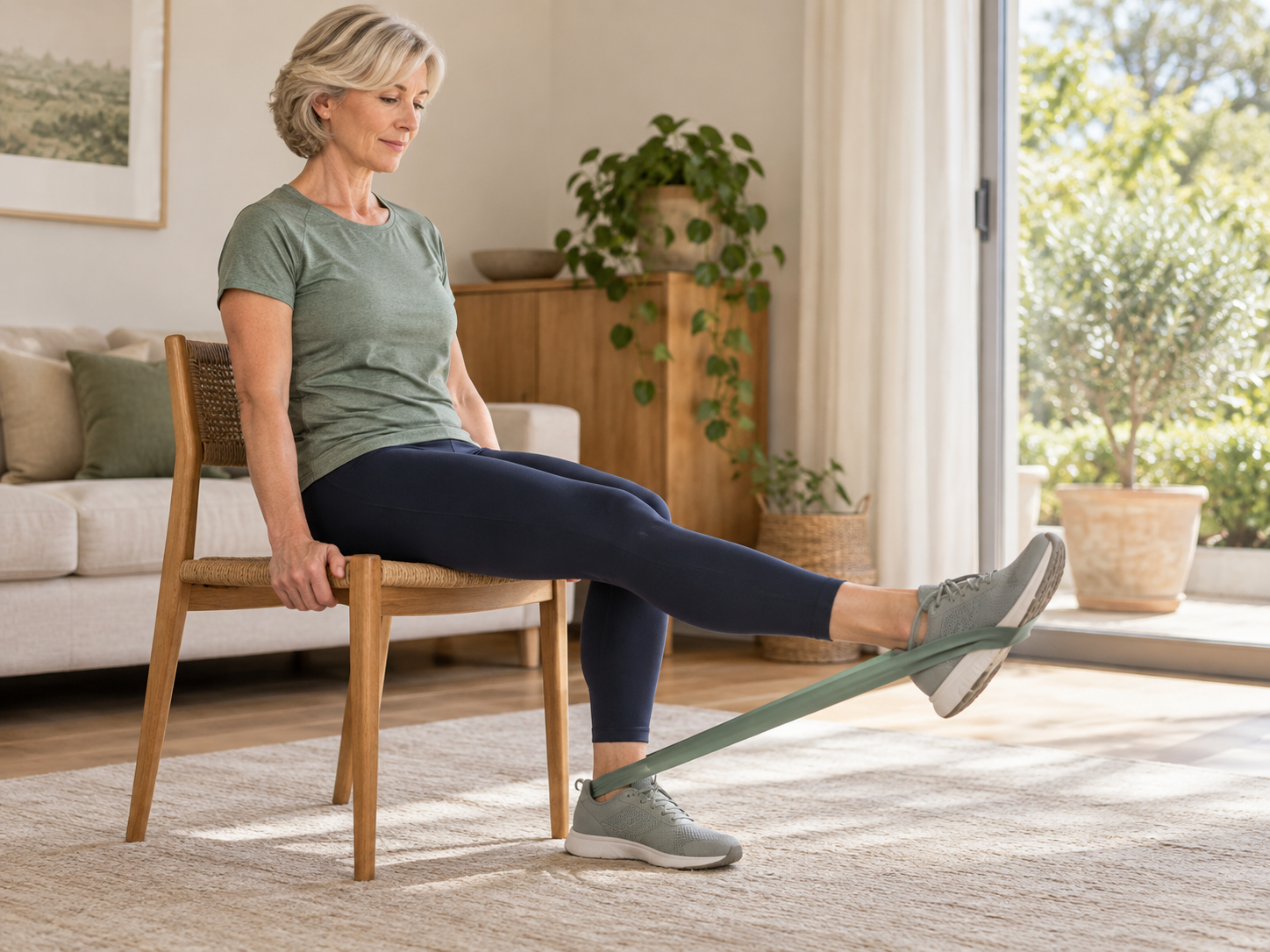
Rehabilitation and resumption of activities
Rehabilitation follows a progressive schedule determined by the injury, the treatment performed, and the knee's response. The steps and timeframes are not the same for everyone.
01 — Protect the repair or the injury
Initially, a brace and weight-bearing instructions may be necessary. The knee is protected according to the surgeon's or doctor's instructions.
02 — Gradually regain mobility
Knee flexion is reintroduced gradually when permitted. Too rapid a progression can compromise tendon protection.
03 — Restore muscle strength
Physiotherapy gradually works on the quadriceps and the muscles that contribute to leg control. The exercises are adapted according to the patient's tolerance and medical instructions.
04 — Resume daily activities
Walking, stairs and other daily activities are resumed according to knee stability, the quality of extension and the ability to control the leg.
05 — Consider sport
A return to sport is considered once mobility, strength, and functional control have been sufficiently restored. It also depends on the type of sport and the clinical progress.
Progress is measured by the regained function and knee tolerance, not solely by the time elapsed. Exercises for knee rehabilitation are adapted to the instructions given for each patient.
A strategy tailored to each patient
A rupture of the quadriceps tendon does not have the same consequences for everyone. The extent of the tear, the ability to straighten the knee, associated injuries, the patient's health status, usual activities, and expectations all guide the treatment plan.
Dr. Benoît Coulin assesses these factors to discuss possible options, their expected benefits, and their limitations. A partial tear with preserved function can sometimes be treated without surgery. A complete tear with loss of extension more often leads to a discussion of repair, followed by a period of protection and rehabilitation.
Follow-up allows treatment to be adjusted according to pain, recovery of range of motion, and functional goals. The decision is made after comparing the results of the examination and imaging with the patient's situation.
«"Repair the tendon when necessary, then rebuild function step by step."»

FREQUENTLY ASKED QUESTIONS
Do you suddenly find it difficult to straighten your knee after a fall or exertion?
A clinical examination and appropriate imaging can help determine if the quadriceps tendon is partially or completely ruptured and to choose the appropriate treatment. In cases of trauma with difficulty straightening the leg or walking, seek medical attention. rapid knee assessment.
