

TROCHANTERIC BURSITIS
There trochanteric bursitis This corresponds to irritation of the bursa located on the side of the hip, at the level of the greater trochanter. This small, fluid-filled sac normally facilitates gliding between the bone and the surrounding tissues. When it becomes painful, the discomfort may also be related to the tendons of the gluteal muscles or to any of the structures located on the side of the hip.
The pain is usually felt on the outer part of the hip and may radiate down the thigh. It is often exacerbated by prolonged walking, climbing stairs, lying on the affected side, or after a recent increase in activity. Diagnosis is based primarily on patient history and physical examination, supplemented by imaging when necessary.
UNDERSTANDING TROCHANTERIC BURSITIS

RECOGNIZING THE SYMPTOMS
There trochanteric bursitis It most often causes pain localized on the outer side of the hip. It may remain concentrated around the greater trochanter or extend down the outer side of the thigh, without necessarily corresponding to deep groin pain.
- Pain on the side of the hip: Precise sensitivity can be found at the level of the greater trochanter, particularly to pressure.
- Pain when lying down: Sleeping on the painful side or staying in the same position for a long time can worsen symptoms.
- Difficulty walking or climbing stairs: Activities that use the hip stabilizing muscles can trigger the pain.
- Pain during certain movements: Getting up, going uphill, running or spreading your legs can become uncomfortable.
Symptoms may appear gradually after increased activity, a fall on the side, or a change in gait. Sudden pain accompanied by fever, a hot and swollen hip, inability to bear weight, or significant trauma requires prompt medical attention.
WHY DOES THE HIP BECOME PAINFUL ON THE SIDE?
Trochanteric bursitis can be caused by several mechanisms. It sometimes occurs in isolation, but lateral hip pain can also be associated with irritation of the gluteal tendons, mechanical overload, or another cause located around the joint.
OVERLOAD OR INCREASE IN ACTIVITY
A rapid resumption of walking, running, climbing stairs or playing sports can increase the stress on the tissues around the greater trochanter.
TRAUMA OR REPEATED PRESSURE
A fall on the side of the hip, prolonged pressure on a hard surface, or regularly sleeping on the painful side can irritate the bursa and surrounding tendons.
WEAKENED GLUTEAL TENDONS
Tendinopathy of the gluteus medius or minimus can cause lateral pain similar to that of bursitis. These conditions are common and can be associated with the same painful symptoms.
MECHANICAL IMBALANCE
Weak pelvic muscles, changes in gait, a difference in limb length, or back or knee pain can increase stress on the side of the hip.

MAKE THE RIGHT DIAGNOSIS
The diagnosis of a trochanteric bursitis The diagnosis is based first on the description of the pain and the examination of the hip. The objective is to confirm the lateral origin of the symptoms and to look for associated involvement of the gluteal tendons, the back, the knee or the joint itself.
01 – CLINICAL EXAMINATION
The location of the pain, its tenderness to palpation, hip mobility, and gluteal muscle strength are assessed. Certain movements or positions can reproduce the symptoms and help distinguish lateral pain from pain originating in the joint itself.
02 – X-RAYS
X-rays of the pelvis and hip may be recommended to look for osteoarthritis, bone abnormalities, or other causes of pain. They don't usually show bursitis directly, but they help rule out certain conditions.
03 – ADDITIONAL EXAMINATIONS
An ultrasound or MRI can clarify the condition of the bursa and gluteal tendons when symptoms persist, when the diagnosis remains uncertain, or when an associated injury is suspected.
Imaging alone is not sufficient: the diagnosis relies on the concordance between symptoms, clinical examination and test results.
RELIEVING BURSITIS WITHOUT SURGERY
The management of trochanteric bursitis Treatment depends on the severity and duration of symptoms, as well as the structures involved. Non-surgical measures aim to reduce irritation, improve hip muscle strength, and gradually resume activities.
ADAPTATION OF ACTIVITIES
Temporarily reducing the movements that clearly trigger pain can help soothe the irritated area. This doesn't necessarily mean stopping all activity, but rather modifying the loads, distances, and positions that cause pain.
PHYSIOTHERAPY AND STRENGTHENING
Physiotherapy aims to progressively strengthen the gluteal and pelvic stabilizing muscles, improve hip control, and correct the mechanical factors that maintain the symptoms.
PAIN MANAGEMENT
Pain relief measures, the application of cold, and, depending on the medical situation, anti-inflammatory treatment may be recommended. Any medication should be tailored to the patient's medical history and any treatments already received.
INFILTRATION OR TARGETED TREATMENT
In certain situations, an injection may be considered to temporarily reduce pain and facilitate rehabilitation. It does not replace strengthening exercises and should only be offered after the cause of the symptoms has been confirmed.
Reducing irritation, gradually strengthening the hip and correcting stresses remain the primary objectives of treatment.
IS SURGERY NECESSARY?
Trochanteric bursitis does not require surgery. This is an irritation of the tissues around the hip, which is initially treated with non-surgical management. When pain persists, it is best to reassess the diagnosis and look for an associated condition rather than considering surgery for the bursitis itself.
ADAPT THE ACTIVITIES
The first step is to temporarily reduce the activities and positions that trigger the pain, without completely immobilizing the hip. Resumption of activities and positions is gradual, occurring as symptoms subside.
STRENGTHEN THE HIP MUSCLES
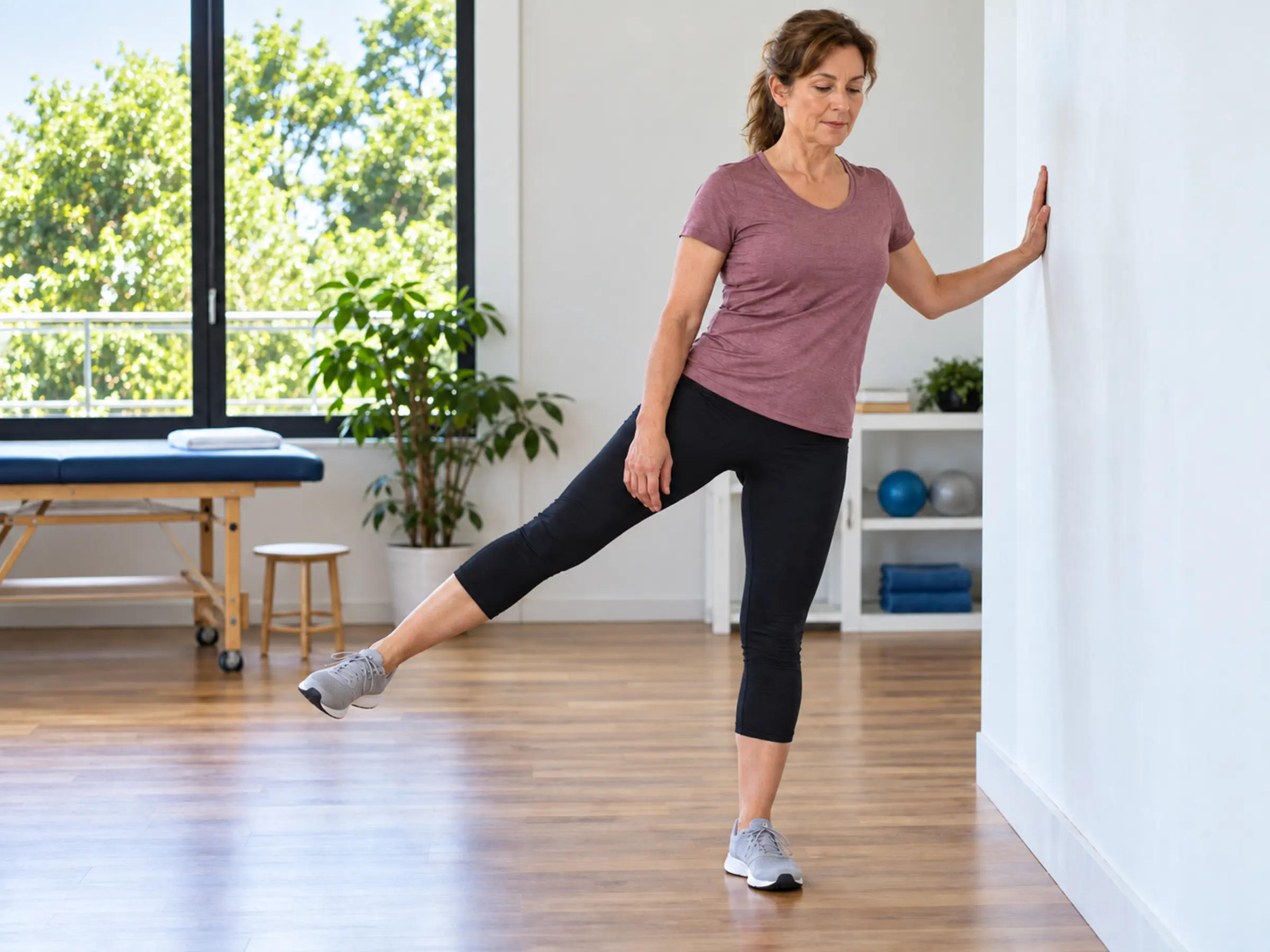
Physiotherapy and progressive strengthening of the gluteal and pelvic stabilizer muscles can reduce stress on the greater trochanter and improve hip function.
LOOK FOR ANOTHER CAUSE IF THE PAIN PERSISTS
If symptoms do not improve despite appropriate treatment, a further clinical examination or imaging may be necessary. The aim is to look for gluteal tendinopathy, pain originating from the back or knee, osteoarthritis, or another cause of lateral pain.
KEEP MOVING WITH A BURSITIS
Trochanteric bursitis does not always require stopping all activity. Movement is generally still beneficial, provided that the pain is respected and that loads that perpetuate irritation are avoided.
Walking on level ground, gentle cycling, water exercises, and progressive strengthening can be considered when well tolerated. It is also advisable to temporarily avoid prolonged positions on the affected side and exercises that cause significant pain.
The resumption of activities is gradual. Distance, duration, and intensity are increased when the hip remains comfortable during exertion and in the hours that follow.
Recovery depends on the cause of the pain, the regularity of the exercises, and the progression of the loads.


A CARE APPROACH TAILORED TO EACH PATIENT
Trochanteric bursitis can manifest as isolated irritation of the bursa, but also as more widespread pain in the tendons and tissues on the side of the hip. A consultation allows the doctor to identify the underlying structure and the factors contributing to the symptoms.
Treatment may include activity modifications, physiotherapy, gluteal muscle strengthening, pain management, and, in some cases, targeted injections. Further investigations are recommended if progress is unsatisfactory or if another condition is suspected.
Surgery remains exceptional for isolated trochanteric bursitis. It is only considered after sufficiently prolonged non-surgical management and when the precise cause of the pain has been identified.
«"Calm the irritation, strengthen the hip, and gradually resume activities."»
FREQUENTLY ASKED QUESTIONS
DO YOU WANT TO BETTER UNDERSTAND YOUR PAIN?
A clinical examination combined with appropriate imaging helps to determine the origin of symptoms and identify the most suitable treatments.
