

TRAUMATIC MENISCAL TEAR
A traumatic meniscal tear often occurs during a twisting of the knee, a pivoting motion, or a weight-bearing movement. Pain may appear immediately or develop over the following hours, sometimes accompanied by swelling or difficulty bending and straightening the leg.
The presence of a tear on an MRI is not, in itself, sufficient to decide on surgery. The mechanism of injury, the examination of the knee, the type of lesion, and the patient's expectations are taken into account to determine the next steps.
UNDERSTANDING A MENISCAL TEAR

-
This is the area located on the inner side of the knee and is the most frequently affected by osteoarthritis. Its wear and tear can cause internal pain and gradually lead to leg deformity.
-
Located on the outer side of the knee, this compartment is less frequently affected. Its wear and tear can cause lateral pain and gradually alter the leg's alignment.
-
This joint is located between the kneecap and the femur. When it is affected, pain often appears when climbing stairs, squatting, or after sitting for a long time.

RECOGNIZING THE SYMPTOMS
After a twist or pivoting movement, a meniscal tear can cause localized pain on one side of the knee. Symptoms vary depending on the type of tear and any other structures that may be affected.
- Pain on the side of the knee: It can be felt along the joint line, inside or outside, and increases during flexion or pivoting.
- Swelling : The knee may swell after the injury, sometimes gradually.
- Difficulty bending or straightening the leg: some movements become painful or limited.
- Hooking or blocking: A mechanical sensation may occur. A blockage that actually prevents the knee from straightening should be assessed quickly.
- Difficulty resuming weight-bearing or sport: Walking, squatting, or changing direction can become uncomfortable.
Symptoms may lessen over time, persist, or reappear during twisting movements and deep bending. Knee pain after an injury can also be related to ligament or bone damage.
In case of significant swelling, inability to bear weight, or a locked knee, a rapid assessment of a knee injury is indicated.
WHY DOES A MENISCAL TEAR OCCUR?
The meniscus can tear when the knee rotates while the foot remains planted on the ground. This can happen during sports activities, a change of direction, or an unexpected everyday movement.
A SUPPORTED TORSION
When the bent knee rotates under the body's weight, the meniscus can be compressed and subjected to shear stress. Depending on the movement and angle of the knee, the injury can affect the medial or lateral meniscus and take different forms.
A SIGNIFICANT BEND OR A SUDDEN MOVEMENT
Deep flexion combined with rotation, or a sudden straightening after squatting, can also cause a tear. The precise mechanism helps guide the examination, but is not sufficient on its own to determine the severity of the injury.
ASSOCIATED INJURIES
The trauma can also affect the ligaments, cartilage, or bone. Instability felt after the accident or significant swelling may lead to an investigation for associated injuries, particularly a anterior cruciate ligament injury. These lesions are not systematic.

MAKE THE RIGHT DIAGNOSIS
The diagnosis combines the circumstances of the injury, the symptoms, the examination of the knee, and, if necessary, imaging. The MRI must be interpreted in relation to the actual impairment: an image alone does not determine the treatment.
01 — THE CIRCUMSTANCES OF THE TRAUMA
The practitioner specifies the movement that caused the pain, the position of the knee, the appearance of the swelling, and the difficulties encountered since the accident.
02 — THE CLINICAL EXAMINATION
Mobility, painful areas, stability, and weight-bearing capacity are assessed. Meniscal tests can guide the diagnosis, but their interpretation takes into account pain and swelling.
03 — X-RAYS IF NECESSARY
After an injury, X-rays may be requested to look for a fracture or examine bone structures. They do not directly show a meniscus tear.
04 — KNEE MRI
MRI allows observation of the menisci and detection of any associated ligament, cartilage, or bone damage. It is indicated based on the clinical examination and the progression of symptoms.
An MRI image should always be considered in conjunction with the symptoms and examination of the knee.
THE FIRST ACTIONS AFTER THE TRAUMA
In the first few days, treatment focuses on minimizing discomfort and avoiding movements that significantly aggravate the pain. Measures are tailored to the condition of the knee and do not replace a medical examination if symptoms are severe.
TEMPORARILY ADAPT ACTIVITIES
It is best to temporarily suspend painful pivoting, changes of direction, and deep bending movements. Complete rest is not necessary in all situations: movement can be adapted to the pain level and the ability to bear weight.
MONITOR FOR SWELLING AND PAIN
Applying cold wrapped in a cloth can provide temporary relief. Pain relievers or anti-inflammatories are not suitable for everyone: their use must take into account medical history, current treatments, and contraindications.
USE A WALKING AIDS IF NEEDED
Crutches may be helpful if weight-bearing is very painful or difficult, but they are not always necessary. A splint is only recommended when the examination or clinical situation warrants it.
A locked knee, an inability to walk, or significant swelling after a twisting injury warrants an Rapid assessment by SOS Genou Genève.
Preserving the natural joint remains a priority as long as conservative treatments allow for maintaining a satisfactory quality of life.
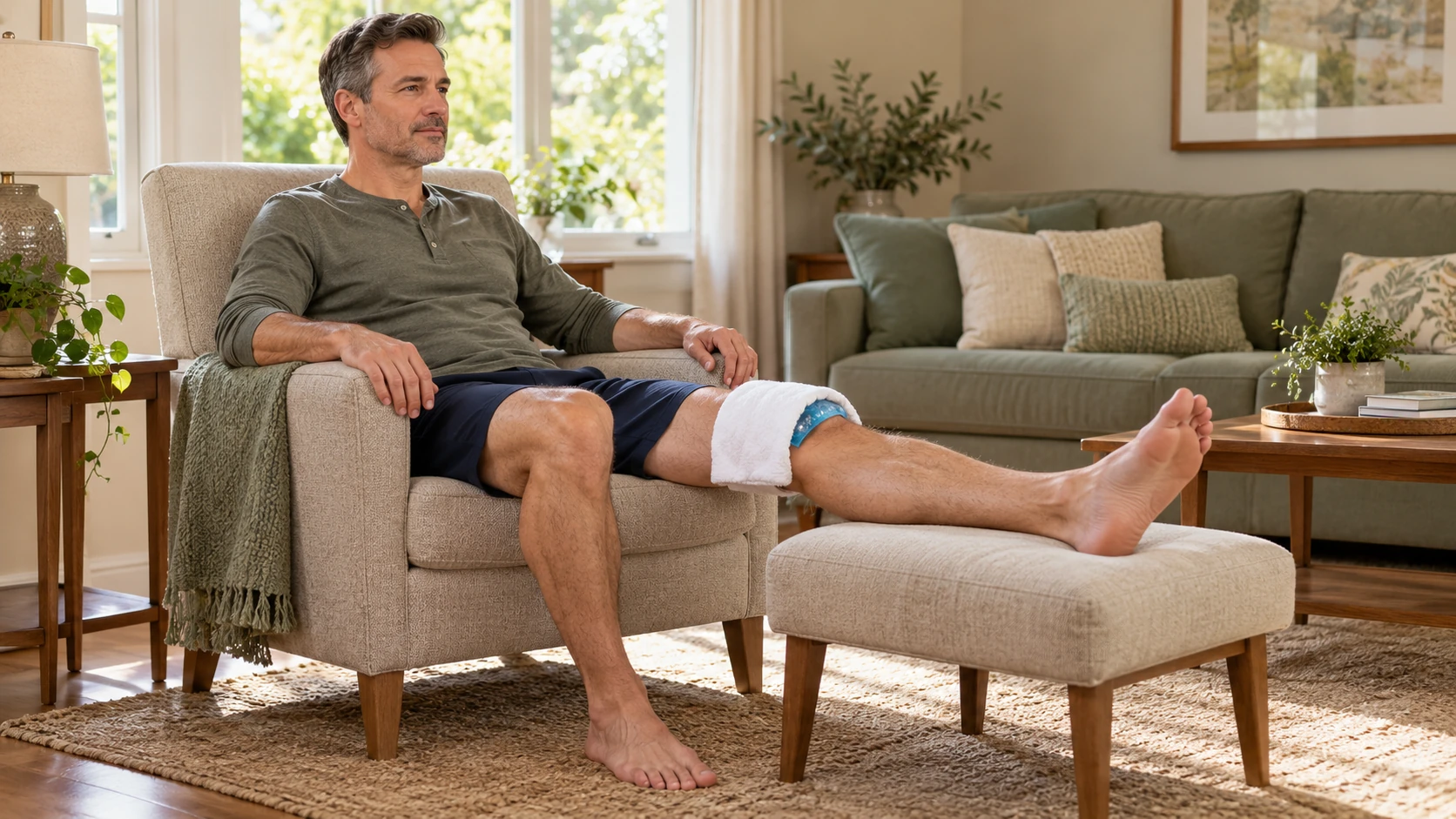
TREATING A TEARED MENISCALE WITHOUT SURGERY
Surgery is not always necessary. Depending on the type of meniscal tear, the absence of blockage, and the evolution of symptoms, conservative treatment may be considered as a first-line approach.
The choice of treatment depends on the discomfort and type of lesion, not just the MRI report.
Physiotherapy
Physiotherapy can help gradually regain mobility, strengthen thigh muscles, and improve knee control. Exercises are tailored to the individual's pain, limitations, and activities.
The gestures
Movements that trigger symptoms—particularly pivoting or deep flexion—can be temporarily reduced and then gradually reintroduced as the condition improves. Pain management can be discussed on a case-by-case basis. An injection does not repair a meniscal tear and is not automatically indicated.
The follow-up
Follow-up allows us to monitor mobility, pain, swelling, and the return to activities. A reassessment is necessary if symptoms persist, if the knee locks, or if function does not progress as expected. To better understand the available options, see the page on... meniscus tear.
WHEN TO CONSIDER SURGERY?
Surgery may be considered when a meniscal tear causes significant discomfort that persists despite appropriate management, when a displaced fragment leads to a blockage, or when the type of lesion presents promising repair potential. The decision depends in particular on the location, shape, and age of the tear, as well as any associated injuries.
The procedure is usually performed arthroscopically, using a camera and instruments inserted through small incisions. Depending on the lesion, the surgeon may recommend a meniscal suture to try to preserve and repair the fabric, or to remove only the unstable part when it cannot be repaired.
The timing of the intervention depends on the examination, symptoms, and imaging. A locking condition or associated injury may alter the schedule. The goal is to treat the mechanical discomfort and preserve the meniscus as much as possible. All surgery has constraints and limitations; it does not guarantee the absence of pain or a return to sports on a specific date.
The instructions and options are detailed in the article on the Meniscus surgery and its indications.
When a repair is possible, preserving the meniscus is an important part of the decision.
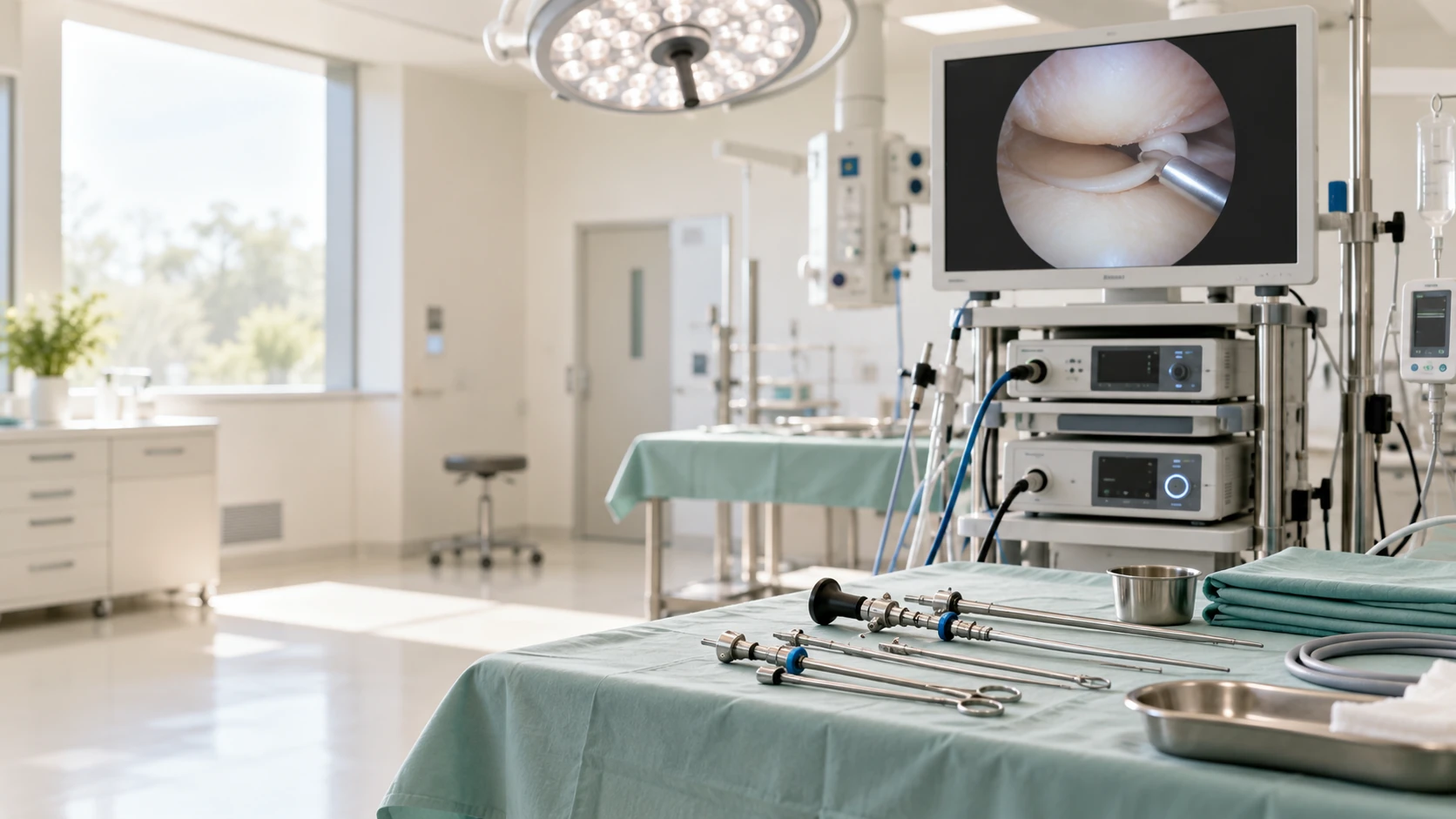

GRADUALLY RESUME ACTIVITY AFTER A MENISCAL TEAR
Rehabilitation depends on the treatment performed, the type of tear, any associated injuries, and the knee's response. Following sutures, the instructions and steps may differ from those following a partial meniscectomy or non-surgical management.
01 — REGAIN MOBILITY
Flexion and extension movements are addressed according to symptoms and medical instructions. After repair, their range of motion may be temporarily limited.
02 — REGAIN STRENGTH
Physiotherapy supports the progressive strengthening of the thigh and hip muscles, taking into account pain and swelling.
03 — CONTROLLING SUPPORT AND MOVEMENTS
Balance, stability and movement quality are retrained before attempting more demanding movements.
04 — RESUME DAILY ACTIVITIES
Walking, stairs, and usual activities are gradually reintroduced. Progress depends on the mobility, strength, and reaction of the knee.
05 — CONSIDER A RETURN TO SPORT
Running, jumping, and changes of direction are resumed when functional criteria are satisfactory and the knee tolerates the previous stages. The timeline varies depending on the type of treatment and any associated injuries.
The decision regarding resumption of activity is based on clinical progress and functional capacity, not on a uniform timeframe for everyone.
To learn more about the actions that allow you to resuming physical activity with a recovering knee, The treatment plan must be adapted with the care team.
A strategy tailored to each patient
A traumatic meniscal tear is not treated the same way for everyone. Dr. Benoît Coulin takes into account the mechanism of injury, the location and shape of the tear, knee stability, associated injuries, age, activities, and the person's goals.
Physiotherapy and temporary activity modifications can avoid surgery in some situations, but they are not suitable for all mechanical injuries. Surgery can treat some displaced or persistent tears, but it also requires rehabilitation and does not guarantee the same outcome for every patient. When possible, preserving the meniscal tissue is preferred.
Clinical examination and imaging allow these elements to be compared before choosing a strategy. The goal is to propose a treatment that is consistent with the lesion and the patient's daily life.
«"Each meniscus deserves a precise evaluation before deciding how to treat it."»

FREQUENTLY ASKED QUESTIONS
Does your knee remain painful or lock up after a twist?
A clinical examination allows for the assessment of knee mobility and stability. Appropriate imaging can then clarify the nature of the lesion and look for any associated conditions. Treatment is determined based on these findings and your individual situation.
