

osteoarthritis
patellofemoral
Patellofemoral osteoarthritis affects the joint located between the kneecap and the femur. It can cause pain at the front of the knee, particularly when going up stairs, squatting, or getting up from a chair.
The goal of treatment is to understand the origin of this pain, and then to preserve the patient's mobility and activities for as long as possible.
Understanding patellofemoral osteoarthritis

-
Located at the front of the knee, it moves when the leg bends and straightens.
-
It covers the surfaces of the kneecap and femur to facilitate their gliding.
-
The cartilage gradually deteriorates in this area, which can cause pain in the front of the knee.

RECOGNIZING THE SYMPTOMS
Pain associated with patellofemoral osteoarthritis is usually located at the front of the knee, around or behind the kneecap. It can appear gradually and be more pronounced during movements that require bending the knee while supporting the body's weight.
- Pain on the stairs: It is often felt on the descent, but can also appear on the ascent.
- Difficulty getting up: Getting up from a low chair or getting out of a car can become painful.
- Difficulty squatting: Significant knee flexion can accentuate the pain.
- Stiffness after sitting: The first movements may be uncomfortable after sitting for a long time with a bent knee.
- Swelling or a feeling of chafing: These signs may accompany pain, but are not present in all patients.
These symptoms are not unique to osteoarthritis. Other problems with the kneecap, cartilage, or tendons can cause similar pain.
Isolated cracking sounds are also not enough to make a diagnosis.
WHY DOES THIS OSTEOARTHRITIS APPEAR?
Several factors can contribute to the development of patellofemoral osteoarthritis. Their role varies from patient to patient; identifying the most important factors helps to tailor treatment.
TRAUMA OR INSTABILITY OF THE PATELLA
A previous fracture of the patella, a dislocation, or cartilage damage can alter the function of the joint. Repeated instability of the patella can also contribute to progressive damage to its contact surfaces.
SHAPE AND MOVEMENT OF THE BALL JOINT
The shape of the femoral groove and the way the patella moves within it influence the distribution of stress. In some patients, one part of the joint is subjected to greater stress during knee flexion.
MUSCULAR STRENGTH AND MOVEMENT
The muscles of the thigh and hip help control the knee. Muscle weakness or changes in movement can make certain actions more difficult and worsen symptoms.
INJURY TO OTHER PARTS OF THE KNEE
Osteoarthritis located behind the kneecap can occur in isolation or in association with involvement of other compartments of the knee. This distinction is particularly important when conservative treatments are no longer sufficient.
MAKE THE RIGHT DIAGNOSIS
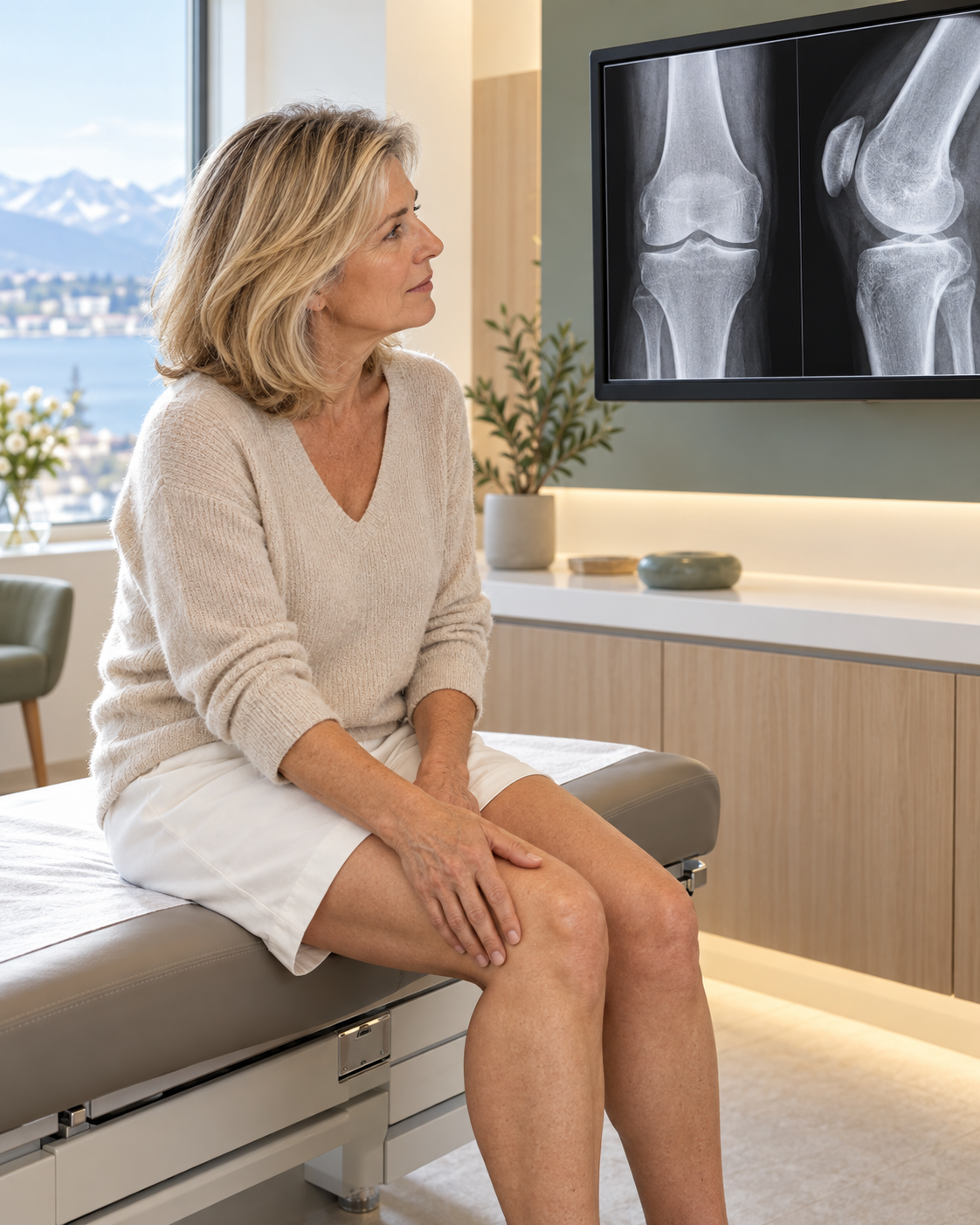
The diagnosis is not based solely on an image. It combines the description of symptoms, examination of the knee and, when useful, appropriate imaging tests.
01 — THE CLINICAL EXAMINATION
The doctor locates the painful area and observes the movements that trigger the discomfort. They assess mobility, muscle strength, patellar stability, and the overall condition of the knee. This examination also helps to identify other possible causes of pain at the front of the knee.
02 — ADAPTED X-RAYS
X-rays can show changes in the joint between the kneecap and the femur. They can also help determine if other parts of the knee are affected. Depending on the situation, X-rays taken while standing and a specific view of the kneecap may be requested.
03 — ADDITIONAL EXAMINATIONS
An MRI is not always necessary. It can be useful when X-rays do not sufficiently explain the symptoms or when it is necessary to clarify the condition of the cartilage and other structures of the knee.
An image of wear does not, by itself, determine the need for an infiltration or an operation. The decision also takes into account pain, mobility, and activities that have become difficult.
RELIEVING OSTEOARTHRITIS WITHOUT SURGERY
Management of patellofemoral osteoarthritis is generally progressive. Conservative treatments are preferred as long as they improve pain, mobility, and quality of life.
PHYSICAL ACTIVITY AND PHYSIOTHERAPY
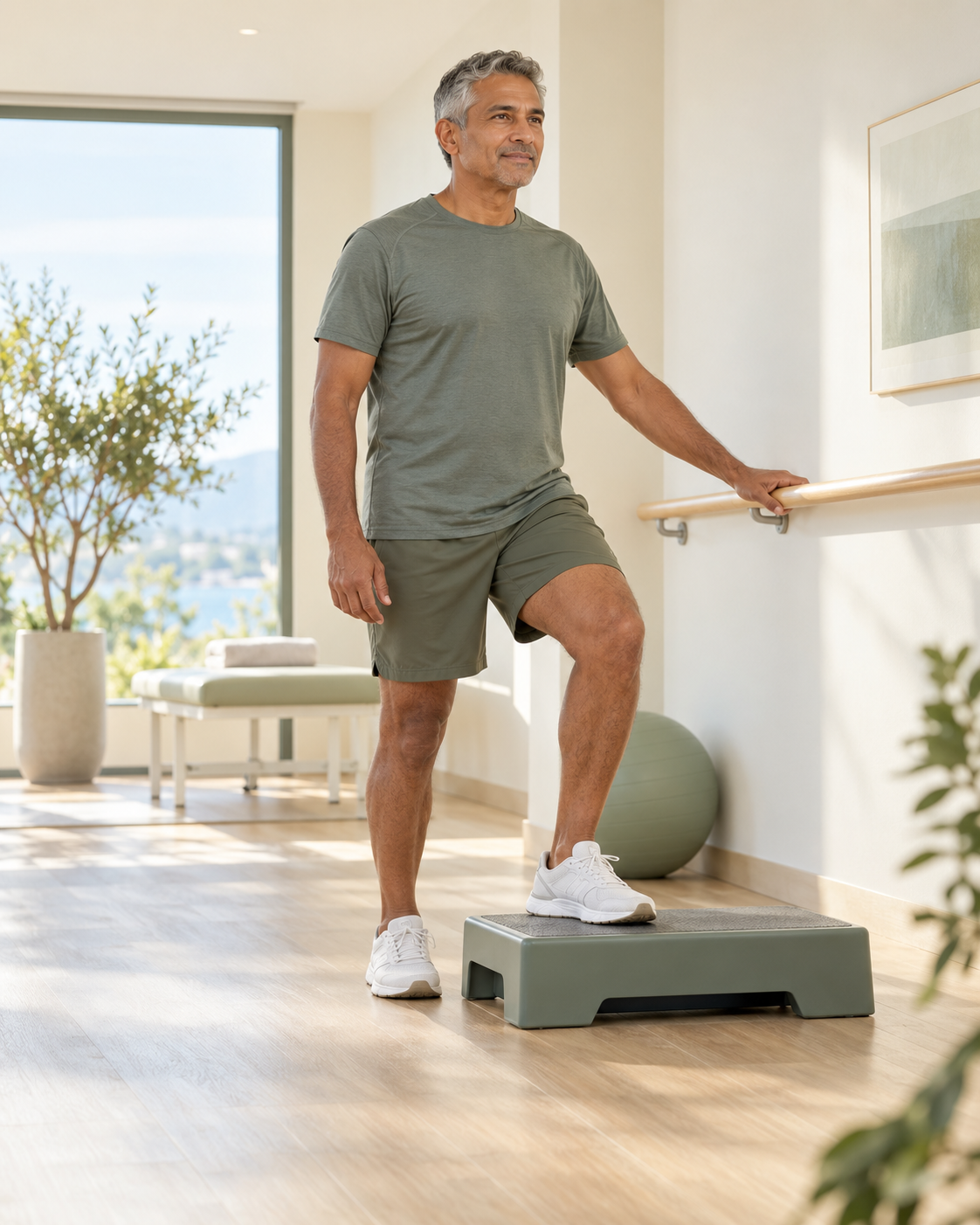
Appropriate movement is part of the treatment. Physiotherapy can help strengthen thigh and hip muscles, improve knee control, and gradually regain movements that have become painful.
The exercises are tailored to the patient's abilities. The goal is to be able to climb stairs, walk, or participate in a chosen activity with greater comfort. This progression is part of a knee rehabilitation adapted to each situation.
ADAPTATION OF DAILY LIFE
During a painful period, temporarily reducing deep bends, limiting repetitive lowering movements, or adjusting the intensity of an activity can help. These changes are not intended to permanently eliminate movement; they allow you to return to a more tolerable level of activity.
DRUG TREATMENTS
Treatments to relieve pain may be offered depending on medical history and any potential contraindications. They can help during a difficult period, but they do not replace work on knee strength and function.
KNEE INFILTRATIONS
If symptoms persist, an intra-articular injection may be considered depending on the patient's profile, the extent of the osteoarthritis, and any treatments already tried. Not all available products have the same indications. To better understand the options, consult the page dedicated to the different types of knee injections.
An injection can help reduce symptoms, but It does not regenerate worn cartilage.. When indicated, it is integrated into a more comprehensive approach.
Preserving knee function and maintaining activities remains a priority as long as conservative treatments provide satisfactory benefit.
WHEN TO CONSIDER SURGERY?
Visible osteoarthritis behind the kneecap is not, in itself, an indication for surgery. Surgery may be considered when pain remains significant despite appropriate treatment and when it persistently limits daily activities.
The choice of intervention depends primarily on the extent of osteoarthritis in the knee.
REPLACE ONLY THE FEMORO-PATELLAR JOINT
When osteoarthritis is truly limited to the joint between the kneecap and the femur, a femoropatellar prosthesis This option may be considered for certain patients. It replaces the affected areas in this region, while preserving other parts of the knee when they are sufficiently intact.
This possibility is based on specific criteria. In particular, it is necessary to verify that the pain corresponds to the observed condition and that other compartments of the knee do not require different treatment.
TREATING MORE EXTERNAL OSTEOARTHRITIS
If several parts of the knee are affected, replacing only the joint behind the kneecap may not address all the symptoms. Another solution, including a total knee replacement In certain situations, it can then be discussed.
Dr. Coulin explains the expected benefits, the limitations of the intervention, and the necessary rehabilitation before any decision is made.
KEEP MOVING WITH PATELLAR FEMOROOSTROSIS
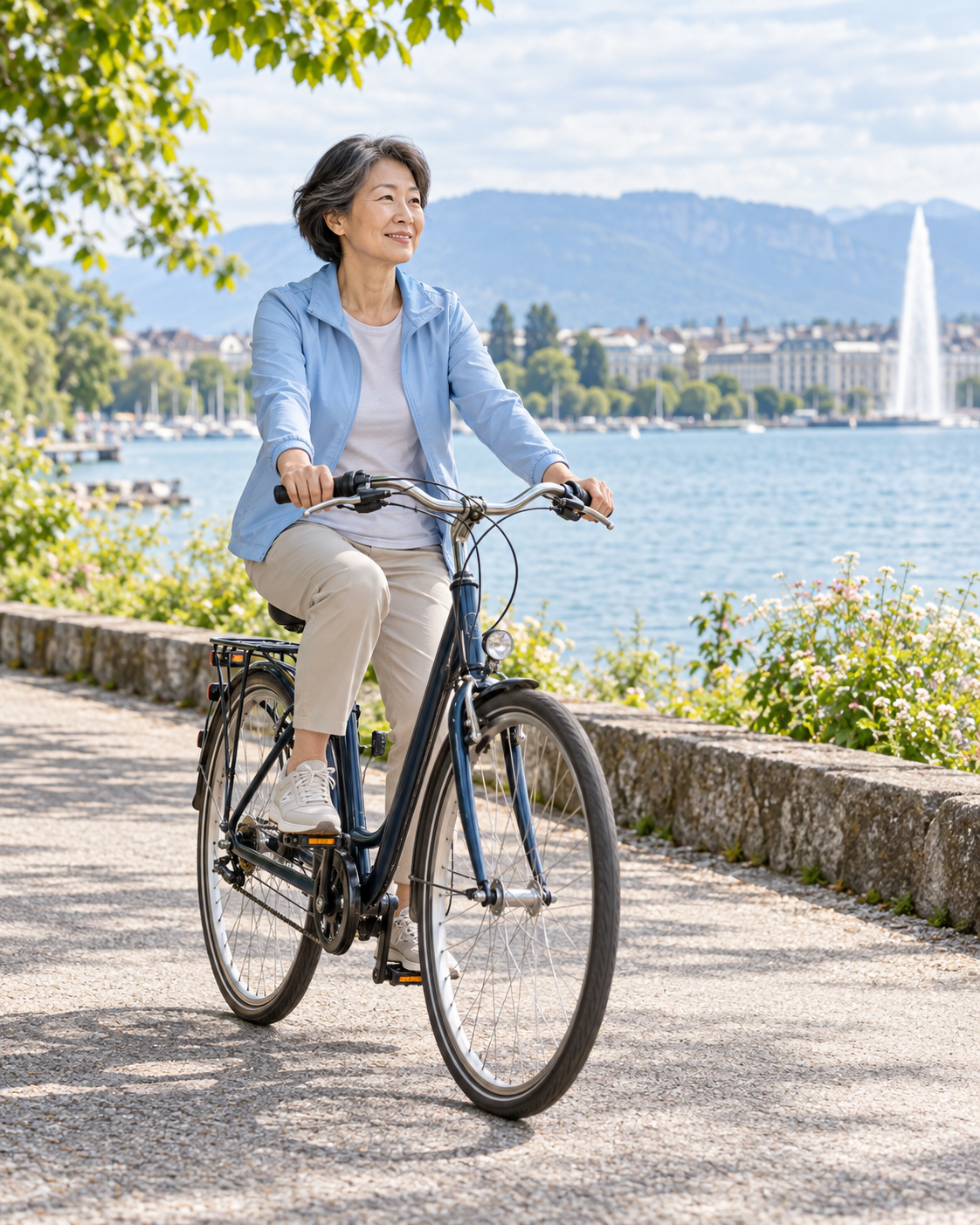
In most cases, it is possible to maintain physical activity. The key is to choose movements that are compatible with the symptoms and to gradually increase the knee's capabilities.
Walking on level ground, cycling with appropriate adjustments, and certain strengthening exercises can be recommended depending on the patient's abilities. Pain experienced on stairs does not mean that all activity is harmful to the joint.
However, the intensity should be adapted to the knee's reaction. If an activity results in significantly increased pain, swelling, or persistent discomfort, its pace or duration can be adjusted.
Moving does not mean ignoring the pain, but gradually regaining movements that the knee tolerates better.
A CARE APPROACH TAILORED TO EACH PATIENT
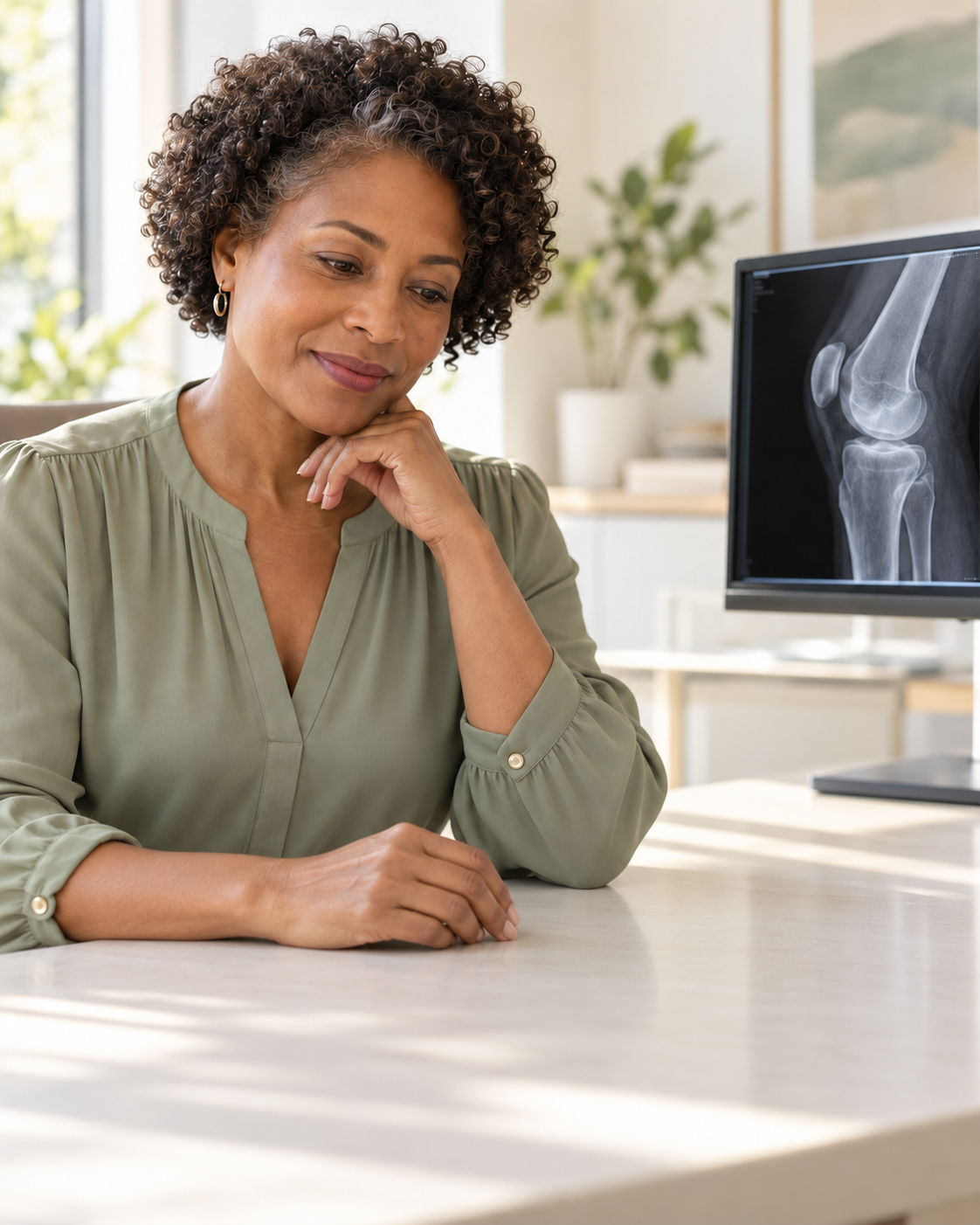
Two people with patellofemoral osteoarthritis on their X-rays can experience very different situations. One is mainly bothered by stairs; the other wants to continue playing sports or encounters difficulties at work.
Dr. Benoît Coulin bases his treatment approach on a precise diagnosis, the overall condition of the knee, and the patient's goals. When possible, physiotherapy, activity modifications, and other conservative treatments help preserve movement without intervention.
Surgery is discussed if these solutions are no longer sufficient and if the knee involvement corresponds to an intervention whose expected benefit is clear.
«"Understand the pain behind the kneecap, preserve movement, and then intervene only when necessary."»
FREQUENTLY ASKED QUESTIONS
DO YOU WANT TO BETTER UNDERSTAND YOUR PAIN?
A clinical examination combined with appropriate imaging can determine if the pain originates from the joint behind the kneecap and help choose the most suitable treatments for your situation.
