
REGENERATE
When possible, conservative approaches are preferred, particularly in younger patients, to preserve the joint and prevent its progression to chronic pain. This strategy helps maintain long-term mobility, joint comfort, and a smooth return to daily and sporting activities.
REGENERATE
Cartilage surgery
Significant traumatic cartilage damage can have devastating long-term consequences. Dr. Coulin uses cutting-edge techniques for repair, promoting cartilage regeneration. He uses techniques involving collagen membranes and the use of cell therapies.
Orthobiology
Recent advances in stem cell therapies and growth factor treatments open new therapeutic perspectives. Dr Coulin and his team are actively involved to offer you the most innovative techniques aimed at relieving osteoarticular pain.
Osteotomy
Congenital or post-traumatic bone deformities can accelerate joint wear, particularly in the knee. Axis correction techniques can offload affected areas, potentially adding years of pain-free life.
Understanding the anatomical deformities underlying your symptoms is essential. A comprehensive analysis is conducted to determine whether this joint-preserving surgery may be appropriate for you.
A full analysis is performed to determine if this type of joint preservation surgery can be offered to you.
Patella surgery
A thorough analysis of the bone reliefs, the relationships between the patella, the femur, the tibia and all the ligamentous structures through CT and MRI scans, is crucial to determine the most appropriate treatment. This step allows to assess the need for surgery, which can vary from a simple plasty of the internal ligament of the patella to more substantial corrections of the bone deformities favoring these dislocations. Surgery associated with these problems requires particular expertise and optimal surgical execution.
The goal is to restore a pain- free knee, demanding an individualized approach to ensure optimal results for each patient.
A CONSERVATIVE APPROACH ABOVE ALL
Regeneration means preservation. Before considering joint replacement, each situation is carefully analyzed to identify solutions that preserve natural structures for as long as possible.
In young or active patients, the goal is clear: to slow the degenerative progression, restore biomechanical balance, and prolong the lifespan of the joint. This conservative strategy often makes it possible to postpone joint replacement for many years.
Each decision is based on a detailed analysis of alignment, cartilage quality, ligament stability, and the mechanical stresses exerted on the joint.
Regeneration is thus part of a logic of precision and anticipation.
PRESERVE JOINT CAPITAL
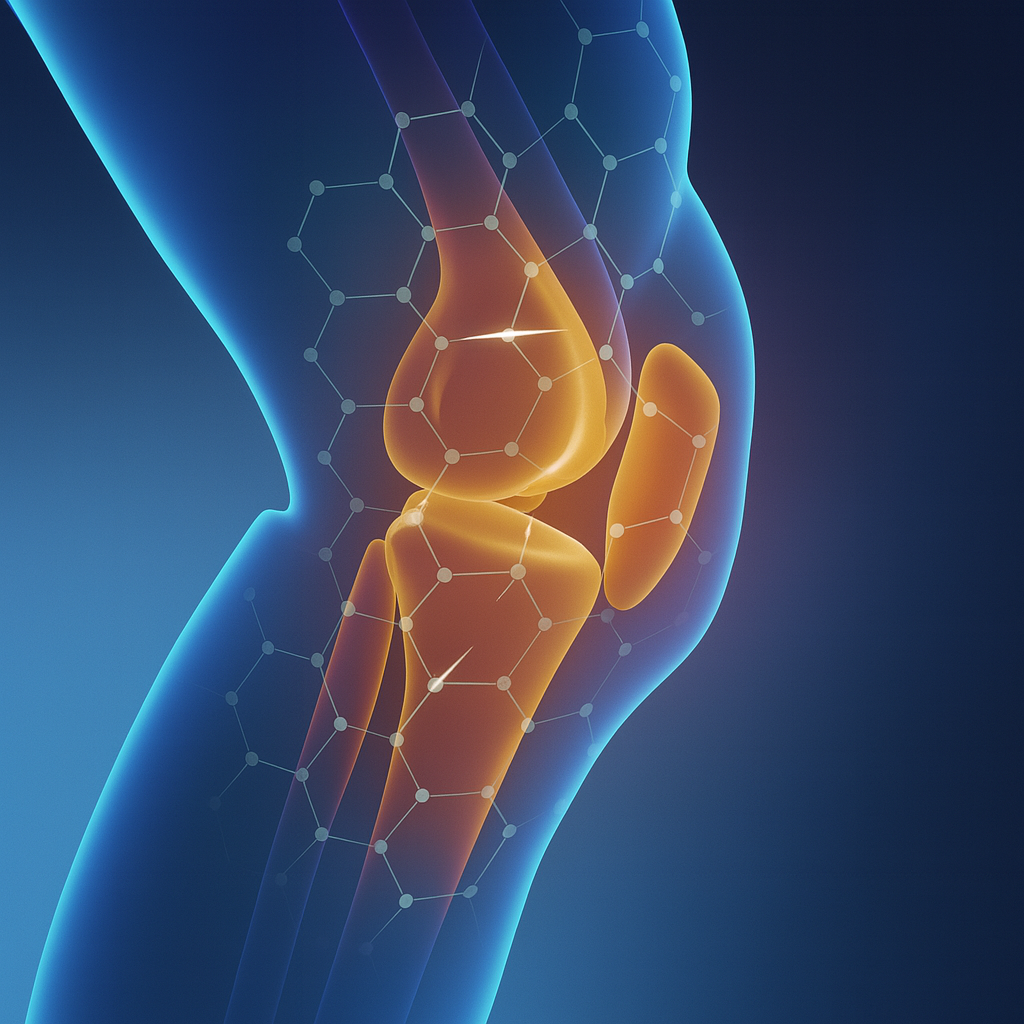
Articular cartilage does not regenerate spontaneously and effectively. When it is damaged, the challenge is to intervene early enough to limit the extent of the damage and preserve the existing joint structure.
Modern cartilage surgery and orthobiology techniques stimulate the body's natural biological repair mechanisms. The goal is not simply to treat a visible lesion, but to improve the overall joint environment.
By restoring a more homogeneous surface and correcting associated mechanical imbalances, it is possible to sustainably improve function and reduce pain.
Joint regeneration relies on this combination: mechanical correction + biological stimulation.
TARGETED AND PERSONALIZED INDICATIONS
Not all cartilage or joint lesions are suitable for a regenerative strategy. A rigorous selection of indications is essential to guarantee optimal results.
Biological age, activity level, location of the lesion, its extent and the general condition of the joint are taken into account in therapeutic planning.
Regeneration is particularly suited to:
in young patients with localized lesions,
for athletes wishing to preserve their performance,
to active patients with early-stage osteoarthritis.
The goal is always to offer the solution that is most consistent with your life trajectory.
REALIGN TO PROTECT
In some situations, joint wear is linked to an imbalance of axis or a poor distribution of loads. Osteotomy This allows the mechanical stresses to be redirected in order to protect the injured area.
This biomechanical approach is essential in a regeneration strategy. Correcting the axis reduces excessive pressure on a weakened area and creates an environment conducive to healing or stabilizing lesions.
Regenerating does not just mean repairing: it also involves restoring a lasting mechanical harmony.

A LONG-TERM VISION
Joint regeneration is part of a progressive and proactive strategy. The goal is to prolong an active, pain-free life and, when possible, delay the need for a prosthetic solution.
This approach requires rigorous planning, mastery of surgical technique and structured post-operative follow-up.
Rehabilitation plays a central role in consolidating results. Initial protection of the joint, followed by a gradual resumption of weight-bearing, determines the quality of the medium- and long-term outcome.
INNOVATION AND PRECISION
Regeneration techniques are constantly evolving thanks to advances in cell biology, tissue engineering and minimally invasive surgery.
The use of modern technologies, precision instruments and detailed pre-operative planning allows for the optimization of indications and the securing of results.
Joint regeneration now represents a credible alternative to early replacement, when offered in the right clinical context.