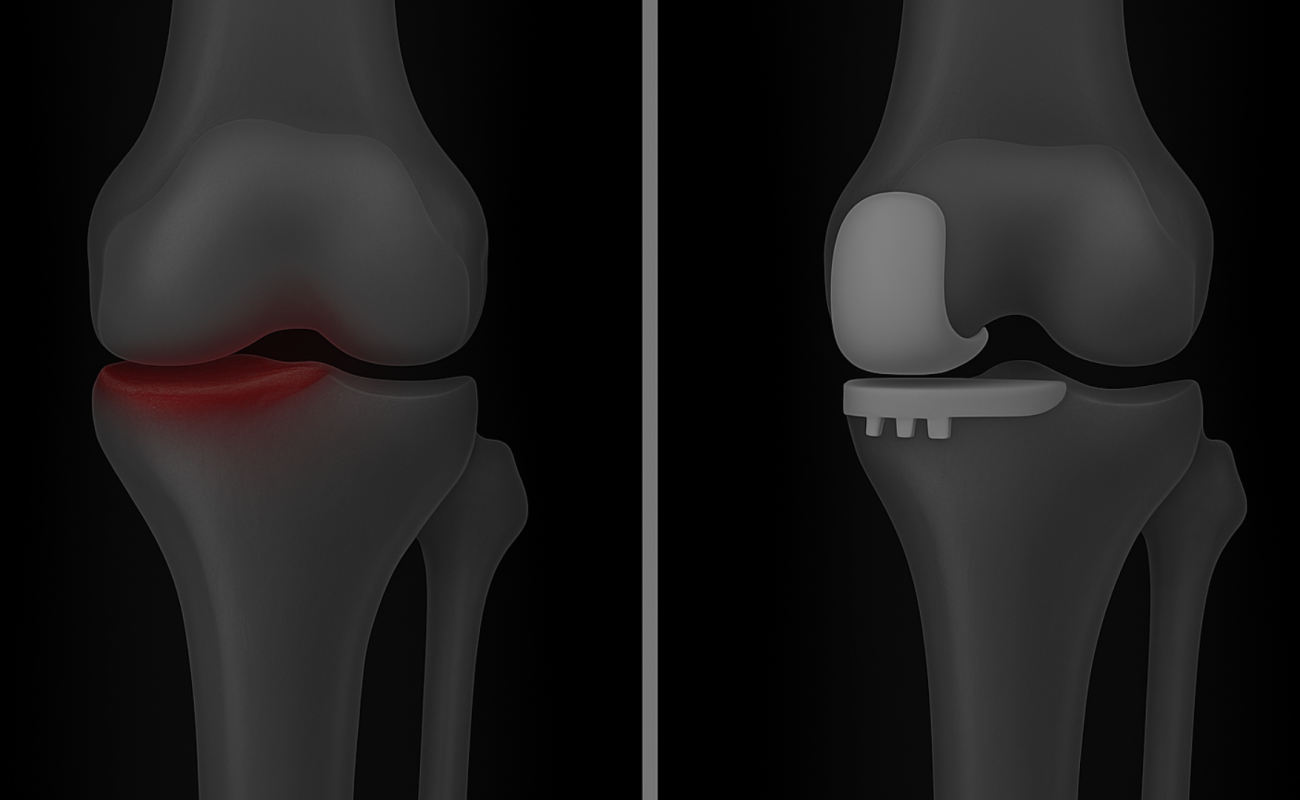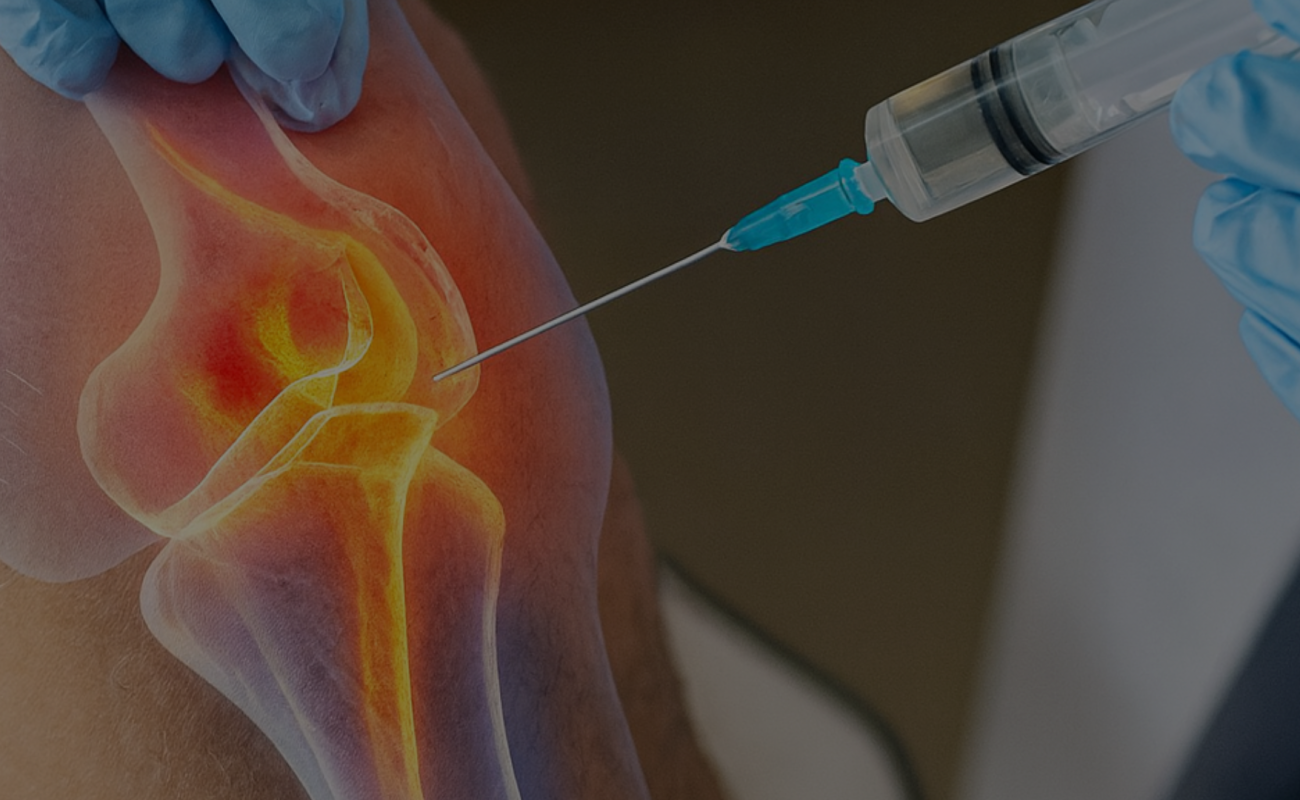

Why?’osteoarthritis gradually reduces the ability to perform everyday tasks
Osteoarthritis is not just intermittent pain or a simple sign of joint aging. For many people, it profoundly alters the ability to perform essential movements: walking, getting up, carrying, dressing, getting into a car, cooking.
It is not really the pain that limits autonomy, but the combination of stiffness, loss of range of motion, muscle weakness and instabilitywhich transforms the simplest actions into real obstacles.
Understanding which movements become difficult is a key step in better adapting one's pace and environment, and in choosing a treatment that can preserve mobility.
Walking: the first movement impacted by the loss of fluidity
Although it appears natural, walking requires complex coordination between muscles, cartilage, ligaments and proprioception.
With osteoarthritis of the knee:
- the stride becomes shorter
- the pace slows down,
- the knee locks more easily
- Worn surfaces cause a constant inconvenience.
Patients often describe:
- a unusual slowness,
- a difficulty walking for long periods,
- a pain that appears after a few minutes
- the sensation that the knee is “resisting” or “locking”.
This loss of endurance and fluidity marks the first signs of reduced battery life.
Stairs: a major challenge for arthritic joints
Stairs put a lot of strain on the knee — much more than walking.
With osteoarthritis, this movement becomes one of the first to cause a functional limitation:
- The climb requires a significant push.
- The descent creates painful tension in the joint.
- The knee lacks control, especially on narrow or uneven ground.
Many patients then begin to:
- use the ramp for support,
- climb step by step.
- avoid steep stairs,
- change their daily commute to reduce its use.
This is a direct sign of declining autonomy.
Getting up from a chair or bed: a movement that becomes slower and more painful
The transition from a sitting to a standing position strongly mobilizes: the quadriceps, the patella, the femorotibial compartment and the stabilizing ligaments.
With osteoarthritis, this normally automatic transition becomes difficult:
- need to use your hands,
- slowness when straightening up,
- knee that "locks up" during the first few seconds,
- sensation of loss of strength.
This action, repeated dozens of times a day, is one of the best indicators of functional progress.
Getting dressed and putting on shoes: simple, agile movements that become more complicated.
When the knee loses flexibility and becomes painful:
- put on a pair of trousers,
- put on socks,
- lacing shoes,
require more time, precision and balance.
These seemingly simple gestures actually require a good range of motion.
With osteoarthritis, the joint gradually loses this capacity, leading to a subtle but real loss of autonomy.
Getting in and out of a car: an underestimated functional test
This movement involves: significant knee flexion, pelvic rotation, and weight transfer. In cases of advanced osteoarthritis, it becomes:
- slow,
- painful,
- unstable and sometimes requires outside help.
Many patients acknowledge adapting their mode of transport precisely because of this difficulty.
Carrying loads or doing the shopping: the pressure on the knee intensifies
Simply carrying a shopping bag significantly increases the forces transmitted to the knee.
With osteoarthritis:
- The pain appears more quickly when under load.
- stability is lower.
- Rotations become risky.
- Sustained efforts are difficult to tolerate.
This limitation can directly impact independence in household chores.
Standing for long periods: reduced joint endurance
Prolonged standing puts continuous pressure on the cartilage.
In a patient with osteoarthritis:
- The pain gradually increases.
- the leg becomes heavy.
- stability decreases
- The patient should sit down to relieve pressure on the joint.
This phenomenon limits social, professional and family activities.
Why does osteoarthritis reduce autonomy so much?
Three mechanisms combine:
1) Stiffness
It limits the ability to bend, stretch and link movements.
2) Mechanical pain
Present during support or transitions, it slows down spontaneous movements.
3) Loss of muscle strength
Muscles become less efficient due to pain, leading to a vicious cycle.
This trio explains why osteoarthritis reduces autonomy long before reaching an “advanced” stage on imaging.
Conclusion
The real impact of’osteoarthritis The impact on autonomy goes far beyond pain: even the simplest actions gradually become difficult. Climbing stairs, walking for long periods, getting up from a chair, or simply getting dressed can reveal a loss of mobility that is often underestimated.
Understanding these limitations allows one to adapt their daily life, prevent loss of independence, and choose a truly appropriate treatment to preserve quality of life.